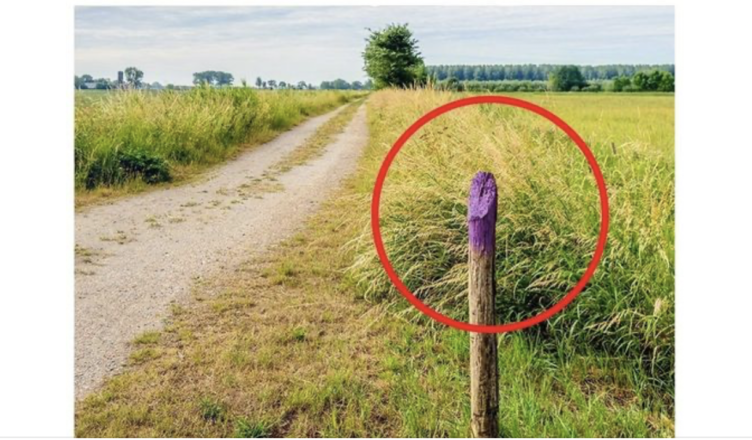
The concept of marking property boundaries with purple paint has been adopted by several U.S. states, with laws specifying the meaning of purple markings on fences, posts, or trees. This practice is a more permanent and weather-resistant alternative to traditional signs that might be subject to wear, theft, or vandalism. The significance of purple paint can vary by state, but in many cases, it indicates that the land is off-limits to trespassers.
Arkansas was one of the pioneering states to enact “posting paint” legislation in 1989, and since then, many other states, including Alabama, Arizona, Florida, Illinois, Indiana, Kansas, Maine, Missouri, North Carolina, Pennsylvania, South Carolina, Tennessee, and Texas, have followed suit. The laws regarding purple paint may include specific requirements for its application, such as vertical purple stripes of a certain width and length.
Property owners may use purple paint to communicate a “no trespassing” message, and trespassing on landmarked in this way can have legal consequences, varying by jurisdiction. Understanding the local laws and regulations regarding purple paint can help individuals navigate outdoor spaces responsibly.
For property owners looking to use purple paint to mark boundaries, it’s important to follow local guidelines, including specifications for stripe width, length, and placement. Spreading awareness in the community about the meaning of purple paint can contribute to the effectiveness of this boundary-marking method.
In summary, encountering a purple fence or markings in outdoor settings may signify private property boundaries, and understanding the legal implications and local regulations is crucial for both property owners and outdoor enthusiasts.