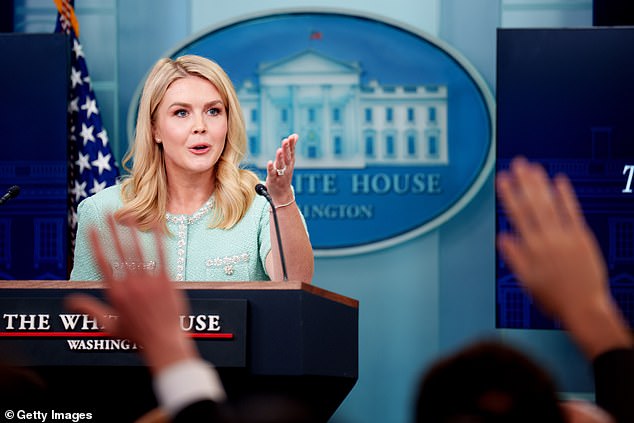
The journalist questioned why the president, who campaigned on significant tax cuts, was suddenly “raising taxes” via tariffs. Leavitt resisted vigorously, claiming that the administration’s strategy was “absolutely not a tax increase on Americans,” but rather a strategic charge on foreign governments that had “been defrauding us for decades.”
Tariffs were characterized by Leavitt as a corrective policy aimed at rebalancing trade, protecting domestic sectors, and, over time, lowering the tax burden on American workers. “Tariffs aren’t about squeezing American families,” she told the audience. “They are about preventing countries from dumping cheap goods, manipulating currencies, and destroying our industrial base. If they want to continue abusing loopholes, they will pay—not Main Street.” She maintained that any short-term pricing pressure on importers would be outweighed by long-term benefits such as stronger domestic supply chains, upward wage pressure, and a less vulnerable American economy to overseas shocks.
In response to the question of whether firms simply transfer these costs to customers, the press secretary acknowledged that importers might face higher upfront prices. Nonetheless, she insisted that “fair, reciprocal trade” will ultimately result in more money in US coffers. She reminded reporters that the administration’s wider tax strategy still includes tax cuts on overtime, tips, and Social Security payments, demonstrating the president’s continued commitment to reducing the total tax burden on working Americans. “When the playing field is level,” she said, “wages rise, jobs stay here, and growth accelerates.”
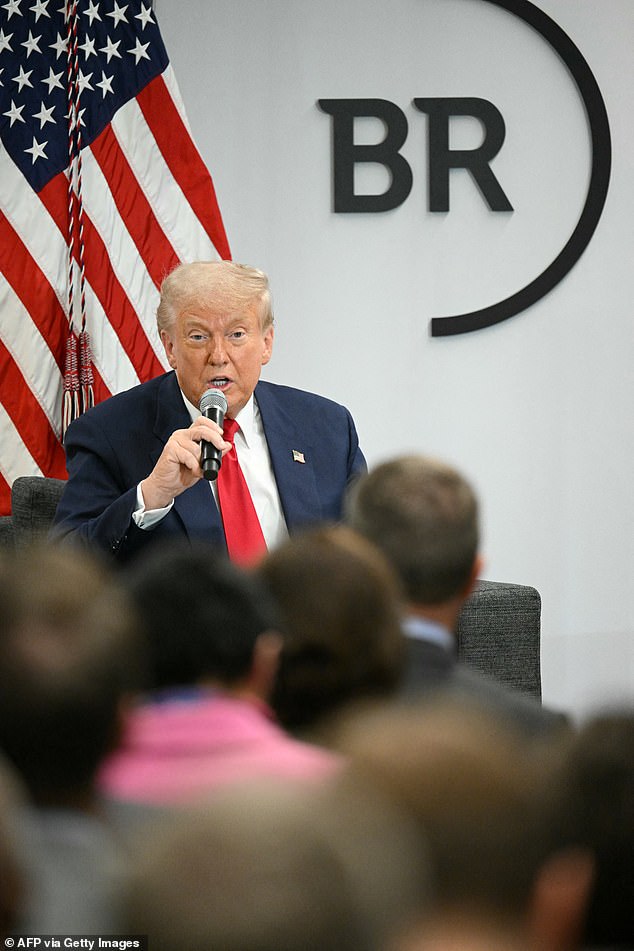
As the back-and-forth became more intense, Leavitt’s patience dwindled. She objected to what she saw as an attempt to “quiz” her comprehension of economics, calling the premise of the AP’s query “insulting” given the administration’s proven track record on tax relief. Her aggressive tone emphasized a defining characteristic of the Trump administration: challenging media myths head-on and rewriting them on its own terms. In her opinion, the true story was not a shift away from tax cuts, but a coordinated strategy—tariffs included—to reclaim economic sovereignty after years of unbalanced trade agreements.
Leavitt’s argument is consistent with President Trump’s wider “America First” policy. From renegotiating NAFTA to placing sector-specific tariffs on steel, aluminum, and solar panels, the administration has claimed that taxes are an essential negotiation instrument. Economists who oppose protectionism refer to rising consumer prices as evidence that such policies fail. However, Leavitt’s words shed light on the White House’s strategy: tolerate some discomfort now in order to achieve an industrial rebirth later. The government hopes that by increasing the cost for foreign companies to flood US markets, it will entice investment back to American soil and raise middle-class incomes.
The question of whether the tariff approach can produce the promised outcomes remains open, but the briefing demonstrated unflinching faith in the West Wing. Leavitt’s vehement reaction demonstrated that the administration saw tariffs as a complementary instrument in a bigger economic makeover, rather than a departure from tax-cutting ideas. As trade policy discussions continue—and the political risks of defending American employment rise—Leavitt’s performance foreshadows an administration willing to defend its ideas with equal parts policy specificity and rhetorical force.