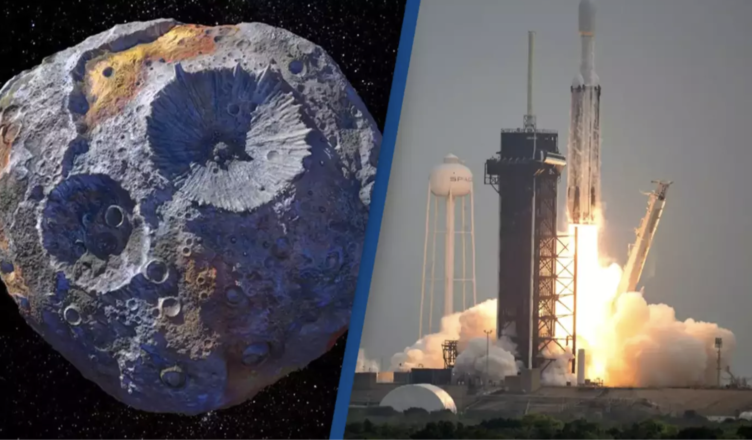
NASA’s most recent mission saw a rocket launch to “one of the most intriguing objects in the main asteroid belt,” which could hypothetically make everyone on Earth wealthy.
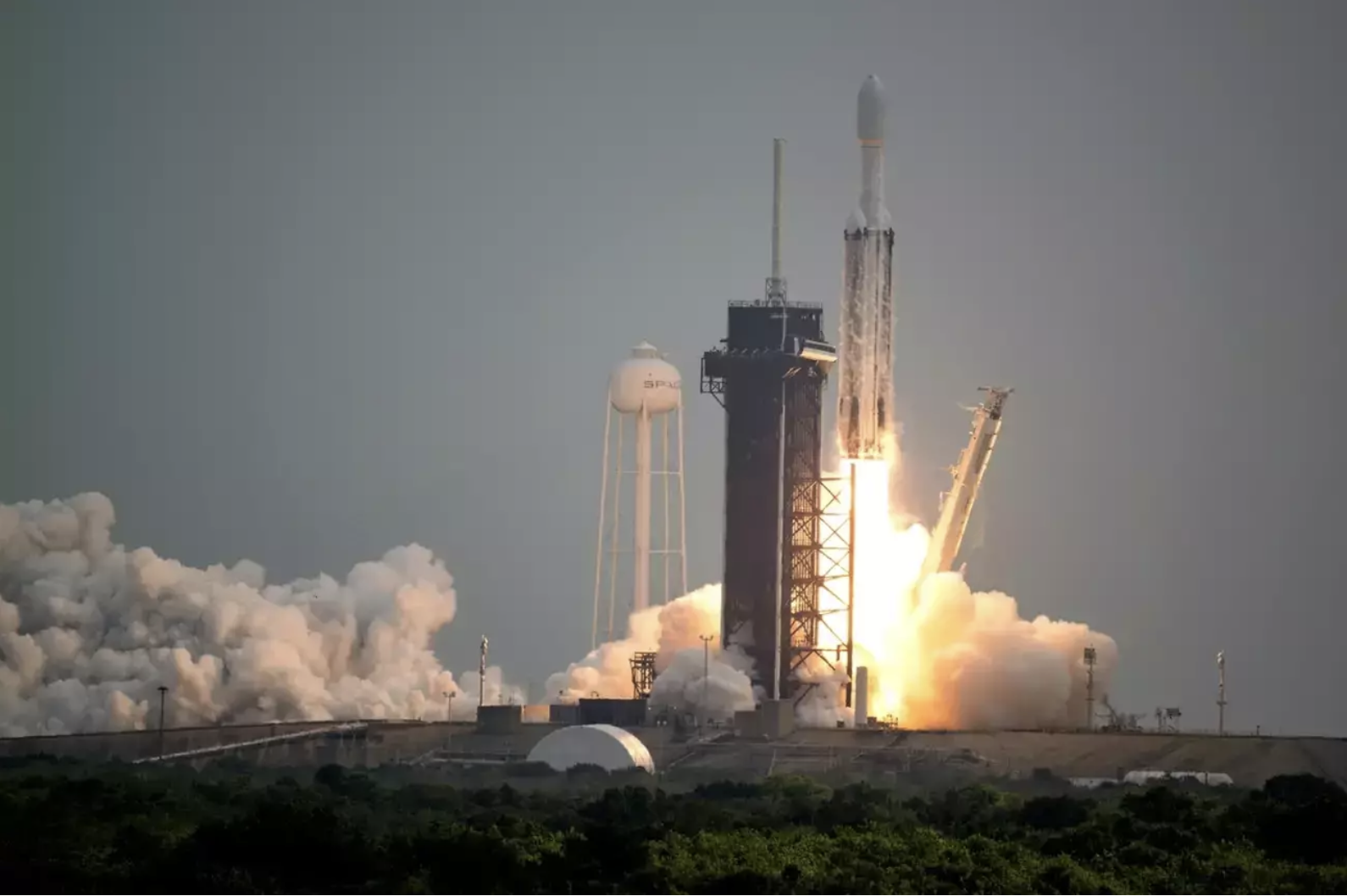
The space agency successfully launched a rocket last Friday (October 13) with the intention of traveling to the metal-rich asteroid 16 Psyche.
The asteroid is rich in gold, iron, and nickel, with a total estimated value of $10,000,000,000,000,000,000 (or $10,000 quadrillion or £8,000 quadrillion).
If NASA is successful in mining the asteroid and returning it to Earth, everyone on the globe will be a millionaire.
In truth, if scientists carried out their plan, the global economy would fall, much as if every living person won the lottery.
It’s a good thing NASA has stated that mining the asteroid is not their objective. According to the space agency, the project was intended to learn more about planetary cores and how planets develop.
In July, NASA released a press release that said: “With less than 100 days to go before its launch, teams of engineers and technicians are working almost around the clock to ensure the orbiter is ready to journey 2.5 billion miles to a metal-rich asteroid that may tell us more about planetary cores and how planets form.”
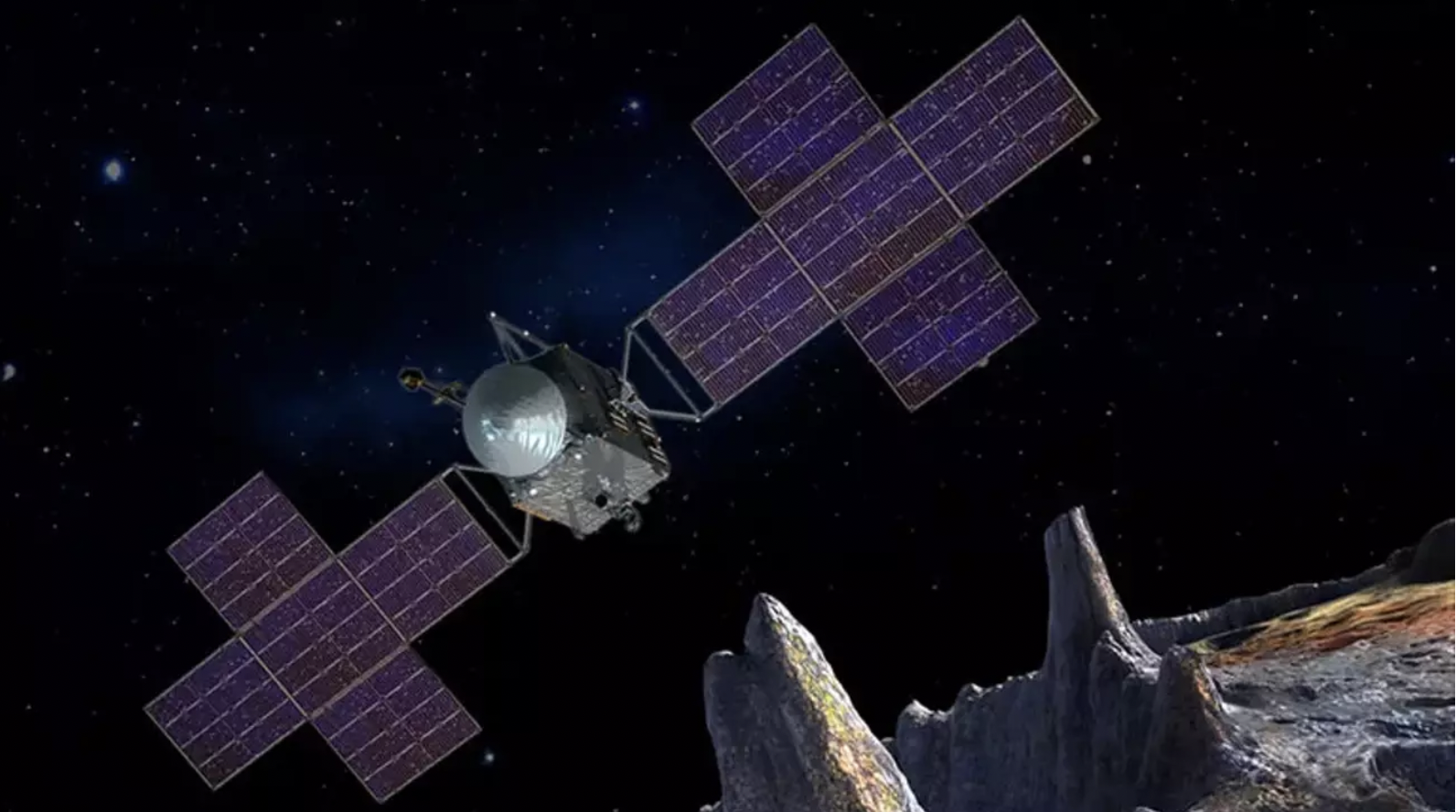
According to NASA, the asteroid orbits the Sun between Mars and Jupiter at a distance of 235 million to 309 million miles (378 million to 497 million kilometers).
Scientists think the spacecraft will arrive at the asteroid around July 2029 and will receive a modest boost in velocity when it passes Mars in May 2026.
“Once in orbit, the spacecraft will map and study Psyche using a multispectral imager, a gamma-ray and neutron spectrometer, a magnetometer, and a radio instrument (for gravity measurement),” NASA said in a statement.
While nine other metal-rich asteroids are known to exist in our solar system, NASA picked 16 Psyche because it is the biggest and is less likely to have been altered by space collisions.
“Psyche is by far the largest, and that’s why we want to go to it because the smaller ones are more likely to have been changed by things impacting them, whereas the big one, we think, is going to be completely unchanged,” Nicola Fox, NASA’s science mission directorate’s associated administrator, told Space.com.