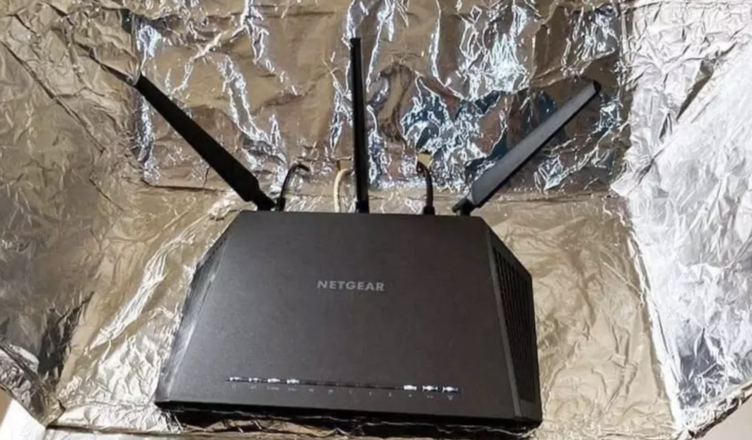
Have you ever considered covering your WiFi router with aluminum foil? I haven’t either, but it appears to be a helpful thing to do for one specific reason.
When the Covid-19 epidemic struck in 2020, millions of individuals were forced to work from home for the first time, irritating those with poor internet connections.
The dreaded buffering swirl is something you would rather not see, especially when you have work to do, so a potential option to boost performance is excellent news.
This ‘hack’ is undoubtedly unusual, but according to some who have tried it, it apparently works well.
Wrapping an ordinary household object, such as aluminum foil, over your Wi-Fi router is intended to increase performance.

Reader’s Digest outlined how to do this, and it appears to be rather straightforward.
First, you should ‘cut a sheet to be around a foot long and the height of your Wi-Fi router’ before bending the household item into a ‘C’ form.
The shiny side of the foil must face within the curve, covering the antennae.
“Place the foil behind the router, with the curved portion facing toward the router and the target area where you want to boost the signal,” according to Reader’s Digest.
You should then proceed to your intended location to see if the ‘trick’ worked. You may accomplish this by running a speed test, which will allow you to analyze both upload and download rates.
Could you please explain the science behind this?
Well, tech expert James McQuiggan said that aluminum foil can improve the flow of Wi-Fi signals, resulting in faster internet rates.
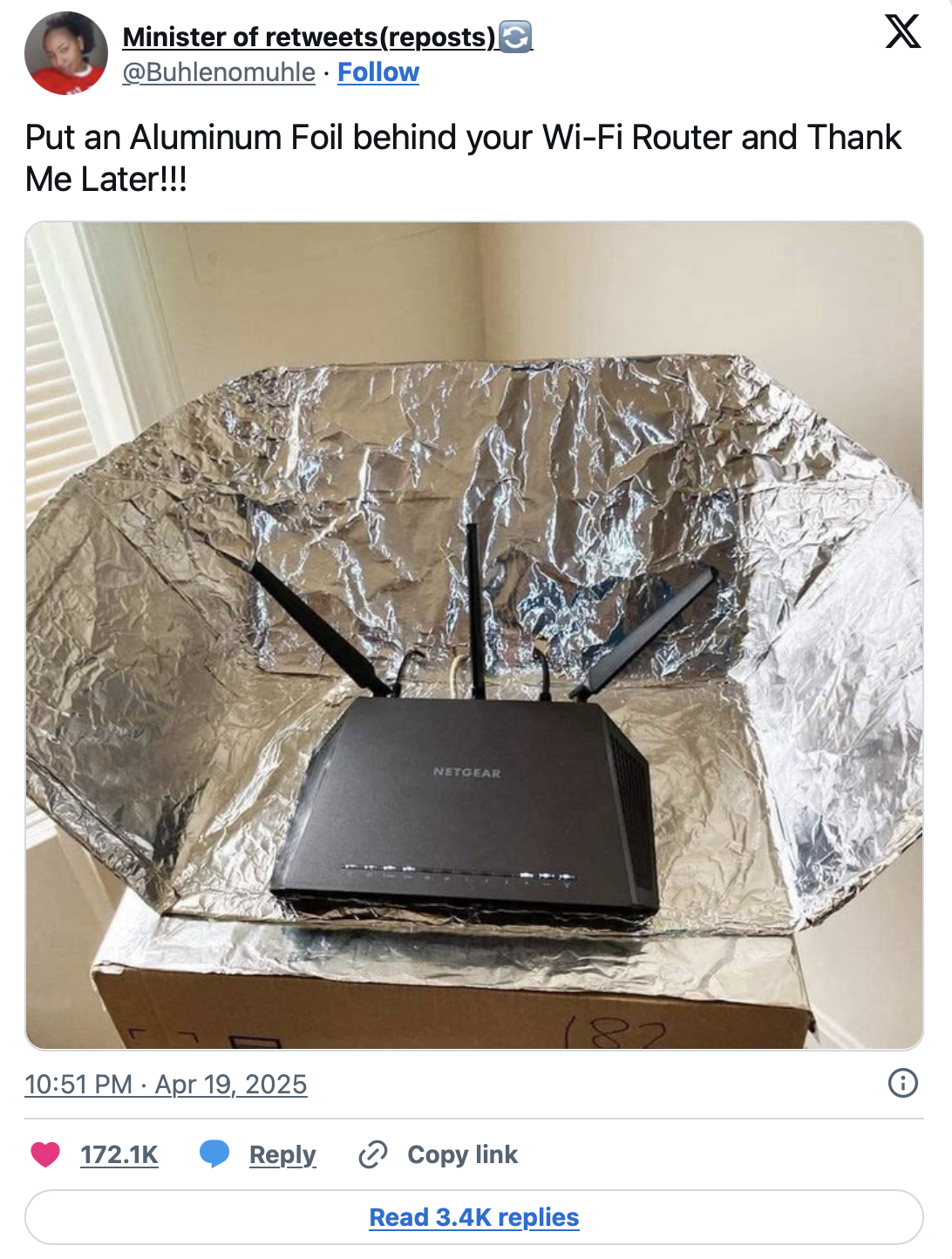
The glossy side is believed to reflect the antenna’s beams to a specific location, i.e., the region you’re suffering with.
Reader’s Digest’s Brooke Nelson Alexander decided to test this strategy and described the results.
She wrote, “Though it didn’t exactly work for me, it can’t hurt to try this approach before spending a lot of money on a Wi-Fi extender if you’re having internet connection issues. After all, it worked for Dartmouth researchers.
“I would venture to guess that this hack might be more effective at improving your internet speeds depending on the size of your space, the number and type of obstructions between your router and device, and your internet plan.”
Alexander cited 2017 research by Dartmouth College and Columbia University, which employed foil to form a ‘virtual wall’ to redirect Wi-Fi signals.
However, other individuals pointed out that the ‘hack’ might potentially worsen the connection in other rooms; thus, it does not appear to operate in every case.