Have you ever seen a film, read a book, or listened to music and thought, “How did they come up with that idea?” Even artists often struggle to trace the origins of their ideas due to the mysterious nature of the creative process, so it’s fascinating to hear directly from the source of a fantastic concept. If you’ve seen “Wicked” and wondered where the idea for the relationship between Elphaba (the Wicked Witch) and Glinda (the Good Witch) originated, the book’s author has revealed the exact moment it occurred to him.
The successful film “Wicked” is based on the 20-year-old hit stage musical based on the novel “Wicked: The Life and Times of the Wicked Witch of the West” by Gregory Maguire. While the musical is a shortened version of the 1995 novel, the main storyline—the genesis tale of the two witches from “The Wizard of Oz”—is central to both. In an interview with the BBC, Maguire described how Elphaba and Glinda’s friendship sprang to mind.
Maguire was visiting Beatrix Potter’s property in Cumbria, England, and reflecting on “The Wizard of Oz,” which he had enjoyed as a boy and believed could serve as an interesting foundation for a narrative about evil.
“I thought, ‘Alright, what do we know about “The Wizard of Oz” from our memories?'” stated the gentleman. “We have the house falling on the witch.” What do we know about the witch? All we know about the witch is that she has feet. I started thinking about Glinda and the Wicked Witch of the West.
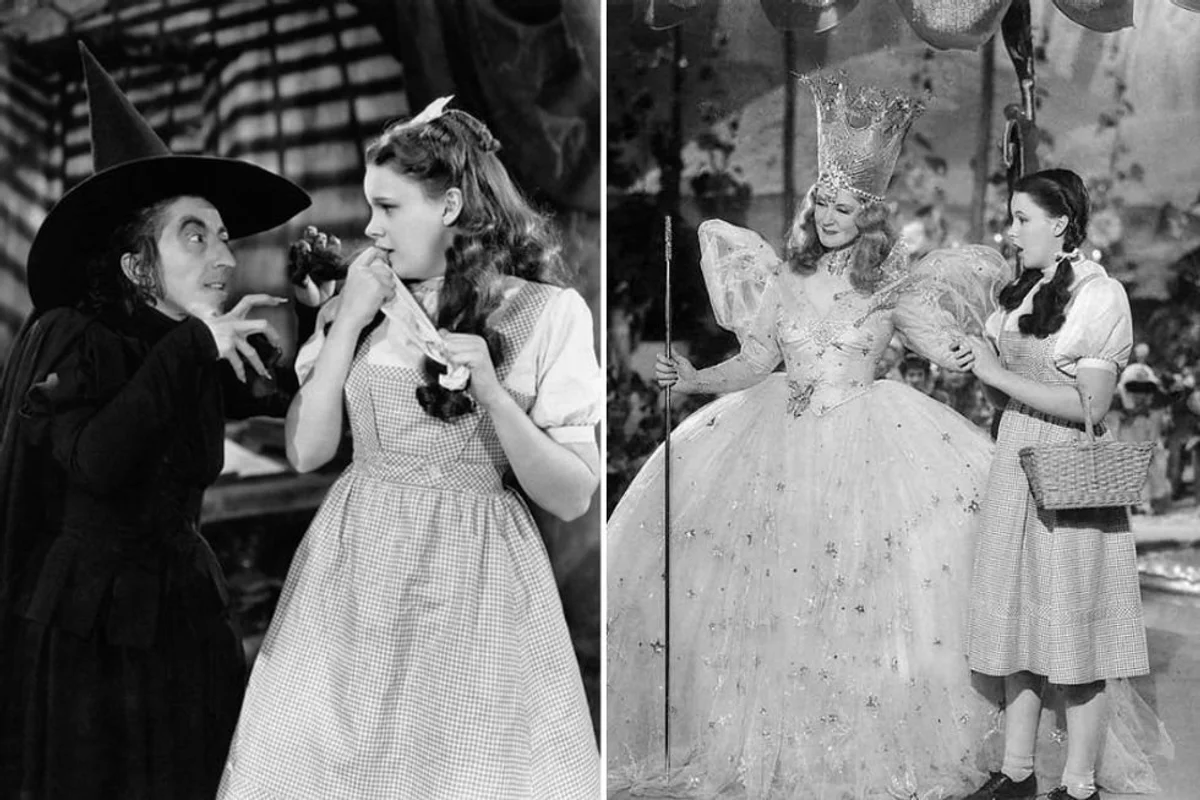
“There is one scene in the 1939 film where Billie Burke [Glinda the Good Witch] comes down looking all pink and fluffy, and Margaret Hamilton [the Wicked Witch of the West] is all crowed and crabbed and says something like, ‘I might have known you’d be behind this, Glinda!'” This was my memory, and I wondered why she was using Glinda’s first name. They’ve known each other. Perhaps they have known each other for a long time. Maybe they attended college together. And I dropped to the ground in the Lake District, laughing at the notion of them attending college together.”
Посмотреть эту публикацию в Instagram
In “Wicked,” Glinda and Elphaba, the Wicked Witch, meet as students at Shiz University, a wizarding institution. They are assigned as roommates, and while they first dislike one another, they gradually become closest friends. The tale becomes much more intricate from there (and the novel is darker than the stage play), but it is the character development of the two witches and their connection that forces us to question our assumptions about good and evil.
Maguire also explained to the Denver Center for Performing Arts what prompted him to utilize the “Wizard of Oz” characters in the first place.
“I was living in London in the early 1990s, just before the Gulf War began. I was intrigued to watch how my own blood temperature dropped after reading a headline in the generally cautious British daily, the Times of London: ‘Saddam Hussein: The New Hitler?’ I found myself ready to make an opinion regarding the Gulf War and the need for action against Saddam Hussein based on how that headline made me feel. The usage of the term “Hitler”—what a word! What it evokes! When, a few months later, six young schoolboys abducted and killed a toddler, the British press paid close attention to the circumstances. I got interested in the nature of evil and if people may be born bad. I briefly pondered creating a novel about Hitler but abandoned the idea due to my overall uneasiness with the realities of the period. But when I learned that no one had ever written about the second most terrible character in our collective American subconscious, the Wicked Witch of the West, I believed I had gotten a modest stroke of inspiration. Everyone in America knows who the Wicked Witch of the West is, but no one knows anything about her. There’s more to her than meets the eye.
Authors and artists—and their ideas—help hold a mirror up to humanity for us to view and reflect on who we are, and “Wicked” is one of those stories that helps us take a close look at what we’re seeing in that mirror. Thank you, Gregory Maguire, for taking us on a collective journey that not only entertains but also has the ability to influence how we perceive one another.