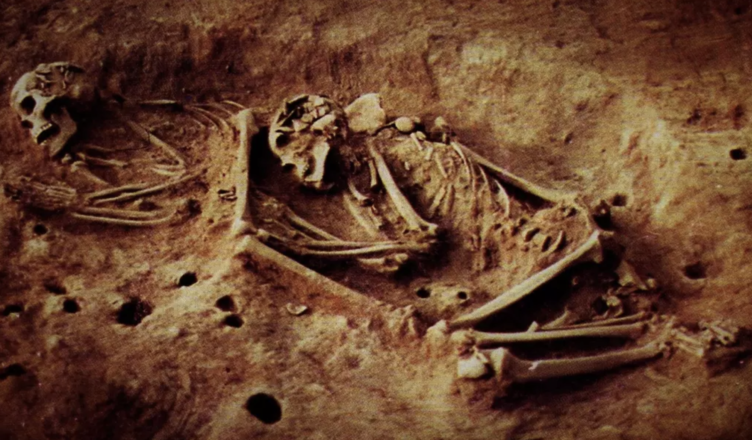
DNA from bones found by archaeologists that date back 6,000 years could cast doubt on everything we know about human life.
It is not every day that new knowledge emerges with the potential to dramatically rewrite human history.
But this has just happened.
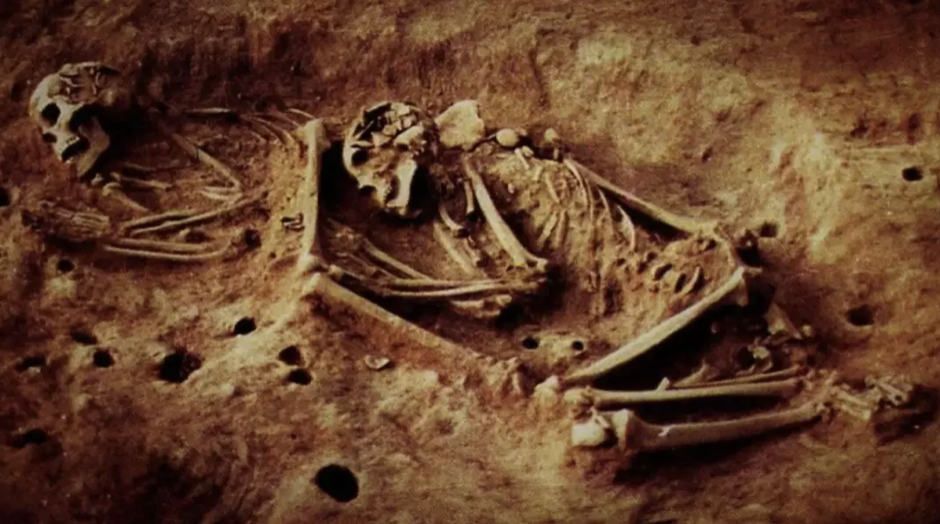
According to experts, the bones of hunter-gatherers in Checua, Colombia, contain DNA that does not match any Indigenous tribe in the region today.
The ancient preceramic site is home to the bones of individuals who have now been discovered to have a lineage that is completely extinct on the globe, and it may hold the key to learning more about the first humans to reach South America.
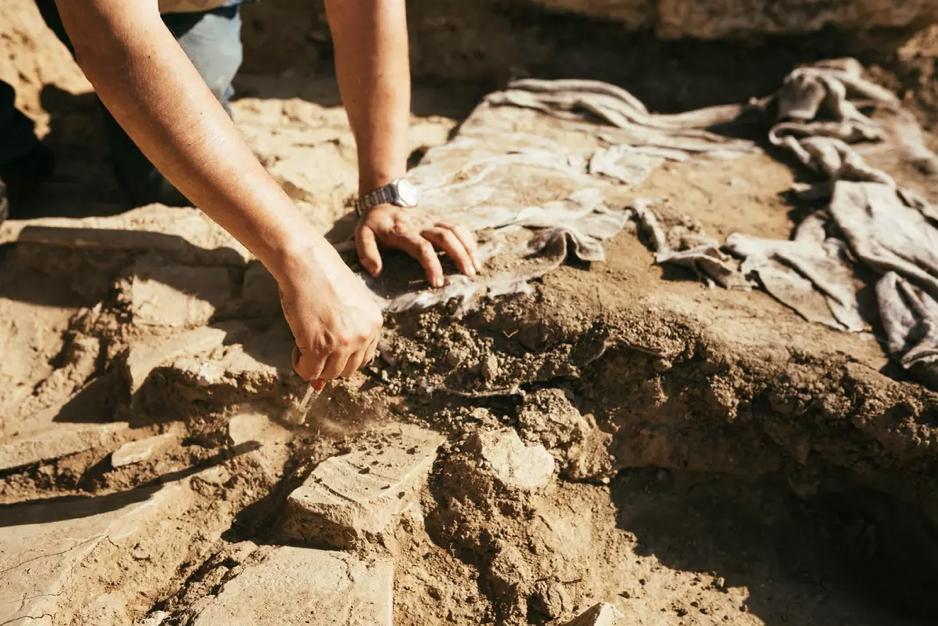
According to the archaeologists, the lineage identified in the DNA goes back to about 6,000 to 500 years and belongs to the Bogotá Altiplano people, providing them with a unique genetic history based on data obtained from 21 individuals.
Using DNA from their bones and teeth, the findings revealed that the earliest individuals at Checua had a specific ancestral signature that has been eradicated from the globe today.
Kim-Louise Krettek, main author and PhD student at the Senckenberg Center for Human Evolution in Germany, stated, “This area is critical to understanding how the Americas were inhabited.
“It was the land bridge between North and South America and the meeting point of three major cultural regions: Mesoamerica, Amazonia, and the Andes.”
According to the DNA investigation, the region’s early inhabitants were unrelated to any other ancient South American group, nor did they share genetics with North American populations.
Krettek added, “Our findings demonstrate that Quechua people are descended from the initial group that dispersed and differentiated swiftly over South America.
“We couldn’t discover any descendants of the early hunter-gatherers of the Colombian high plains; the genes were not passed down.
“That means in the area around Bogotá, there was a complete exchange of population.”
The study discovered that around 2,000 years ago, there was a rapid genetic change in the Bogotá highlands, possibly indicating the moment when Checua natives vanished and were replaced by a different group of people.
This new group’s DNA matches that of ancient Panamanians and present Chibchan-speaking communities in Costa Rica and Panama, but what happened to their forefathers remains unclear.
Krettek said they may have moved and lost their genes while reproducing, as no violence caused their extinction.
“In addition to technological advancements such as pottery, the inhabitants of the second migration most likely carried the Chibchan languages to what is now Colombia.” Branches of this language family are still spoken in Central America today,” said co-author Andrea Casas-Vargas from the Universidad Nacional de Colombia.
“That genetic traces of the original population disappear completely is unusual, especially in South America,” she said.
However, because western Colombia, Venezuela, and Ecuador have yet to be genetically analyzed, there is little evidence available about genetic changes and migration.
Krettek elaborated, “Ancient DNA from those areas will be crucial in understanding how humans migrated into South America.”
The study, published in the journal Science Advances, examined genetic material from five archaeological sites and discovered something unusual, making it the first of its kind.
According to Phys.org, senior research author Professor Cosimo Posth of the University of Tübingen stated, “These are the first ancient human genomes from Colombia ever to be published.”