
Beyoncé is one of the best-selling musicians in the world, has won a record number of Grammy Awards, and is now on a world tour that is shattering attendance records.
However, one economic expert contends that Queen Bey, as her throngs of admirers affectionately refer to her, is receiving credit for the most unexpected of accomplishments and is partially to blame for Sweden’s persistently high inflation.
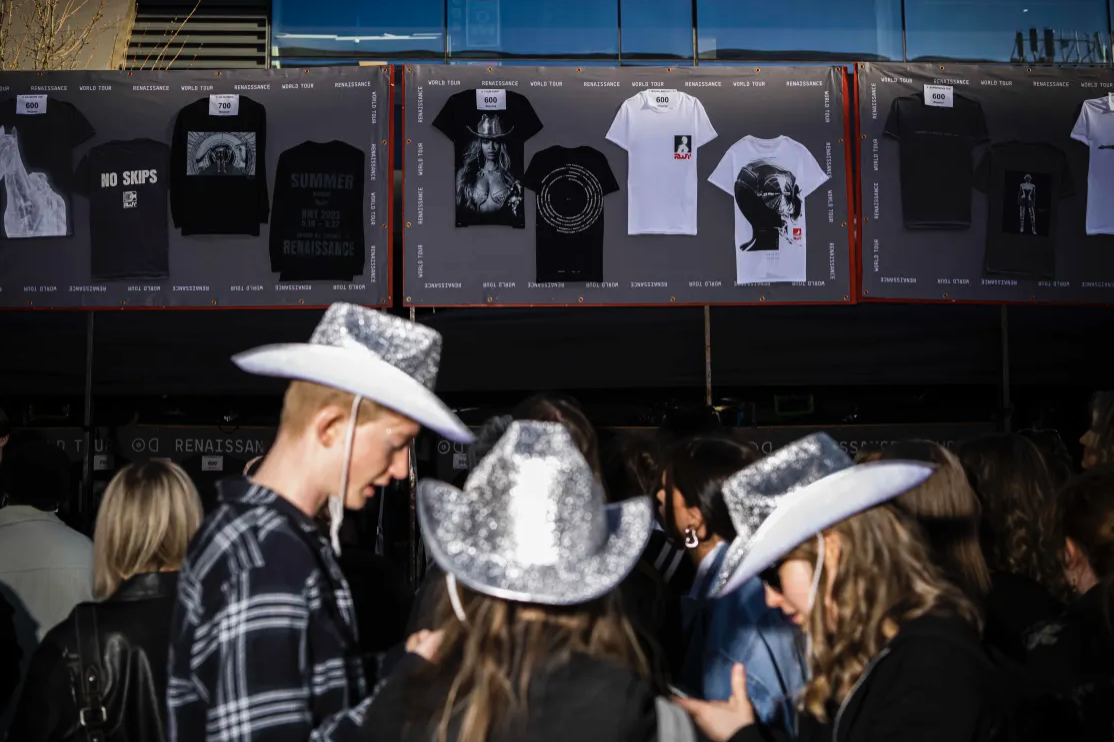
On May 10 and 11, the superstar’s ongoing Renaissance global tour made its debut at the National Arena in Stockholm. Fans traveled from all over the world, including the United States, to attend, partly due to cheaper tickets and partially out of pure enthusiasm.
According to Michael Grahn, head economist for Denmark’s Danske Bank in Sweden, the increase in accommodation rates and other expenses incurred by fans is in part to blame for Sweden’s inflation rate dropping by a less-than-anticipated 0.2% in May.
“Perhaps all that isn’t just down to her as there are other events taking place, but when you think about what was the cause, she is the prime suspect,” he said to NBC News.
We were informed a month ago that it was extremely difficult for her admirers to get lodging and that hotel rates had increased. It seems like a logical guess.
According to official figures, Sweden’s annual inflation rate decreased from 8.4% to 8.2% from April to May, excluding energy expenses. This was a smaller decrease than analysts had anticipated, in part because more people spent money on hotels and restaurants in May. According to economists, inflation will reach 7.8% in May.
Grahn clarified on Thursday that the flood of international Beyoncé fans into Sweden, which has a population comparable to North Carolina’s at around 9 million, was one of the reasons it hadn’t met that goal.
🇸🇪 Beyonce’s start of her world tour in Sweden seems to have coloured May inflation, how much is uncertain, but probably 0.2 p.p. of the 0.3 p.p that hotels/restaurants added. Perhaps also hiked concert ticket prices (recreation). Otherwise as expected.
— Michael Grahn (@MichaelGrahn1) June 14, 2023
Some American fans looked for less expensive choices in Europe because tickets for the American leg of the tour might cost up to $900.
Other countries, according to Grahn, have “a lot more accommodations to cope when all these fans flood the country.”
“It might be the case that when there is a lot of foreign demand coming to Sweden, that could contribute to pushing up prices because it is anticipated as cheap—concert tickets and everything else is cheap for foreigners.”
The Swedish city of Gothenburg, which is much smaller than Stockholm, hosts Bruce Springsteen for three nights at the end of the month, raising concerns about a similar economic impact.
It was not possible to quickly contact Beyoncé’s team for comment.
However, not everyone was convinced of her ability to influence the market.
While the monthly 8.7% spike in lodging expenses in May aligns with the Beyoncé theory, James Pomeroy, a global economist at HSBC Bank, stated that the cost of meals, package vacations, and pets nationally were also to blame for the yearly results.
Beyoncé may have caused a shock to one month’s worth of statistics, but that doesn’t mean she’s to blame for Sweden’s inflation rate, which is far higher than the central bank’s aim.

According to Marcus Widén, an economist at the Nordic corporate bank SEB Group, expenditure on entertainment and lodging was high in May, but not to the extent that they could be considered historical outliers.
When I was going in May, I did in fact note that hotel rates were exorbitant, and this was not in Stockholm. Therefore, even though Beyoncé was undoubtedly a tremendous lift, I believe there was a lot of pressure on this industry in May, he added.
Since Russia’s invasion of Ukraine disrupted the wholesale energy market and distribution networks, Sweden has seen significant inflation and increased household expenses, like many other European nations.
This Monday, the statistics office of the European Union verified that all of the member states that use the euro had entered a recession, with gross domestic product down by 0.1% in both the last three months of 2017 and the first three months of 2018.
But in order to maintain the krona, Sweden decided not to accept the euro in 2003. Additionally, it fared better than some of its neighbors during the COVID epidemic, in part because it continued to operate its businesses and public facilities.
And as for Grahn, he doesn’t anticipate continuing to be of interest to Beyoncé fans or the international press. He also wouldn’t call himself a fan of hers.
He laughed and replied, “No, I’m probably too old to be one of her admirers.
I’m used to being quoted in Swedish media on economics and other topics, but not on this magnitude. Of course, it’s lovely, but I suppose it’s just a one-time occurrence, and they’ll quickly forget about me.