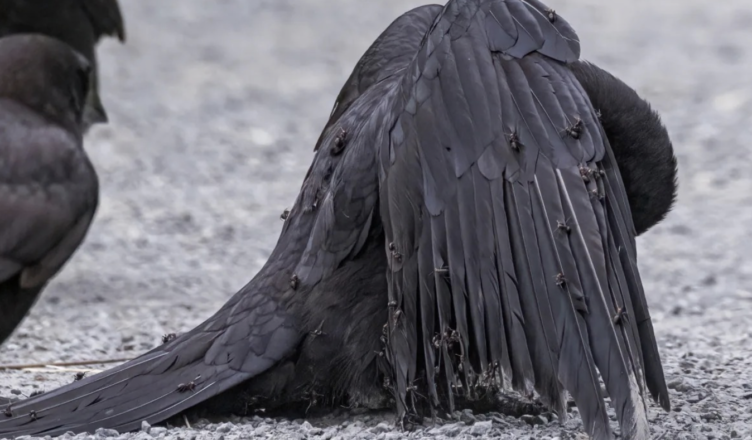
Tony Austin, a Canadian photographer, stumbled upon the intriguing phenomenon of “anting” while capturing images, leading to his unexpected viral fame.
In the renowned Swan Lake Nature Reserve in Victoria, Tony found himself amidst a flock of crows, one of which caught his attention due to its peculiar behavior. This particular crow seemed to be engaging in a dust bath, yet its actions appeared erratic, with its wings lowered to the ground.

After a brief airborne interlude, the crow returned to the dirt path, prompting Tony’s curiosity. “I thought maybe he was in trouble, but none of the other crows seemed bothered, and after a minute or two they all flew and landed in some trees,” remarked the photographer.
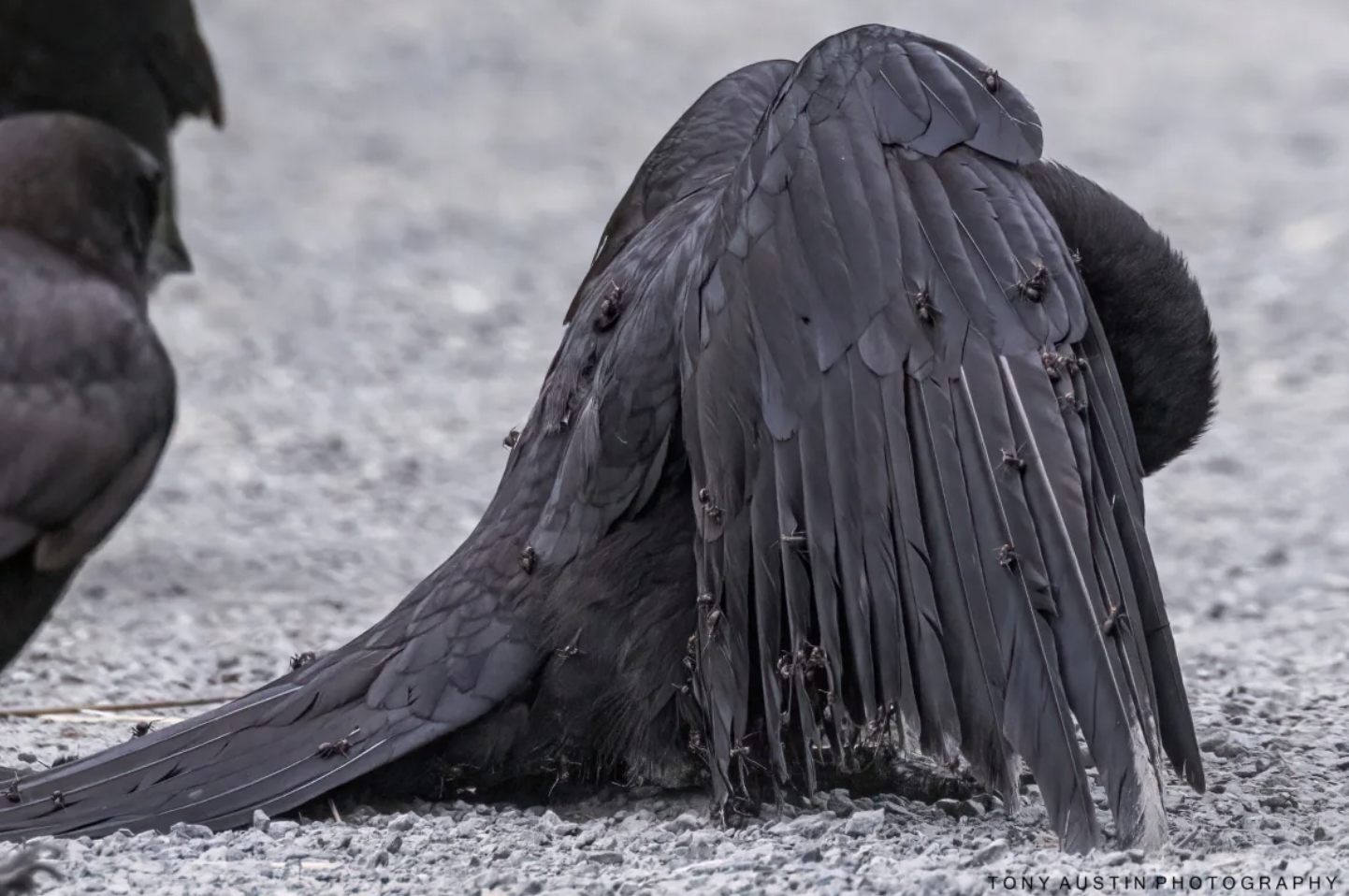
Tony, intrigued, crouched down to capture close-up shots, only realizing the true extent of his discovery upon reviewing the images at home. To his surprise, the crow was adorned with crawling ants—an observation that sparked a wave of interest when he shared the photos on Facebook.
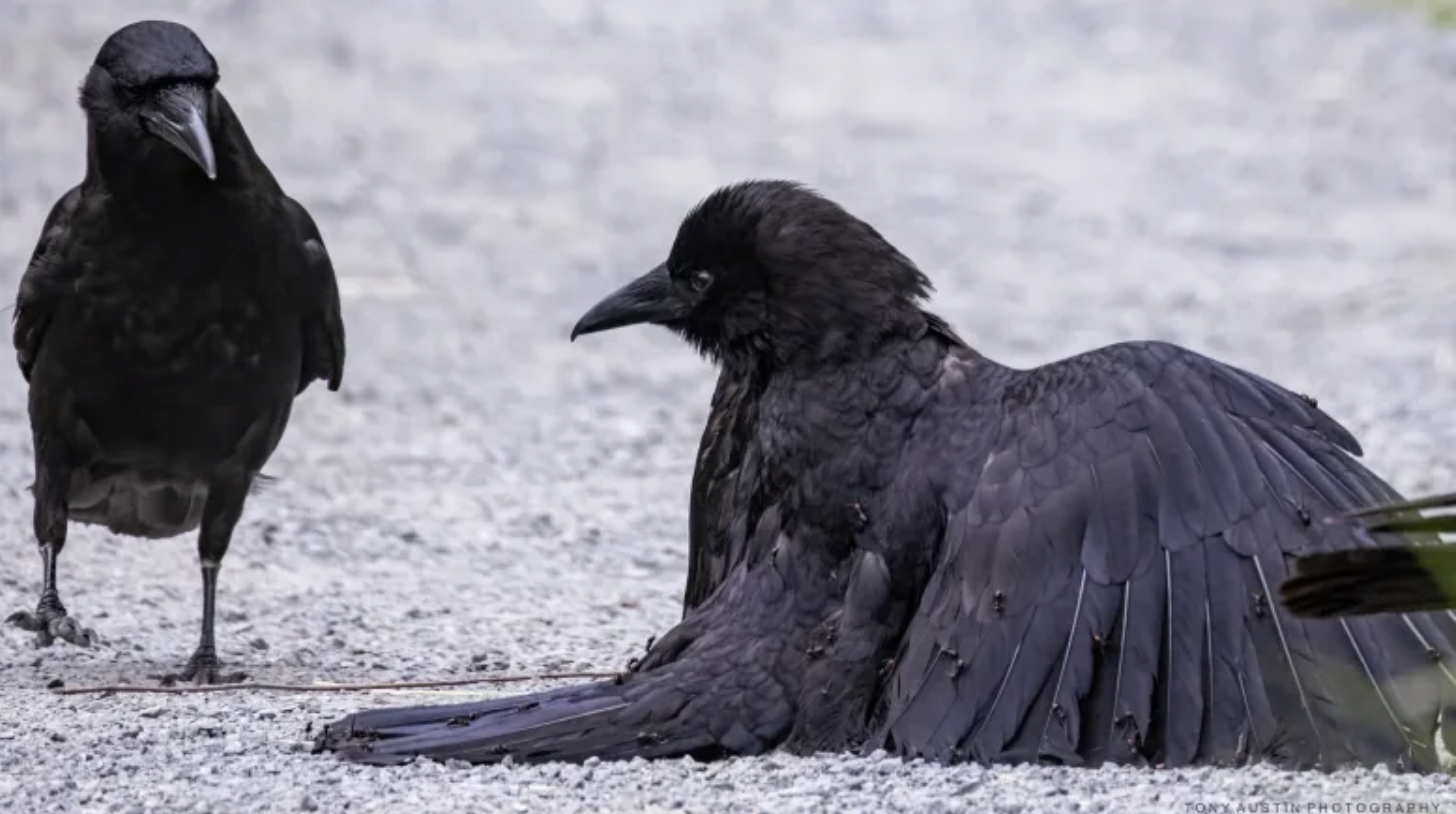
The phenomenon of “anting” dates back to the mid-1800s, initially documented in turkeys. However, experts remain puzzled by its exact purpose. Some theories suggest that birds engage in anting to soothe irritated skin during molting, while others propose that ants assist in managing feather parasites.
David Bird, an emeritus professor of animal biology at McGill University, even suggests that insects may serve as a potential food source for birds during anting. Despite these hypotheses, conclusive explanations have eluded scientists thus far.
For Tony, the unexpected success of his photographs brought a sense of fulfillment. “Photography has always been my passion, and I’ve pursued it throughout my life. It’s gratifying to shed light on this little-known and enigmatic behavior,” he expressed. “I’m also grateful to this crow and its companions for granting me an unforgettable experience.”