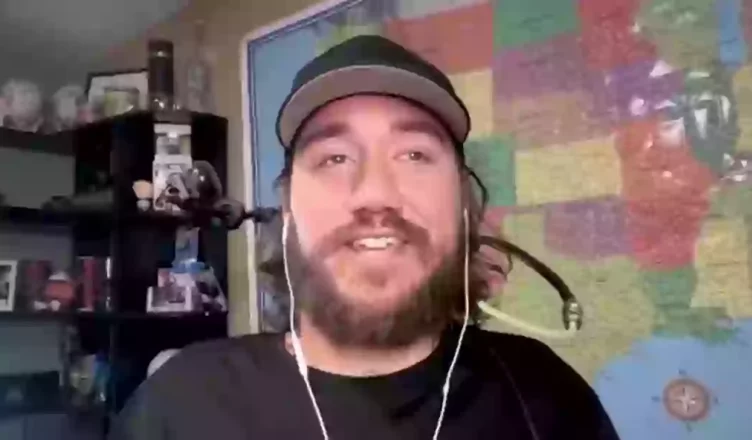
The first individual to be implanted with Elon Musk’s Neuralink device demonstrated the ability to sketch with his mind.
Noland Arbaugh of Arizona was paralyzed below the shoulders after a diving accident while working as a camp counselor in 2016.
Billionaire Musk founded his US neurotechnology company the same year, but it wasn’t until May 2023 that the Food and Drug Administration (FDA) approved Neuralink to test its implants on humans.
Last January, Noland became the first person to be implanted with the gadget.
The brain-computer interface (BCI) chip, which is smaller than a 50-cent coin, is placed into the skull via minuscule cables.
It works by targeting particular neurons, while ultra-thin cables with electrodes capture brain activity and transfer it to external devices via Bluetooth, allowing people to operate computers using just their thoughts.
Currently, just three individuals in the world have a Neuralink, which Musk believes will swiftly rise.
The primary goal of this technology is to restore autonomy in individuals with paralysis and other limitations.
But Musk also hopes that Neuralink will one day be utilized for ‘human/AI symbiosis.’
Last week I spoke to Noland Arbaugh @ModdedQuad about his journey & his views on a BCI future.
Then we drew some lines together on a shared canvas: him controlling the cursor using his thoughts (via @neuralink), and me – the old school way, using a computer trackpad. pic.twitter.com/vQ4mgJzExP
— Velco Dar (@VelcoDar) June 17, 2025
Essentially, it aims to enhance our memory and cognitive skills, while also enabling us to perform somewhat frightening tasks such as storing and retrieving memories.
Even though we’re still a long way off, Noland has kept curious social media fans updated on his progress.
He previously demonstrated his ability to play chess and video games and study languages despite his physical limitations.
More recently, he chatted with Velco Dar, an entrepreneur and author of Neuraleap: How BCI Can Change Communication, Commerce, and Government.
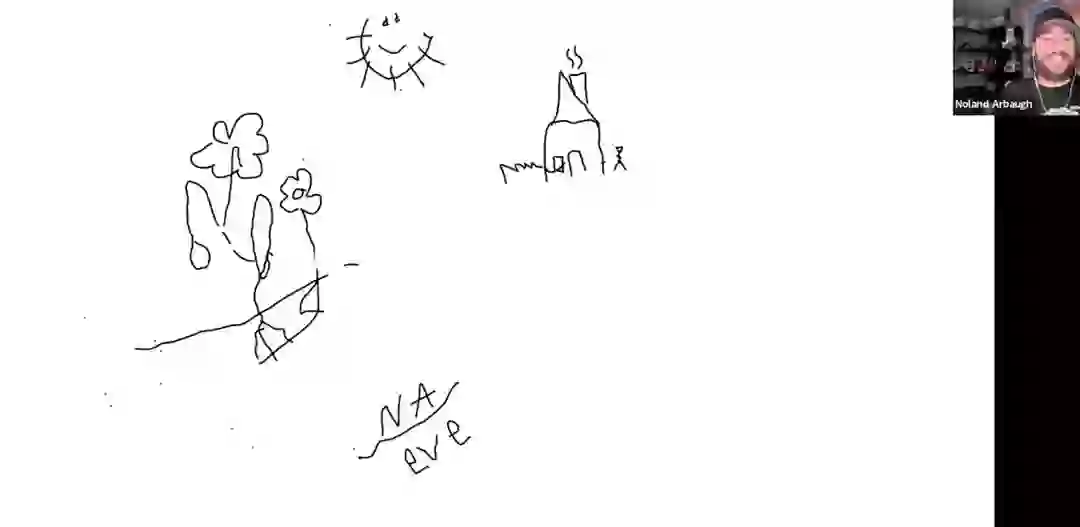
During the conversation, Noland demonstrated how he utilizes the device’s N1 chip to sketch digital photographs on the screen.
Despite admitting that he is “not artistic at all,” Noland skillfully sketched flowers, the sun, and a home with only his thoughts to operate a cursor.
As Noland began painting the stems of a couple of flowers, Velco noted how he thought the movement was caused only by his ‘amazing’ sight.
Noland responded, “I often forget that people aren’t accustomed to witnessing this.” I thought, “This is my life; this is how I use it.”
He went further: “I use it around people who’ve never seen it before, and their jaws drop.”
Noland then explained to Velco how he mentally ‘clicks and drags’ the pointer, describing it as almost like pushing the controls.
Then, when he thinks about clicking, he considers many potential actions.
The first imagines flicking his thumb to the left, while the second imagines flicking his pinky to the right.
You can observe Noland’s procedure in the video above, starting at the 45-minute mark.
It is extremely interesting to observe, and it is undoubtedly a great step forward for individuals who have suffered life-altering injuries.