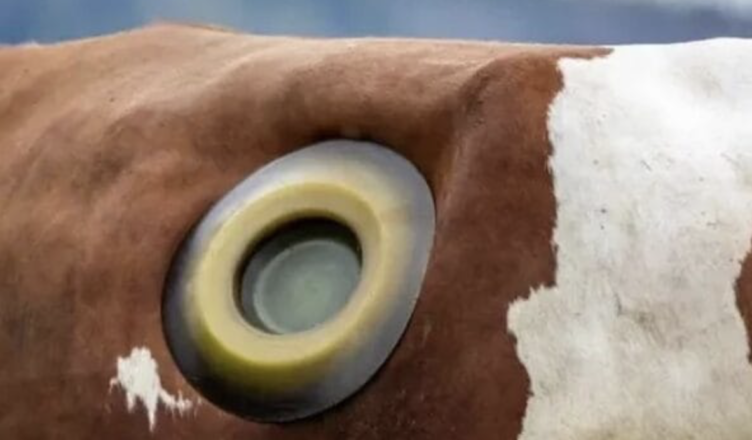
When you think of a “porthole,” you generally see a little circular window on a ship or airplane, correct? You might be surprised to learn that cattle also utilize portholes. Yes, cows. For decades, farmers and scientists have used portholes, sometimes known as cannulas, to enter cows’ stomachs.
Despite not being widely known, this technique has been in use for more than a century and serves an important purpose.
What precisely are cowportholes?
A cannulated cow, also known as a fistulated cow, is a cow that has had surgery to insert a unique device called a cannula into its side. It is simply a surgical incision made in the side of a cow’s stomach.
Consider it a tiny, sealed “porthole” that is normally sealed with a plastic ring.
So, why would someone do this? Primarily for research and veterinary treatment.
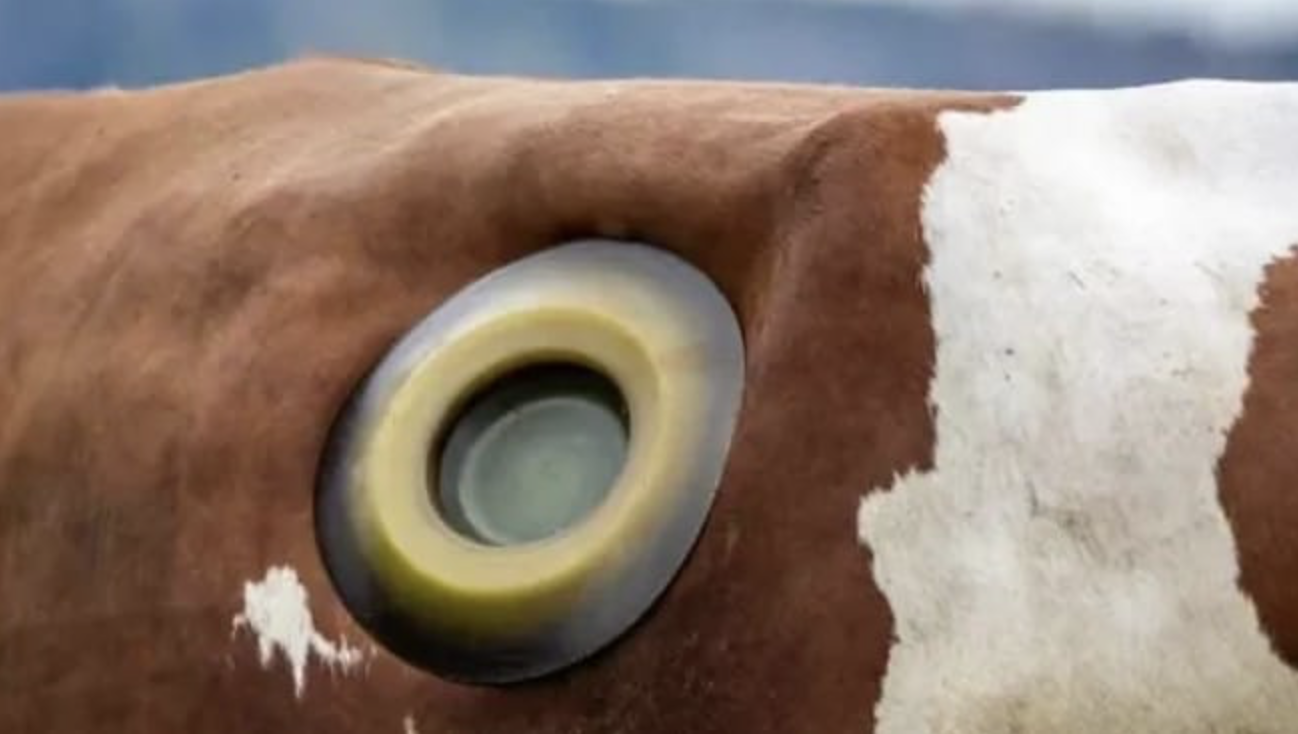
This arrangement allows scientists to analyze digestion, feed efficiency, and even how cows metabolize different diets without having to constantly sedate or operate on the animal. Doesn’t it seem rather wild?
The practice dates back to the 1920s.
The technique of placing portholes in cows was first described in 1928 by Arthur Frederick Schalk and R.S. Amadon of North Dakota Agricultural College.
Researchers began utilizing portholes to investigate bovine digestion in greater detail. By introducing a porthole, scientists were able to gather samples of partially digested food, gases, and bacteria. This research revealed insights into how cows metabolize food and how to feed them more efficiently.
For example, a 1939 research of cannulated cows discovered that the pH level in a cow’s rumen varies throughout the day, with the most alkaline level occurring just before eating.
Why put portholes in cows?
Farmers and scientists insert portholes into cows to examine and enhance their digestion and general health.
They can build diets that improve milk output, increase growth, and even minimize hazardous emissions like methane by studying how cows digest various meals. It is a method intended at increasing farming’s sustainability and productivity.
But that is not all. According to researchers, cows with portholes can live long, healthy lives following their first healing time. While the treatment is painful and has hazards, many experts believe that the cows do not experience long-term discomfort and can live for up to 15 years.
Prior to the treatment, the cow is forced to fast for 24 hours, without eating or drinking. When it comes time for the operation, the cow remains standing and conscious, but a local anesthetic is administered to numb the region.
A veterinarian then surgically opens a tiny hole in the cow’s side and inserts a rubber cannula, which functions as a porthole directly into the stomach. The entire operation is meticulously executed to reduce tension and agony, yet it remains a very contentious technique.
A step towards boosting food output.
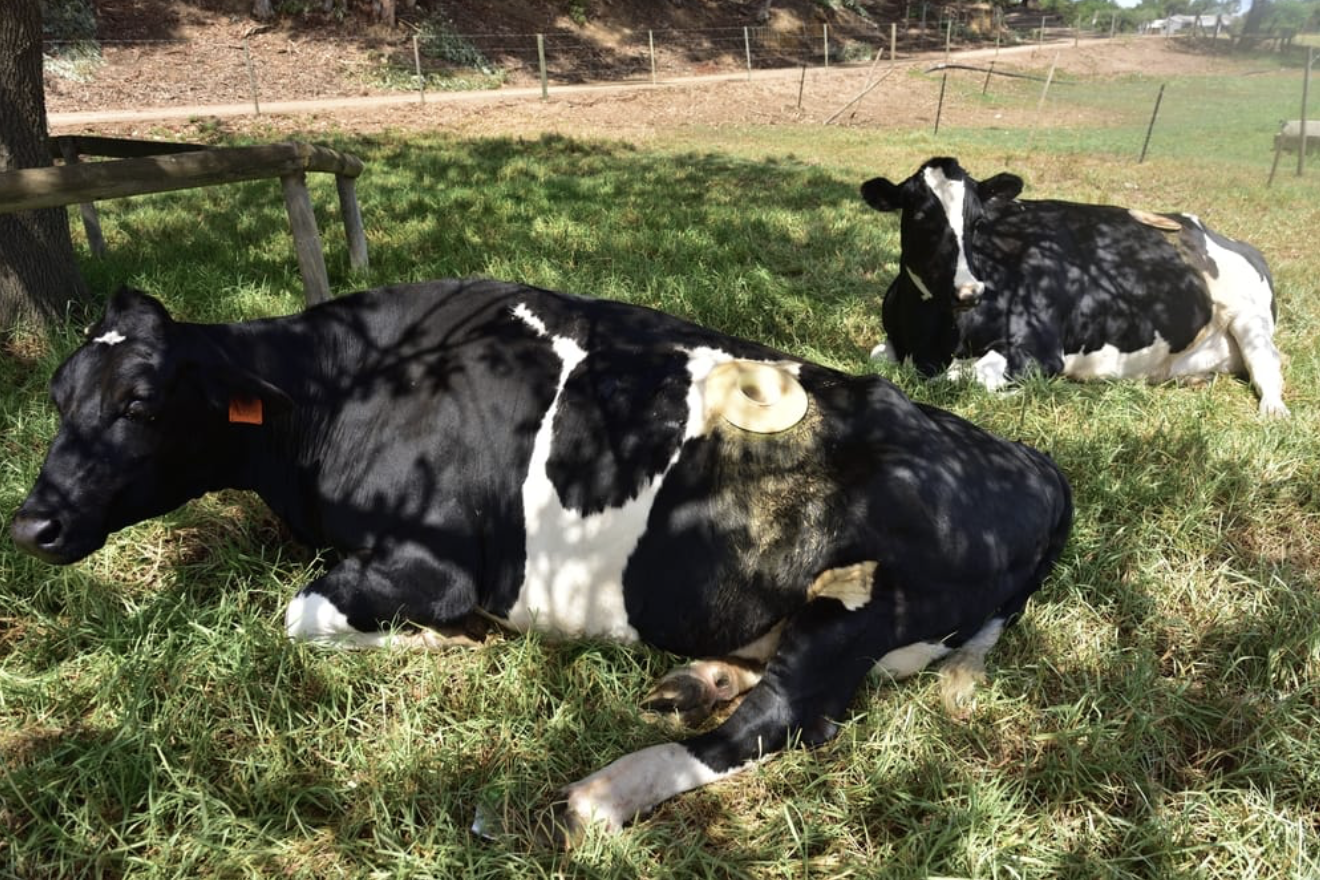
The larger purpose behind the portholes is obvious: increased milk output and more sustainable farming.
Farmers may feed cows in methods that reduce environmental effects, such as lowering methane emissions, which contribute significantly to climate change. Furthermore, this discovery may help reduce the need for antibiotics, making milk production cleaner and more efficient.
But is this ethical?
While the approach clearly improves science and agriculture, it is not without criticism. Animal rights organizations, such as L214 in France, say that the surgery is intrusive and unneeded.
Some see it as a sort of exploitation, calling it harsh and unjust to the animals involved.
“Many of them already have lameness, infections, and lung and heart issues. Despite this, we continue to press forward rather than breaking the loop. “It’s time to call this unfair system into question,” L214 stated, posting a video showing a researcher inserting their hand into a porthole.
As a result, there have been demands to put an end to the practice, with petitions circulating in several nations to permanently abolish cow portholes.
People for the Ethical Treatment of Animals (PETA) has opposed the use of cow cannulation, citing the surgery’s four- to six-week recuperation period, which they claim isn’t necessarily in the animal’s best interests.
The organization claims the surgery is not only intrusive but also fundamentally wrong, claiming, “Cows are intelligent and sensitive animals who don’t deserve to be mutilated for any reason.”
PETA said, “While some claim that this transfer can improve the health of cows, the procedure seems mostly to benefit the meat and dairy industries’ bottom lines — optimizing food and digestion for animals who will ultimately be exploited and slaughtered.”
Alternatives to porthole
As technology progresses, there are several alternatives to employing portholes to investigate digestion. New lab models simulating the cow’s digestive tract are being created.
These models imitate the rumen environment, providing insights without requiring a live animal. However, many researchers argue that having direct access to a live cow gives data that lab models cannot mimic.
Portholes on display—and reaction.
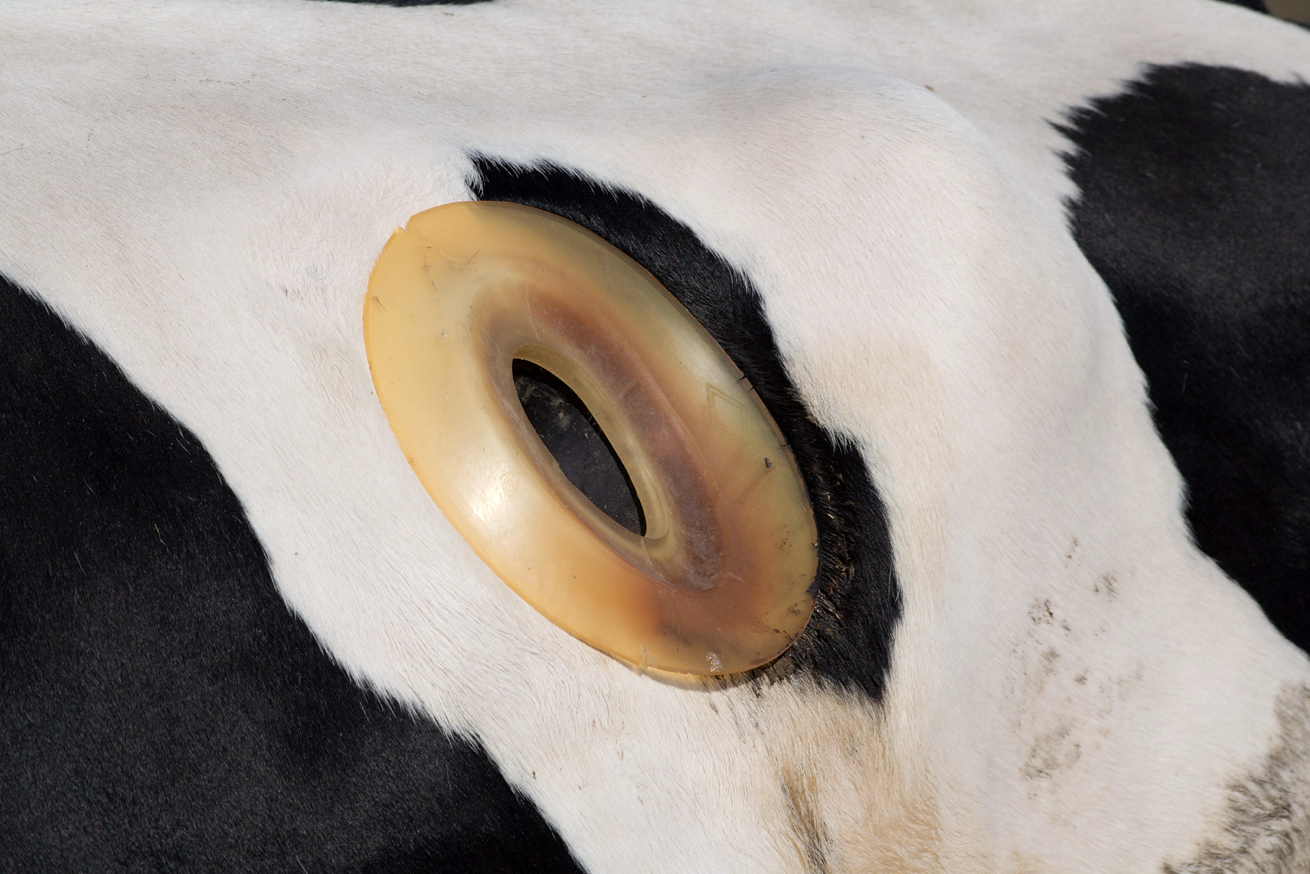
In some countries, cows with portholes are even displayed during agricultural fairs. Visitors may examine these cows up close and even reach inside their stomachs to witness the digestive process firsthand.
These demonstrations are intended to educate the public, but they have provoked controversy and protests, with many asking if such displays are essential or merely exploitative.
In North America, certain veterinary colleges, major animal hospitals, and farms preserve healthy cows with portholes as living donors for a procedure known as a “microbiota transplant.” In layman’s words, veterinarians physically reach into the cow’s stomach and scoop out some of its rumen contents (rich in beneficial bacteria) to give to a sick cow whose digestive tract isn’t functioning properly. Transfaunation is a procedure that restores cow gut health.
However, across the Atlantic, things are handled completely differently. In Europe, surgically implanting a porthole in a cow is commonly regarded as unethical.
Instead, veterinarians use a long, flexible tube with a metal filter tip — similar to a large straw — to extract stomach fluid. Veterinarians pass this instrument down the cow’s throat and into its stomach, often collecting up to five liters of fluids. It is less intrusive, but some argue not as effective.
Animal welfare versus agricultural advancement.
The use of portholes on cows sparks a bigger issue about animal welfare in agriculture. While proponents believe that this study improves animal health and sustainability, detractors contend that it emphasizes industrial profits over animal welfare. The debate is unlikely to go away very soon, especially if more people become aware of the practice.
What are your thoughts? Should we keep using portholes on cows for research, or is it time to take a more ethical approach? Let us know in the Facebook comments!