In biblical archaeology, one of the most persistent concerns has been the whereabouts of the remnants of Noah’s Ark. The Bible claims that a gigantic wooden vessel known as Noah’s Ark saved Noah, his family, and pairs of every animal species from a cataclysmic flood that flooded the Earth around 5,000 years ago. It has proven challenging to use scientific evidence to establish the historicity of this myth, despite the fact that it has long been at the center of many theological doctrines. Archaeologists believe the location of Noah’s Ark is one step closer to confirmation, but new findings have revived the long-standing hunt.
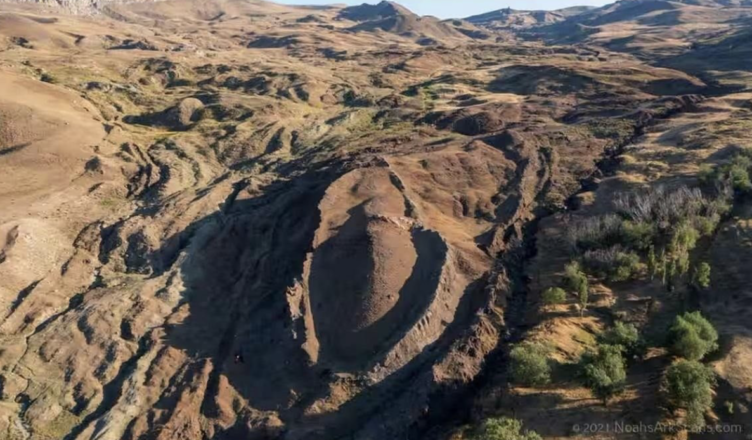
The central location of this archaeological investigation is in Turkey, specifically in the Doğubayazıt region of Ağrı, where since 1956 a mystery geological feature fashioned like a boat-shaped mound has been the subject of research. This place fits the biblical account of how, following a 150-day flood that wiped out all life on Earth, the Ark landed on the “mountains of Ararat” in Turkey. Shaped like an ark, the mountain itself rises to an astonishing 16,500 feet.
The trip, which began in 2021 and is still ongoing, was led by a team of experts from Istanbul Technical University (İTÜ), Andrew University, and Ağrı İbrahim Çeçen University (AİÇÜ). The major goal of the study is to analyze rock and soil samples collected from the site to look for conclusive evidence that could point to the existence of Noah’s Ark.
The team collected thirty samples of soil and rock fragments from the site in December 2022, and the ITU laboratory analyzed them. The preliminary results had researchers very enthused. The samples contained clayey and marine components, as well as seafood remnants. Researchers claim that the data unequivocally demonstrate that people lived at the boat-shaped mound between 3000 and 5500 BC.
Dating human activity to this age is very crucial because it roughly aligns with the biblical date of the Great Flood, which occurred about 5,000 years ago. Scholars caution that further in-depth research and analysis are necessary to confirm the presence of Noah’s Ark at this location.
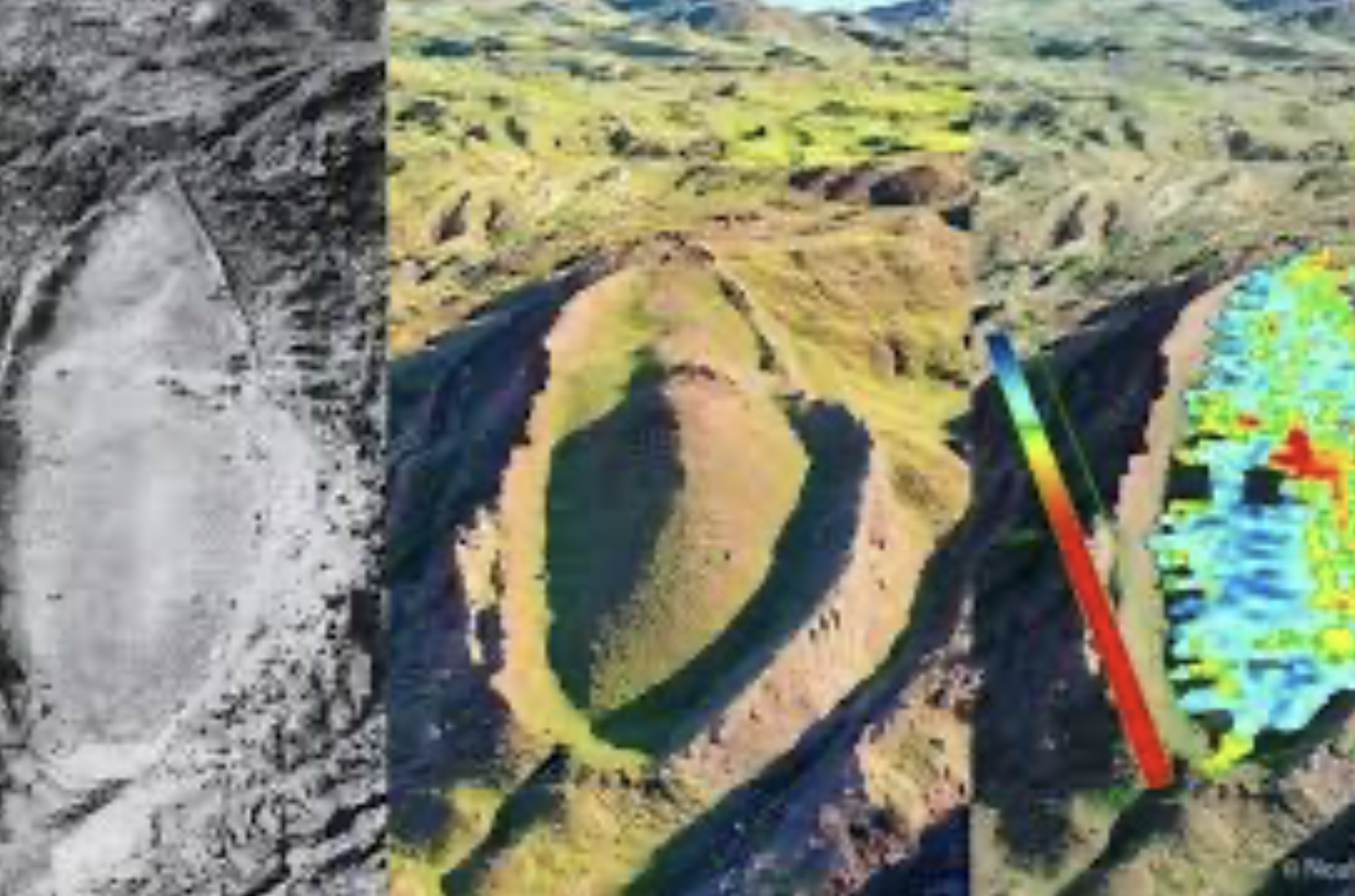
“The preliminary results of the investigations indicate that human activity has been in the area since the Chalcolithic era, which occurred between 5500 and 3000 BC,” AİÇÜ Vice Rector Professor Faruk Kaya said in response to the findings. We are aware that Prophet Noah’s Flood occurred 5,000 years ago. In this community, dating was also a common practice. The results of the laboratory testing proved this. Based on the dates, it is impossible to say that the ship is here. We have a tremendous deal of work ahead of us to clarify this.
It’s vital to keep in mind that, exciting as these findings may be, they don’t provide conclusive evidence for the existence of Noah’s Ark. Given the skepticism surrounding this quest, the scientists on the expedition are committed to conducting thorough and rigorous scientific studies in order to fully authenticate their results, given the skepticism that surrounds this quest.
Mount Ararat’s geological past is a point of contention in the debate about the Ark’s location. Ph.D. holders in philosophy from the University of Sydney and young Earth creationist Dr. Andrew Snelling have argued that Mount Ararat cannot be the Ark’s destination because the mountain arose after the flooding subsided. This difference in interpretation illustrates the intricacy of the Noah’s Ark narrative and the range of perspectives that surround it.
Biblical archaeology continues to be a challenging and contentious field when it comes to locating Noah’s Ark. Some individuals approach the story with skepticism, focusing on the metaphorical and symbolic elements found in religious texts, while others find the intriguing prospect of uncovering one of the most renowned boats in history captivating.
Regardless of the outcome of this ongoing archeological investigation, the hunt to confirm the existence of Noah’s Ark is proof of humanity’s insatiable curiosity about unlocking the mysteries of our past. It serves as a reminder that the pursuit of knowledge and understanding is essential to the human experience, even in the face of challenges presented by science.
In conclusion, the Turkish archeological investigation has brought us one step closer to possibly confirming the existence of Noah’s Ark. By examining soil and rock samples, scientists discovered evidence of human settlement from a period closely associated with the biblical narrative of the Great Flood. To be clear, further investigation is necessary to establish the presence of Noah’s Ark at this site beyond a reasonable doubt. All the same, we must welcome these findings with tempered optimism. Regardless of the result, this investigation exemplifies the enduring fascination with unraveling ancient mysteries and investigating the interplay between religion, history, and science.