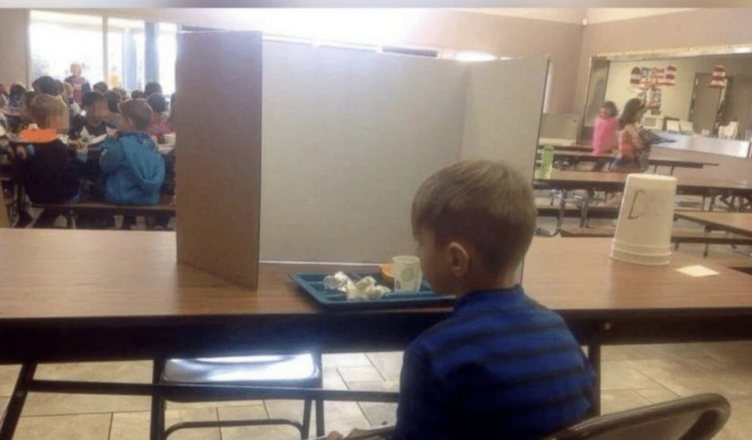
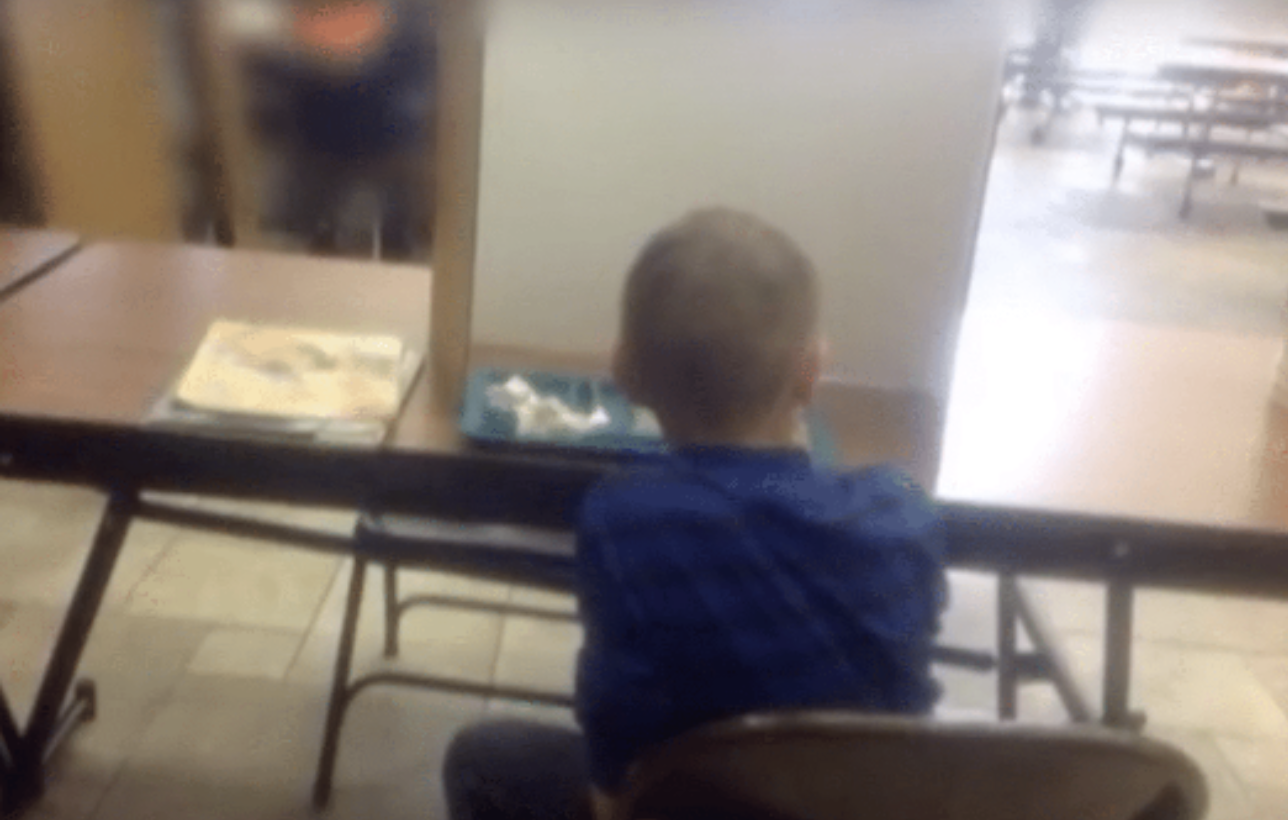
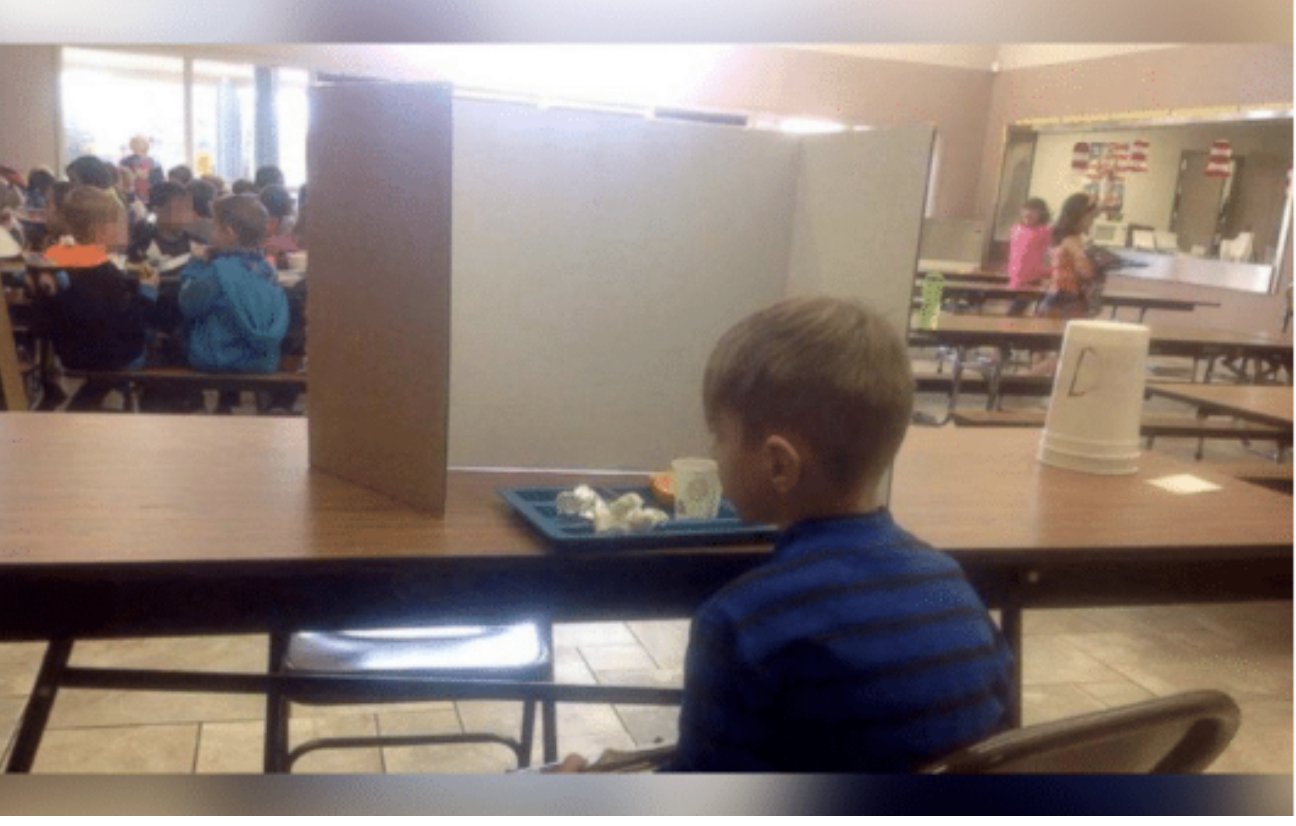
In 2015, a 6-year-old boy named Hunter from Grants Pass, Oregon, experienced public humiliation at school due to tardiness caused by car troubles. His mother, Nicole, visited him during lunch, only to find him isolated behind a white divider with a cup marked “D” for detention, tearfully sitting alone.

Shocked and dismayed by her son’s treatment, Nicole took a photograph and shared it on Facebook. The post quickly went viral, sparking widespread community outrage. The school’s policy of publicly shaming Hunter garnered criticism through numerous calls and negative reviews.
The Grants Pass community rallied to support the family, with strangers coming together to address their car issues and ensure Hunter would not face tardiness again. When Nicole and her family visited the repair shop, they were astonished to learn that the community, along with local businesses and a radio host, had collaborated to provide them with a dependable Chrysler van.
The family received the keys to the minivan, a gesture that left them surprised and appreciative. The community’s generosity not only solved their transportation challenges but also exemplified the transformative impact of collective kindness.

Hunter’s story instigated positive changes at the school. The practice of public shaming was reconsidered, leading to the establishment of a supervised classroom for detention to spare students from humiliation in front of their peers. The incident underscored the influential role of social media and showcased the compassion and solidarity a community can extend in challenging situations.