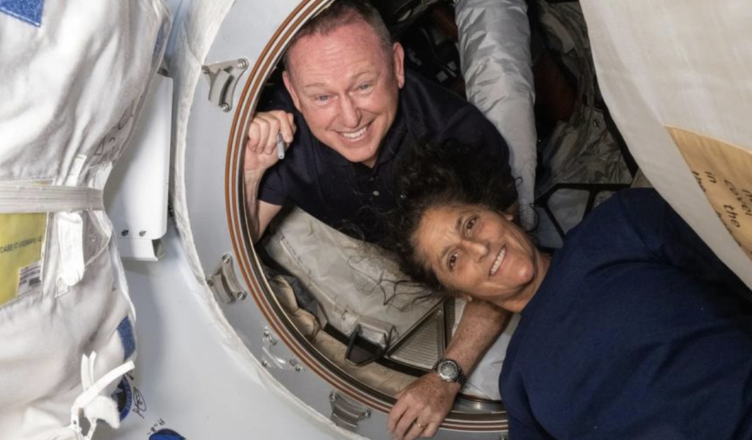
NASA is considering detaining the two astronauts who flew Boeing’s spacecraft to the International Space Station until February due to problems found during the voyage.
On Wednesday, the agency announced that they are currently exploring alternative methods to safely return NASA astronauts Butch Wilmore and Suni Williams to Earth, but they have not yet developed a plan. However, authorities have said more openly than before that they may choose to employ a SpaceX capsule instead.
“Our preferred option is to return Butch and Suni on Starliner,” said Steve Stich, manager of NASA’s Commercial Crew Program, at a news conference on Wednesday. “We’ve done the planning to have other options, and we’ve been working with SpaceX to make sure they’re ready to respond.”
Wilmore and Williams arrived at the space station on June 6 on the first crewed test flight of Boeing’s Starliner spacecraft. The intended idea was for them to remain in space for roughly a week. However, difficulties with five of the Starliner’s thrusters, as well as helium leaking from the capsule’s propulsion system, have left the astronauts stuck for more than two months as experts on the ground gather data and debug.
The agency intended the mission to be the penultimate step before certifying Boeing to conduct routine crewed flights to and from the ISS. The outcome of the process is currently unknown.
NASA did not provide a timeline for the astronauts’ potential return in Boeing’s capsule, but Stich stated that they anticipate a final decision by mid-August.
Meanwhile, NASA and Boeing have postponed the launch of one of SpaceX’s Dragon capsules, scheduled to transport four additional crew members to the space station later this month, to give them more time to address the Starliner issues. NASA has delayed the SpaceX mission, known as Crew-9, by nearly a month. NASA officials said they might change the plan and send two crew members into orbit instead of four, then use the capsule to return Wilmore and Williams home.
According to Ken Bowersox, associate administrator of NASA’s Space Operations Mission Directorate, there have been differences on how to safely return the astronauts to Earth.
“I have to admit that sometimes when we get disagreement, it’s not fun,” says Bowersox. “Having those debates can be difficult, but it’s what makes us a successful business and will help us make smart decisions when we approach that point in the future. And I don’t believe we’re too far away from making that decision.”
If Wilmore and Williams return home in a separate spacecraft, mission management might make software changes to the Starliner, allowing it to undock from the space station and return to Earth without a crew, according to Stich.
Boeing executives did not attend the conference, but a company spokeswoman stated in a statement, “We continue to believe in the Starliner’s capability and flight rationale.”
“If NASA decides to change the mission, we will take the actions necessary to configure Starliner for an uncrewed return,” according to a statement.
The thruster faults arose when Starliner approached the space station in June, causing delays in the docking process. Meanwhile, mission management was aware of the helium leaks prior to liftoff. They stated at the time that the leaks were unlikely to jeopardize the mission or the astronauts’ safety.
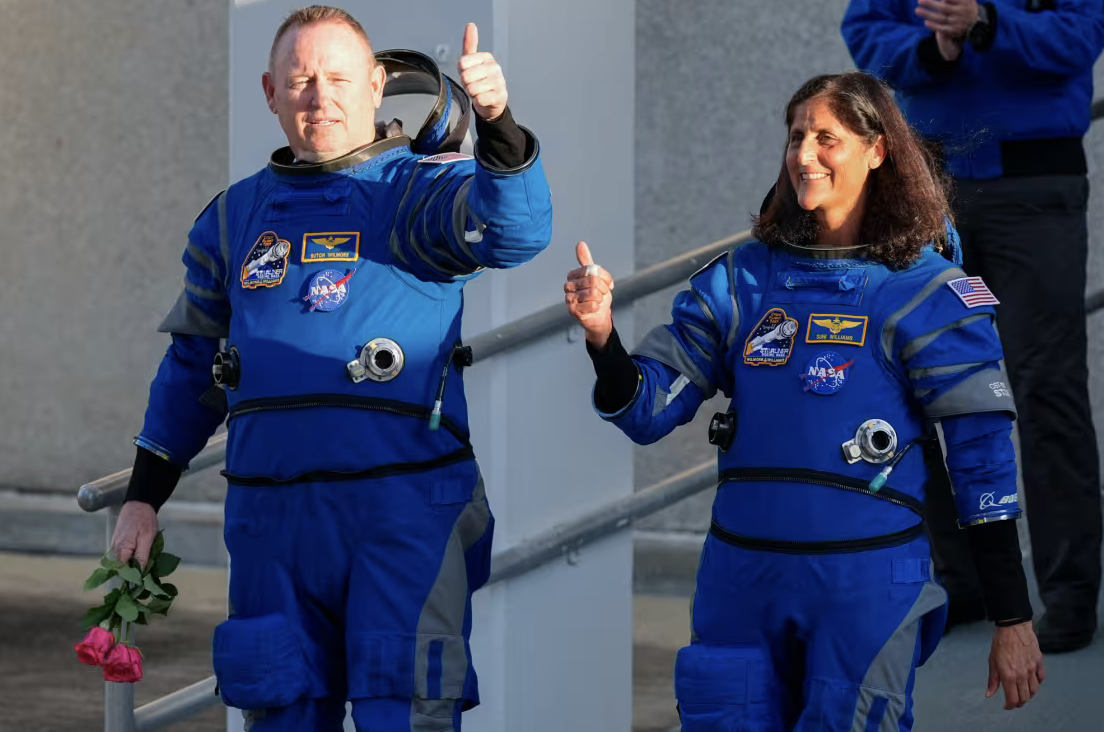
Engineers from NASA and Boeing have been attempting to duplicate orbital conditions on a test engine at the agency’s White Sands Test Facility in New Mexico. Mission management also conducted two “hot fire tests” in orbit, igniting the capsule’s engines in brief bursts while it remained parked at the space station.
Stich said Wednesday that studies indicated that a microscopic Teflon seal appeared to enlarge under high temperatures, which might be partially to blame for the thruster issues. When the seal expands, it is likely to obstruct the flow of propellant into the thrusters, he explained.
Further testing is necessary to gain a deeper understanding of potential obstructions and the reasons behind their absence in the most recent hot fire test. NASA announced last week that the thrusters, responsible for maneuvering the spacecraft in orbit and guiding it into the Earth’s atmosphere, remained stable.
“That gives us a lot of confidence in the thrusters, but we can’t totally prove with certainty what we’re seeing on orbit is exactly what’s been replicated on the ground,” Stich said to the crowd.
The latest Starliner debacle has been a setback for Boeing, especially given that the program was already years behind schedule and more than $1.5 billion over budget before the astronauts embarked.
Boeing and SpaceX both constructed their space capsules as part of NASA’s Commercial Crew Program, which began more than a decade ago to help private businesses create new space vehicles to transport humans to low-Earth orbit. The program came after the retirement of NASA’s space shuttles.
SpaceX has been sending humans to the International Space Station since 2020.