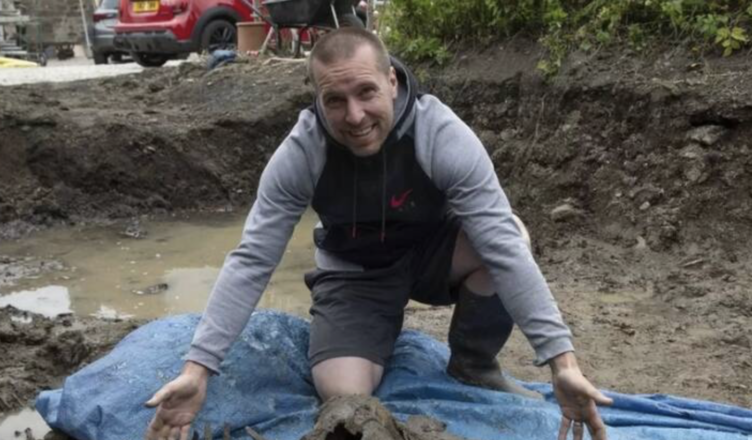
Paul McDonald, 44, didn’t expect to find anything buried in his backyard when digging a swimming pool for his children, let alone 8,000-year-old dolphin bones. But that is exactly what he discovered.
According to the BBC, the Scottish father of four immediately identified the dolphin’s head after striking the bone because of its distinct form and rows of teeth.
“I was digging in the pool when I came across something unusual,” McDonald explained. “I rolled it back, came down, and took it out.” “I saw the roundness of the skull, then the snout and teeth, and I knew it was a dolphin right away.”
The dolphin bones were kept in clay, approximately 31 inches below present-day ground level. Archaeologists believe they might have been there for up to 8,000 years, washing up after the last Ice Age, with one hailing the finding near Causewayhead, Stirling, as “the find of a lifetime.”
A shattered instrument made of deer antler, which would have been used to slice flesh from the dolphin, was found alongside the 10-foot-long animal skeleton. Experts say the dolphin would have been a tasty dinner for the ancient villagers.
“I knew it had to be old because I was stuck in clay at that depth.” “Now that we’ve discovered a tool that tells us more about what was going on, it’s mind-boggling,” McDonald said. “We bought the house six years ago, and I’ve found a few interesting things, such as old bottles and coins, but I’ve always wanted to find something like this.”
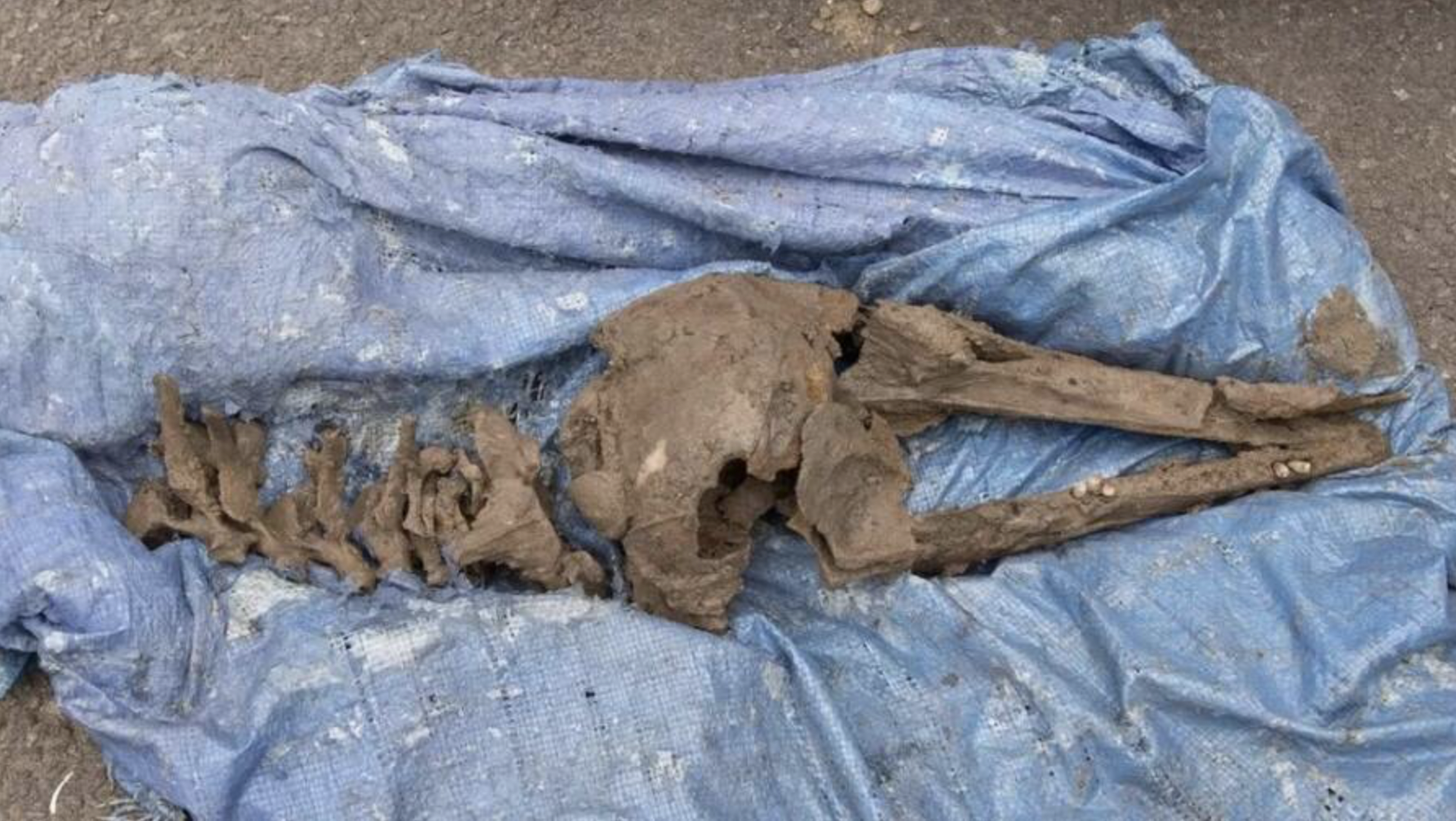
So far, National Museums Scotland (NMS) specialists have retrieved the dolphin’s head for research, with intentions to thoroughly unearth the remainder of the bone. According to Murray Cook, a Stirling archaeologist, this discovery might be the first of its sort in Scotland in over a century.
“I don’t think one of these has ever been subjected to modern excavation,” Cook explained. Whale bones were discovered near Stirling in 1897, according to recent sources, but there are no records of dolphin findings.
“After the Ice Age, following the retreat of the ice, this area was a vast inland sea teeming with life,” Cook stated. “Our earliest ancestors would have been walking the shoreline every day for food such as seaweed and shellfish, and if a seal, whale, or dolphin washed up, it would have been carved into almost immediately.”
“The tool made from antler tine means they were hacking into the dolphin, and that’s tremendously exciting,” he added. “The tip has broken off—which we still hope to find—and they’ve discarded it.”
“I’ve been at the museum for 35 years, and this is the first time something like this has emerged from the clay,” said Andrew Kitchener, the NMS’s head curator of vertebrates. “It’s a fascinating and significant discovery.” It appears to be a stranded animal that has just sunk into the clay and been preserved until Paul discovered it, which is truly a miracle.”
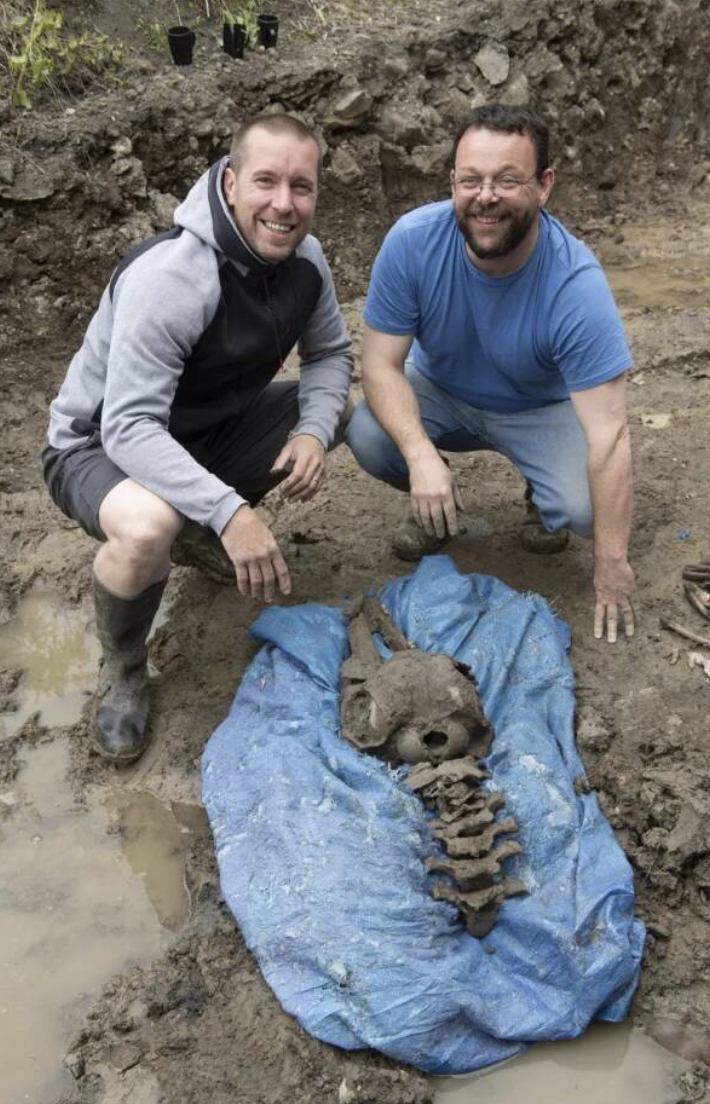
While there is still more work to be done on the skeleton, Kitchener believes they will be able to determine the dolphin’s age after the bones are radiocarbon dated. However, based on his first study, he concluded that the dolphin was a female, according to her smaller size, and most likely an older one, owing to the quality of its teeth.
“We’re only at the beginning,” he explained. “It’s just exciting to see it emerging from the clay.”
In terms of the bones themselves, McDonald’s technically owns them in isolation. The antler instrument, on the other hand, may be deemed a Treasure Trove, entitling McDonald to a prize as its discoverer.
“I’m just happy to find it and make sure it’s looked after and people get to see it,” he added.