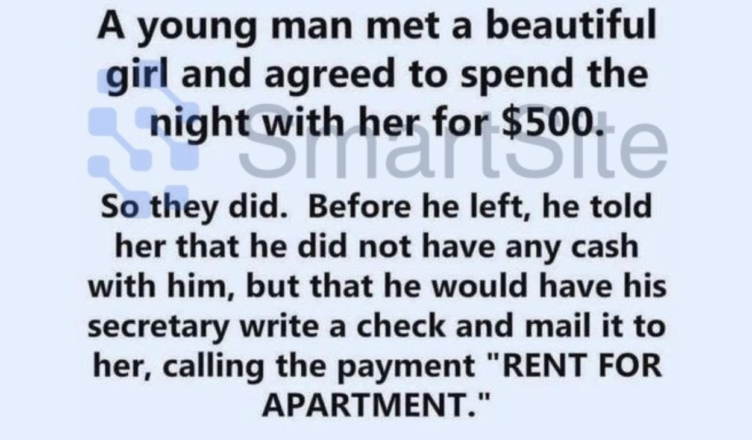
A young married man arranged for a woman to spend the night with him for $500. However, after their encounter, he felt dissatisfied and believed the agreed-upon amount was too high.
Before parting ways, they decided he would pay her with a check labeled as “apartment rent,” which he planned to mail to her.
Feeling unsatisfied, he opted to send her only half of the agreed-upon sum along with a letter explaining his rationale.

In his letter, he wrote:
“Dear Madam,
Enclosed is a $250 check intended for your rent. I have sent a different amount than originally agreed upon because, at the time of renting, I had certain expectations: the apartment was to be vacant, well-heated, and comfortable. However, last night, I discovered it had been previously occupied, lacked heating, and was excessively spacious.”
Upon receiving the letter and check, the woman returned the $250 check and responded:
“Dear Sir,
I am surprised by your expectation that a beautiful apartment would remain vacant indefinitely. As for heating, it is available if you know how to operate it. Regarding the room’s size, it is sufficient. If you find the furnishings unsatisfactory, please refrain from blaming the landlord. Please remit the full $500, or I will be forced to contact your current landlord.”
This story serves as a reminder not to make assumptions or hasty decisions, as they may lead to unintended consequences.