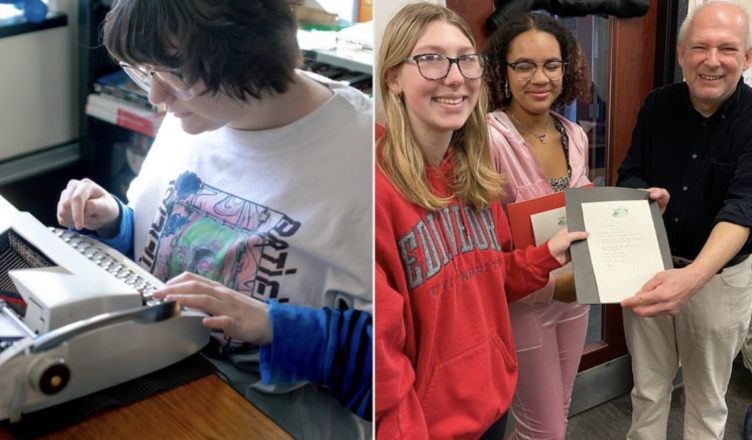
Students at Lincoln Park Performing Arts Charter School received a special gift simply for attempting something new.
Mr. Frederic Durbin added an analog writing lesson to his schedule this year. Durbin, who is a typewriter enthusiast, was eager to become involved with the kids at the Midland, Pennsylvania, school.
“While we discussed typewriters and how to use them in writing, the lesson is ultimately not about typewriters. The typewriters are a terrific vehicle for it, but we see the need for a lesson that just teaches people to pay attention and focus intensely,” Durbin tells PEOPLE.
“It’s a combination of philosophy and writing class because we’re studying paying attention, focusing on one thing at a time in a society where we’re always distracted by our phones. This is a lesson where a typewriter allows you to do one thing: write. This was the main focus of the training.
Students were excited about taking the lesson because they trusted Mr. Durbin’s perspective from past interactions with him.
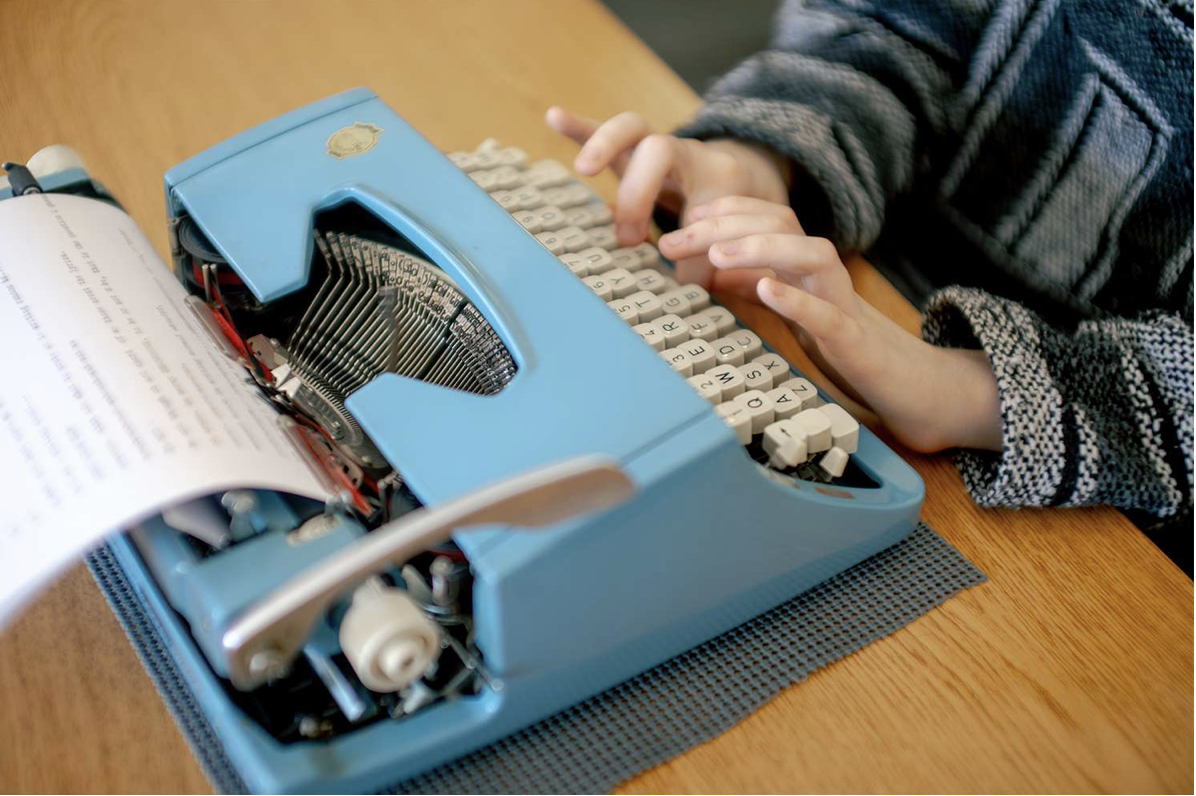
“I saw it and thought, ‘He probably would make something like this really work,'” a pupil tells PEOPLE. “I had no genuine experience dealing with typewriters. I’ve been around them before but have never used one. When you know how to use one, they can be a lot of fun to text on.
“Where else would I be able to sit down and use a typewriter, especially at school?” I think that was an interesting opportunity for a lot of us,” another student says.
“We work on whatever Mr. Durbin assigns us every day. At first, it was difficult since we had to learn how all of the typewriter’s parts worked and how to utilize it as a writing instrument,” they said. “But once we got the hang of it, it was fantastic.” The most challenging aspect was spelling. You either have to go back and fix something, use correction tape provided by Mr. Durbin, or I will forcefully type the proper letter over the faulty one.”
“We allow rough drafts to be rough,” Durbin explains. “We know you’ll make mistakes on a typewriter that you can’t easily fix, so you can get it better in the second draft, but you’re stuck with it in the first draft, so we did a lot of that kind of work.”
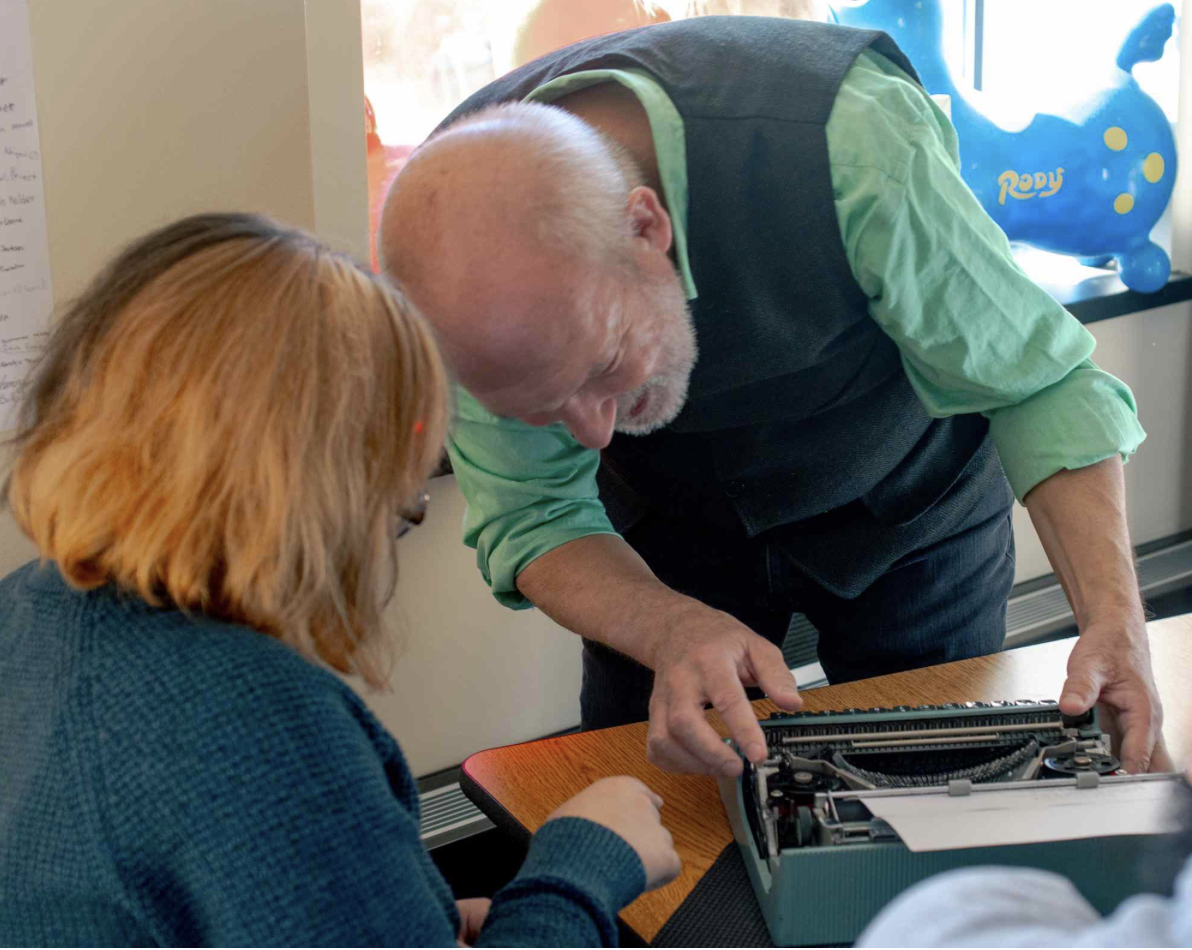
In terms of getting the pupils started, he says, “We had to begin the course by studying how to operate typewriters, how to carry them, and what the hazards are because new typewriters are no longer being created. So we emphasize early on the significance of caring for these devices that are 60 or 70 years old for this course.”
The teenagers had to get used to the reality that “the feel of a typewriter is a little different from a computer keyboard,” he says. “Vertical motion is more pronounced. Fingers do not slide as easily as they do on a computer. It’s a fallacy that a typewriter requires more strength to use, which I don’t believe it does, but it is a different sort of action.”
They are also studying Richard Polt’s Typewriter Revolution, which has served as a basis for their comprehension.
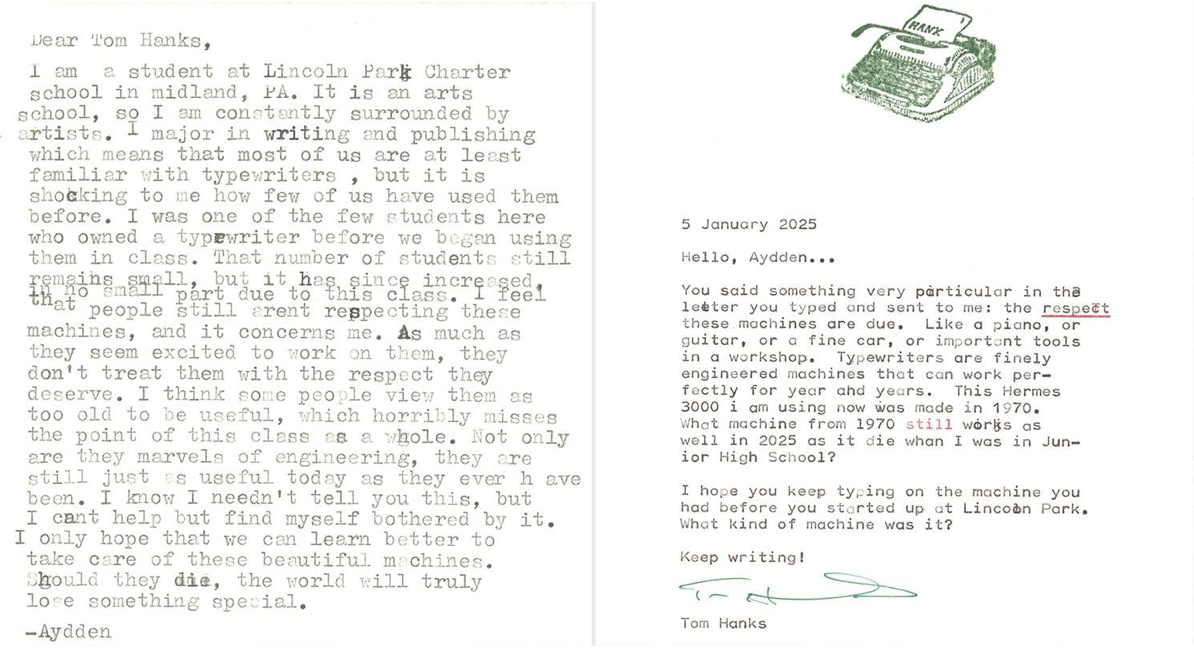
Once they got the fundamentals down, Mr. Durbin revealed his plan to write to Tom Hanks with his class.
“Tom Hanks is well-known for his typewriter collection and enthusiasm. And you might be shocked to learn that there is a global online typewriter community of people who like using these devices and exchanging knowledge,” Durbin adds. “Within that, it’s pretty widely known that if you write to Tom Hanks on a typewriter and you catch him at the right time, he will write back to you because he loves to do that.”
Most of the pupils were familiar with the actor and eventually wrote to him about a range of topics. They sent out their letters in September, not anticipating a response.
“I asked him three questions. “One was about his favorite typewriter and whether he wanted one,” one pupil explains.
“I talked about his roles and movies and how often he appeared in my childhood, with voice acting and everything,” another participant recalls.
“I remember saying, ‘I do not expect that you’ll respond,’ so the whole thing is simply me talking about my favorite book. “This is the plot, and this is what happened,” adds another.
“When I heard we were getting the letters back, I was like, ‘Oh,'” the book lover adds with a giggle. “I was kind of embarrassed, but at the same time, it’s like, ‘It’s not that bad.'”
The letters in response arrived in January, surprising the students and delighting Mr. Durbin.
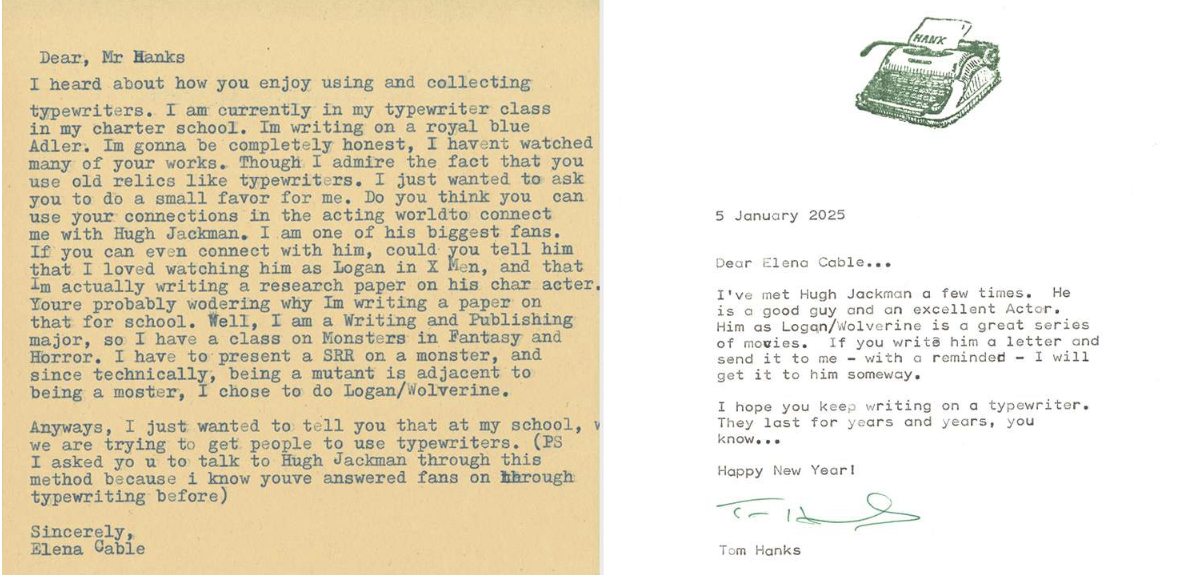
“I didn’t think he would respond either, so I sent him a letter asking him to introduce me to Hugh Jackman,” another pupil recalls.
“He was excellent about it. He says, ‘If you want to send a letter to him, just give it to me, and I’ll make sure he gets it. ‘” Durbin notes. “People were just writing to him about things they were interested in, and the letters back seemed to invite further correspondence because he would ask the students different questions about themselves.”
How have their parents reacted to the class project? “My parents were really mad at me for asking about Hugh Jackman,” the aforementioned author admits, laughing.
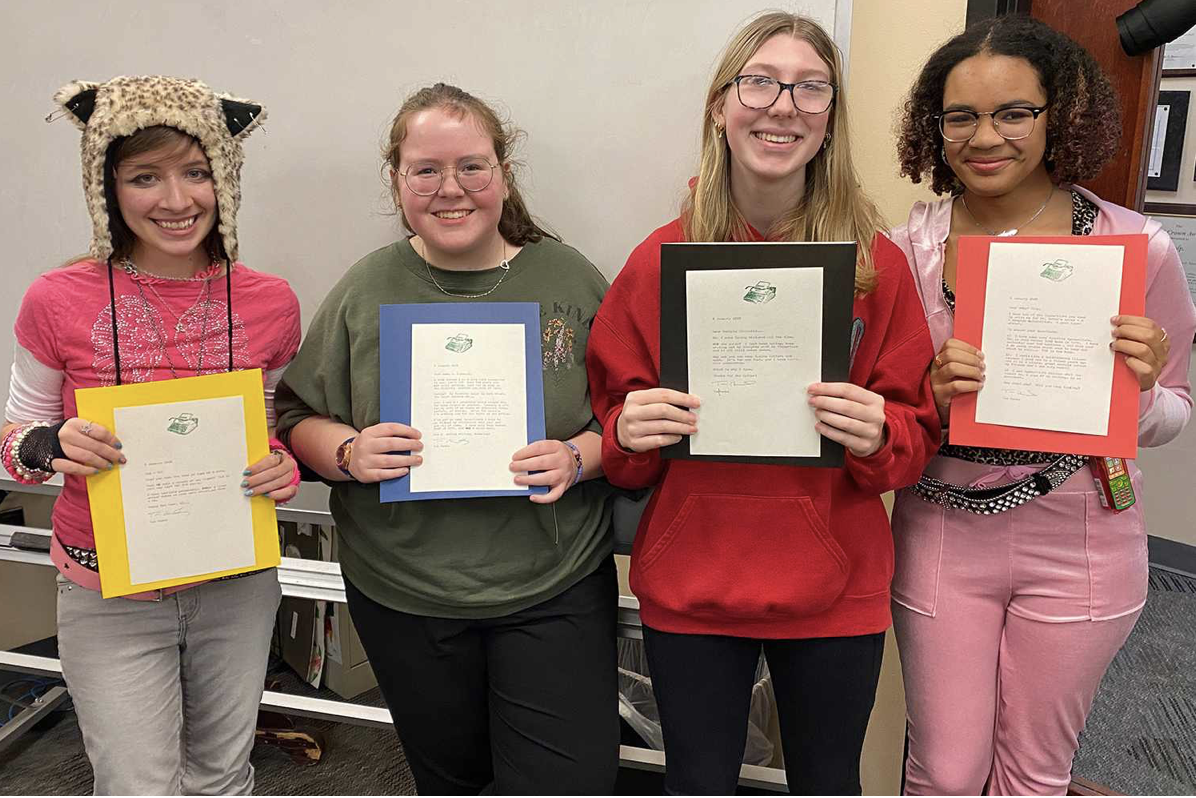
“I told my mom and dad, and they were like, ‘Oh, you should frame it,’ but they weren’t freaking out,” another participant recalls.
The class’s overall success and experience have motivated several of the students to pick up typewriters for themselves.
I own two. My father assisted me, by which I mean he performed all of the work to repair and clean up one of them, and we still have to work on the other,” one new owner explains.
“I own two electric typewriters, which are different than the typewriters we have in class,” another person comments. “I purchased my first electric typewriter before the class this summer. I began using it extensively, so when I learned about this session, I jumped at the opportunity to experience a real typewriter instead of the one we had. Now, I’m working on my second electronic typewriter.”
Mr. Durbin is excited to be able to teach the class and other creative courses at the performing arts charter school.
“We’re able to offer some courses like this that are not what you would find at the typical school,” explains the instructor. “Basically, if we can imagine something, we can do it.”