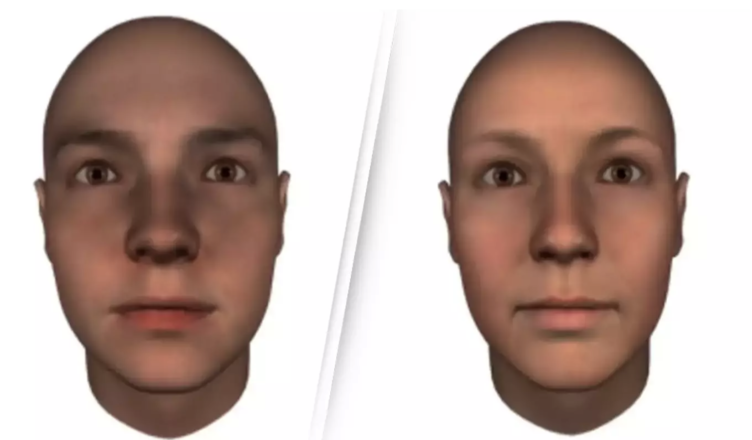
People often assume they can gauge someone’s wealth based on factors like clothing, occupation, residence, or even the fragrance they wear. However, a recent study suggests that individuals also form judgments about one’s economic status based on the shape of their face.
Move aside “resting bitch face,” there’s a new phenomenon in town called “resting rich face.” Researchers from the University of Glasgow conducted a study involving 30 young, white, native English-speaking participants with an average age of 22.

In the study, participants assessed 3D models of faces, making judgments about the individuals’ wealth, social standing, competence, warmth, dominance, and trustworthiness. The findings revealed that faces perceived as “rich” were also considered more trustworthy, displaying features like chiseled features, raised brows, and rosy cheeks.
On the contrary, faces perceived as “poor” were characterized by lowered eyebrows, shorter chins, downturned mouths, and cooler skin tones, contributing to an impression of coldness and untrustworthiness. Dr. Thora Bjornsdottir, the lead author, emphasized the potential long-term effects of such judgments based solely on facial appearance.
She noted, “People who are perceived to be of high or low social class are also often judged as having advantageous or unfavourable traits, respectively. Such judgments are formed even just from facial appearance, and this can have substantial consequences, including disadvantaging those who are perceived to be of lower social class.”
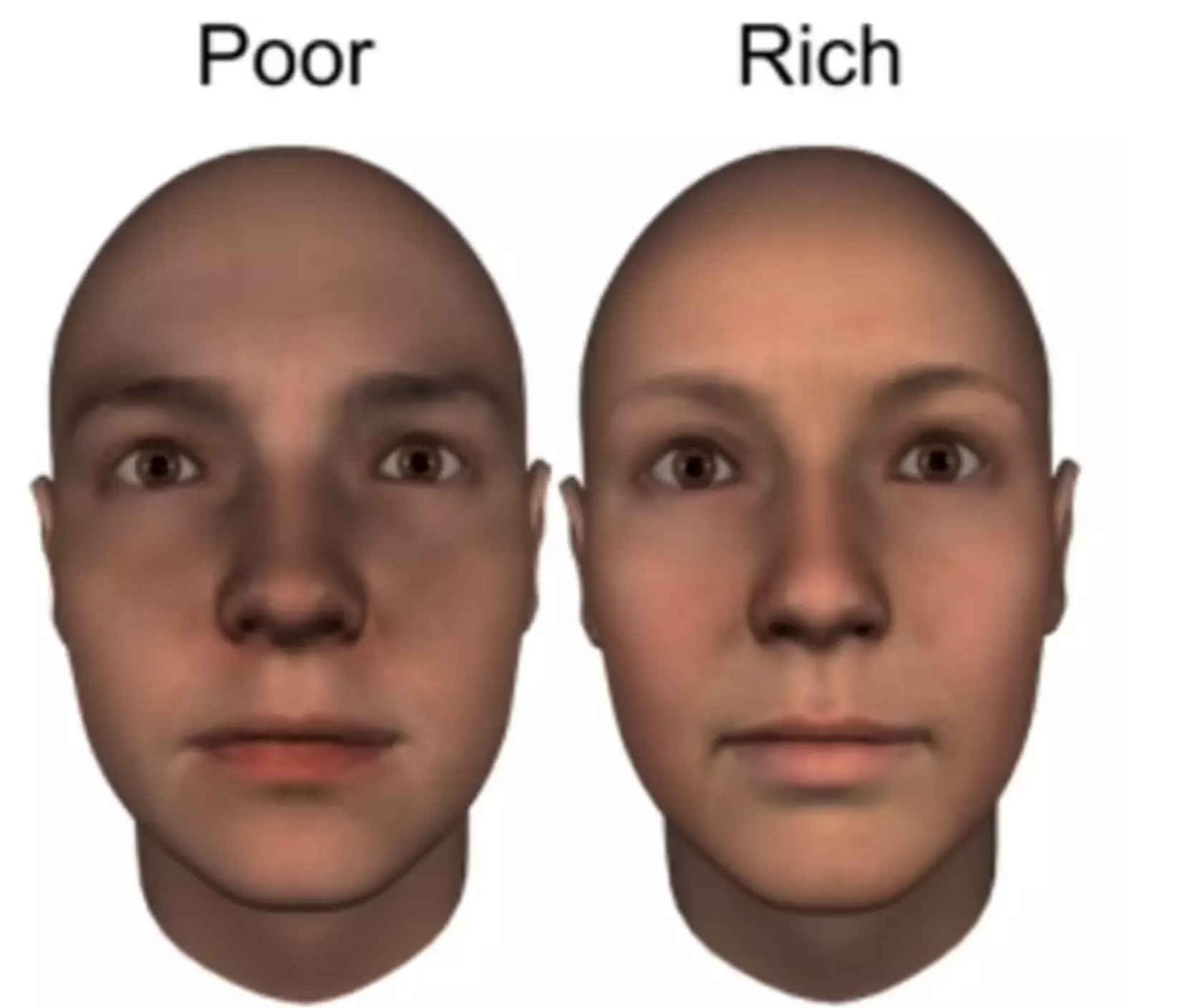
The study also revealed that faces perceived as “poor-looking” were associated with more “infantile” features, resembling a child’s face, while “rich” faces were characterized by longer and more defined features, including protruding noses, upturned mouths, and high foreheads. These characteristics were deemed to make them appear more dominant, capable, and honest.
Professor Rachael Jack highlighted the significance of the research in connecting social class perceptions with stereotypes, stating, “Our research demonstrates how specific facial attributes play a pivotal role in connecting social class perceptions with related stereotypes. These findings are not only valuable for advancing our understanding of central social perception theories but could also help with future interventions designed to interrupt biased perceptions.”