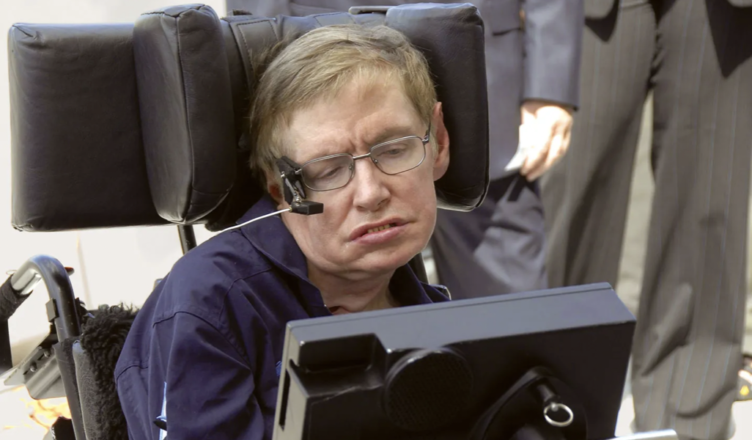
Before his passing, Stephen Hawking expressed his thoughts on the afterlife. As a pioneering theoretical physicist, his intellect sparked curiosity about his perspectives on God and what comes after death. Through various interviews and writings, he shared his views on the existence of a divine power and the idea of an afterlife.
When questioned about his belief in God, Hawking’s response was unequivocal. He maintained that there was no evidence supporting the existence of a higher power and that the workings of the universe could be explained through scientific laws. In an interview with the Spanish newspaper El Mundo, he remarked, “Before we understand science, it is natural to believe that God created the universe. But now science offers a more convincing explanation.” Hawking’s stance on religion transcended any particular faith; he regarded all religions as grounded in faith rather than empirical evidence. In essence, he identified as an atheist.
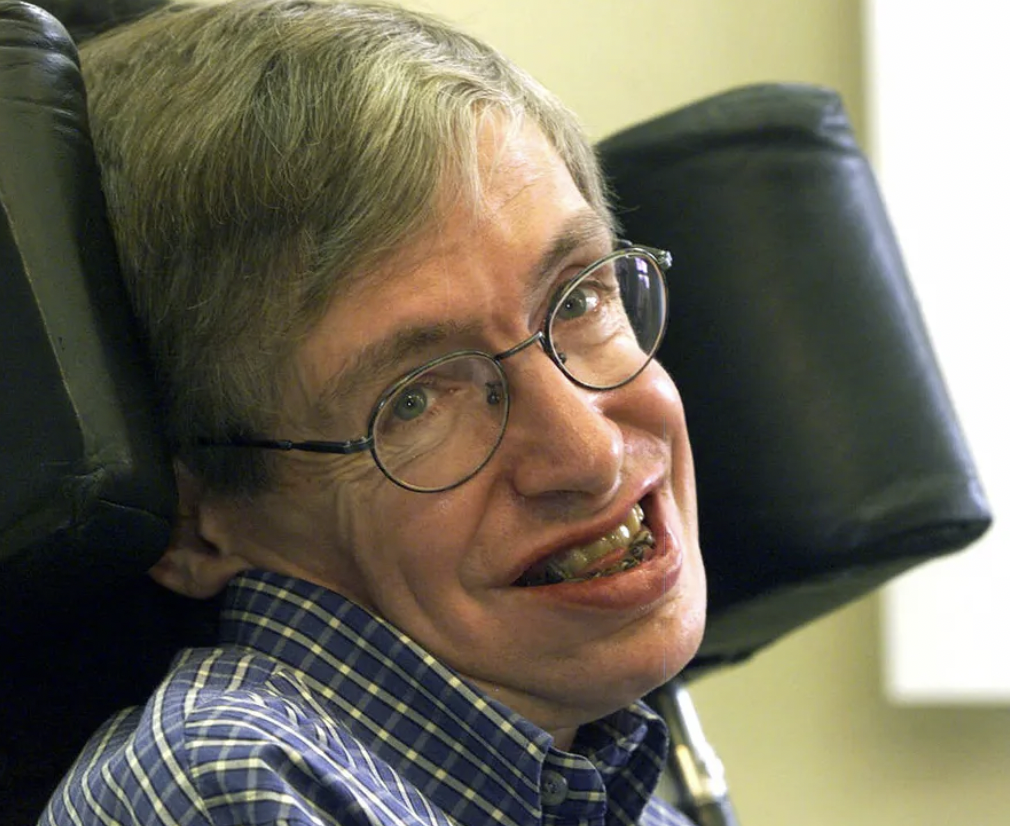
In his collaborative work with Leonard Mlodinow, “The Grand Design,” Hawking delved deeper into his beliefs regarding the origin of the universe. He argued that the laws of physics, rather than a divine creator, were responsible for the universe’s inception. He stated, “Because there is a law such as gravity, the universe can and will create itself from nothing. Spontaneous creation is the reason there is something rather than nothing, why the universe exists, why we exist.”
Hawking’s perspective on the afterlife was similarly rooted in scientific rationale. He regarded the notion of an afterlife as wishful thinking, devoid of substantial evidence. In his final book, “Brief Answers to the Big Questions,” he asserted, “No one created the universe and no one directs our fate. This leads me to a profound realization, there’s probably no Heaven and no afterlife, either…I think belief in an afterlife is just wishful thinking. There is no reliable evidence for it, and it flies in the face of everything we know in science.” Nonetheless, Hawking respected others’ beliefs and emphasized that individuals are free to believe as they choose.
In conclusion, Stephen Hawking’s perspectives on God and religion were shaped by his mathematical endeavors and his quest to comprehend the universe through scientific inquiry. While his viewpoints may have diverged from conventional beliefs, his contributions to science remain influential and enduring.