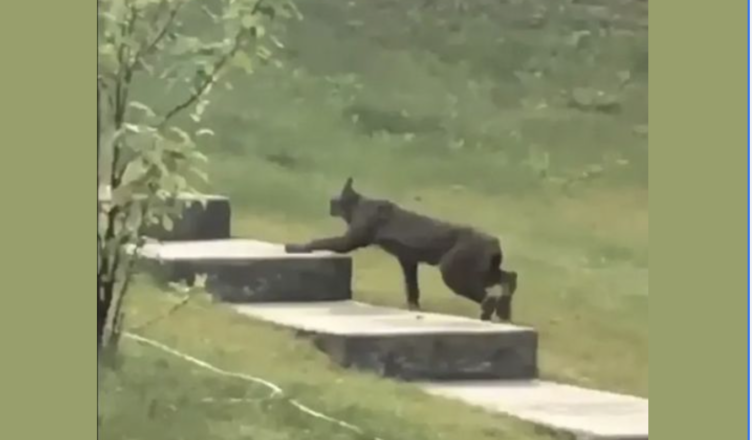
A species of lynx native to North America, including Canada and parts of the United States, is called the Canada Lynx, or Lynx canadensis.
Although the Canada Lynx normally has a light brownish-gray fur coat, there have been reports of black-furred animals as well.
The black-colored type had never been photographed, but in 2022, a lucky person was able to snap some images that quickly went viral.
A Canadian researcher from the University of Alberta managed to capture the animal. An employee of the Yukon government named Thomas Jung captured a video of the animal on his phone.
Paint it Black: the first report of Melanism in Canada lynx (Lynx canadensis) was an article in the journal Mammalia that described the discovery.
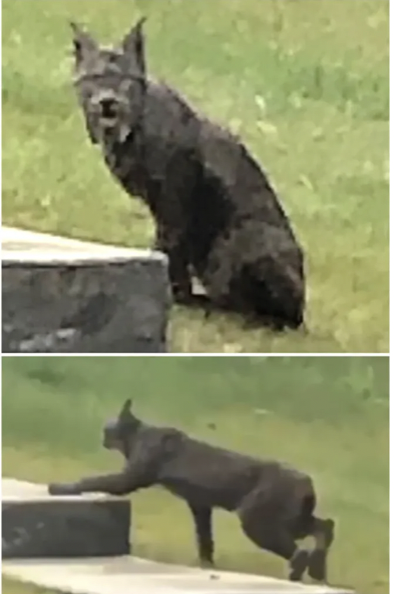
The footage was captured in a rural residential neighborhood close to the Yukon metropolis of Whitehorse. The lynx may be seen in the video relaxing at a distance of roughly 50 meters. There were some people and a dog nearby, and the lynx ultimately fled when the dog began to bark. The behavior of the Canada Lynx is that of a lone, reclusive creature.
Although they were able to identify the animal as a Canada lynx, experts on the species were unable to pick out many distinguishing traits in the shaky footage.
According to Jung, “It had a black coat with whitish gray guard hairs all over and whitish gray hairs in the facial ruff, the rostrum, and the dorsal regions.”
The majority of lynx species have a common hue, with Canada lynx frequently seen in the winter with silvery gray coats. In the summer, their coats frequently turn reddish brown.
Due to its variety in coat color, the lynx seen in the video is a very unusual species.
According to Jung, differences like this are frequently adaptations that may be advantageous to evolution (adaptive) or detrimental (maladaptive).
Melanism in any animal has not yet been proven to be advantageous or disadvantageous by scientists. However, Jung considers the lynx’s feature to be maladaptive since it results in a lack of essential concealment. The animal would probably stand out in the snow when hunting in the winter because of its darker hair.