
Have you ever glanced skyward and observed brightly colored spheres suspended from power lines? Perhaps you’ve pondered their purpose or significance. These captivating indicators are known as aerial marker balls, and they serve a vital role in ensuring aviation safety for both aircraft and ground personnel. Let’s delve deeper into why these colorful orbs are a common fixture on power lines.
Guiding the Skies with Visibility Markers
The vibrant orbs adorning power lines are more than mere adornments; they are potent indicators crucial for maintaining airspace safety. Often referred to as visibility markers or aerial marker balls, these markers play a pivotal role: warning low-flying aircraft of nearby power lines. Think of them as miniature beacons guiding pilots away from potential hazards.
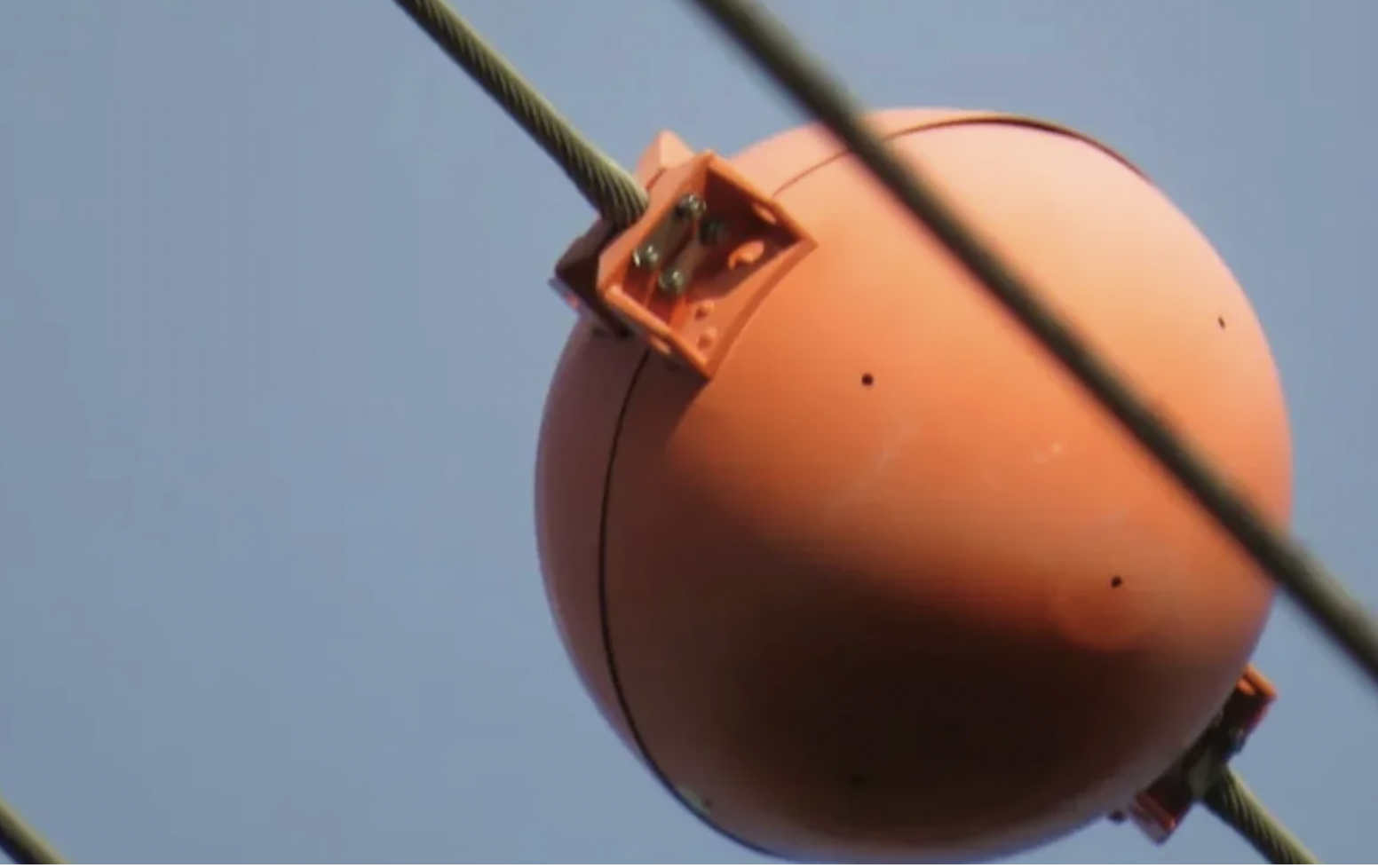
Staying Clear of Danger
Imagine a scenario where an aircraft is flying low, perhaps near canyons, lakes, rivers, or airports. In such instances, there’s a risk of the aircraft colliding with power lines that might not be immediately visible. To mitigate this risk, the Federal Aviation Administration (FAA) mandates the use of aerial marker balls on power lines traversing areas prone to low-flying aircraft traffic. By installing these markers, we create a safer environment for both aviators and ground personnel.
Colors That Catch the Eye
Have you ever questioned why these marker balls come in different colors? The answer lies in maximizing visibility. The colors—often orange, white, and yellow—are meticulously chosen to stand out against various landscapes. When navigating the skies, pilots require markers that are impossible to overlook. These vibrant hues ensure that the markers grab their attention and alert them to the presence of power lines.
The Remarkable Material: Plastic
You may wonder about the composition of these marker balls. Surprisingly, they are crafted from plastic. This material choice is not only practical but also strategic. Plastic is non-conductive, making it an excellent electrical insulator. This property ensures that the marker balls do not interfere with the function of the power lines while enhancing safety effectively.
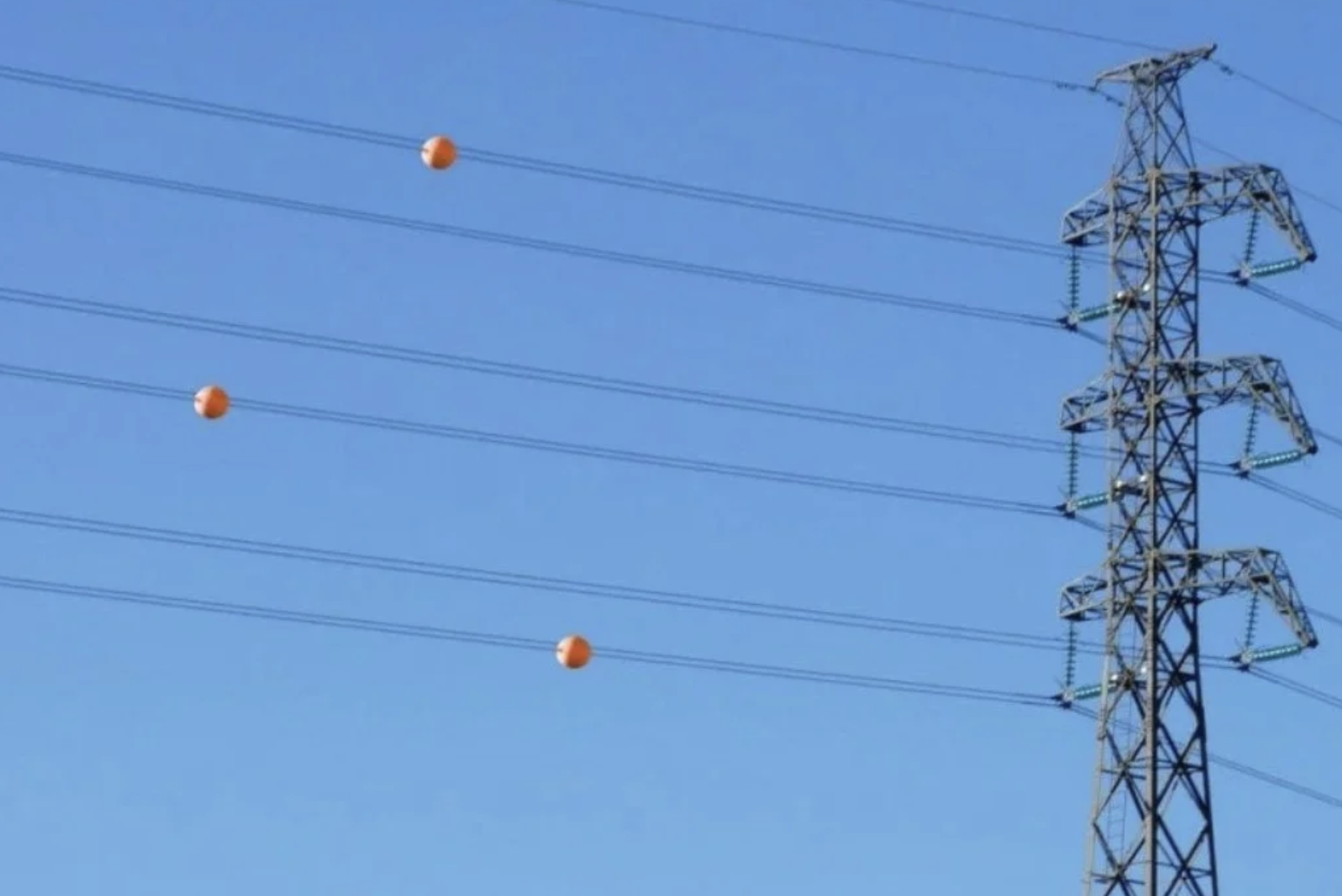
From Size to Weight: The Technical Details
Marker balls are available in various sizes, typically ranging from 20 to 36 inches in diameter. Despite their seemingly lightweight appearance, they weigh between 11 and 17 pounds. This balance of size and weight allows for easy attachment to power lines while maintaining sturdiness and resistance to wind.
The Origin of Marker Balls
The history behind these colorful markers is as fascinating as their function. Nearly 50 years ago, in the early 1970s, an incident spurred their creation. During a flight, Winthrop Rockefeller, then-governor of Arkansas, along with Edward Holland, head of the Arkansas Department of Aeronautics, noticed electrical wires dangerously close to the aircraft.
Concerned about aviation safety, Rockefeller urged Holland to find a solution to increase the visibility of power lines to pilots. Holland enlisted engineer Jack Rutledge to address this challenge. Rutledge’s ingenious solution involved designing bright and easily noticeable marker balls that could be affixed to power lines securely.
Thanks to Rutledge’s innovation, these marker balls have become indispensable for aviation safety. By the 1980s, Rutledge’s company had emerged as a leading supplier of visibility markers, significantly enhancing aviation safety worldwide. Countless lives have been saved over the decades due to the increased visibility these marker balls provide to pilots.
Next time you spot those colored balls dangling from power lines, remember they are not mere decorations. As technology advances, these marker balls continue to exemplify how a simple idea can profoundly impact our world.