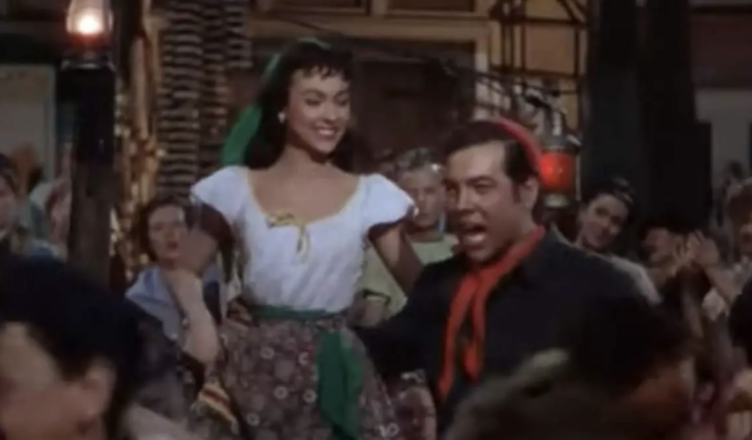
Tina-Lina is a dance song composed by Nicholas Brodsky for the 1950 MGM musical film “The Toast of New Orleans” with lyrics by Sammy Cahn, performed by Mario Lanza.
Brodszky and Cahn created this composition for Mario Lanza’s film “The Toast of New Orleans,” largely to serve as a backdrop for a big dance number.
In the 1950s, MGM musicals were known for their extravagant dance presentations. Interestingly, this was the only time such an event occurred in a Lanza picture. Lanza’s greatest appeal is largely regarded as his singing skills, while dancing is not his strong suit. Nonetheless, “Tina-Lina” is a lively song that might be used to highlight Lanza’s impressive breath control and diction.
The song is notable for its complicated lyrics, which require Lanza to perform lyrical gymnastics to deliver them. The word “vocal acrobatics” comes to mind when hearing the song “The Tina-Lina.” Particularly striking are the statements, “You’ll know why when you’ve seen her dance like no one ever danced before” and “Once you’ve danced with Tina-Lina, there’s no other ballerina who will dance you right to Heaven’s door.” And before the dance is over, you’ll fulfill your goal, and she’ll care for you forever.” The statement, “All it takes is wind and passion,” perfectly captures the demands of this song. The song provides a challenge to any vocalist.
Lanza’s portrayal of lyrics like “…prepare to lose your heart,” “…it’s the fun way to caress,” and “…the Tina-Lina, because you’ll never be the same” creates a sense of exhilaration for the listener. People believe that the commercial version required more effort during recording. Lanza looks to have more control here than he does in the film.
One could argue that the design of “Tina-Lina” prioritized a visual spectacle over a precise melody line. The melody, while there, is not the major focus; rather, the emphasis is on the activities taking place. Lanza’s last note in the film version is exhilarating, although it differs significantly from the commercial recording. The commercial recording concludes with an unrestrained, astonishing vocalization that surprises the listener. In conclusion, while “Tina-Lina” is an entertaining composition, it does place a high demand on the vocalist.
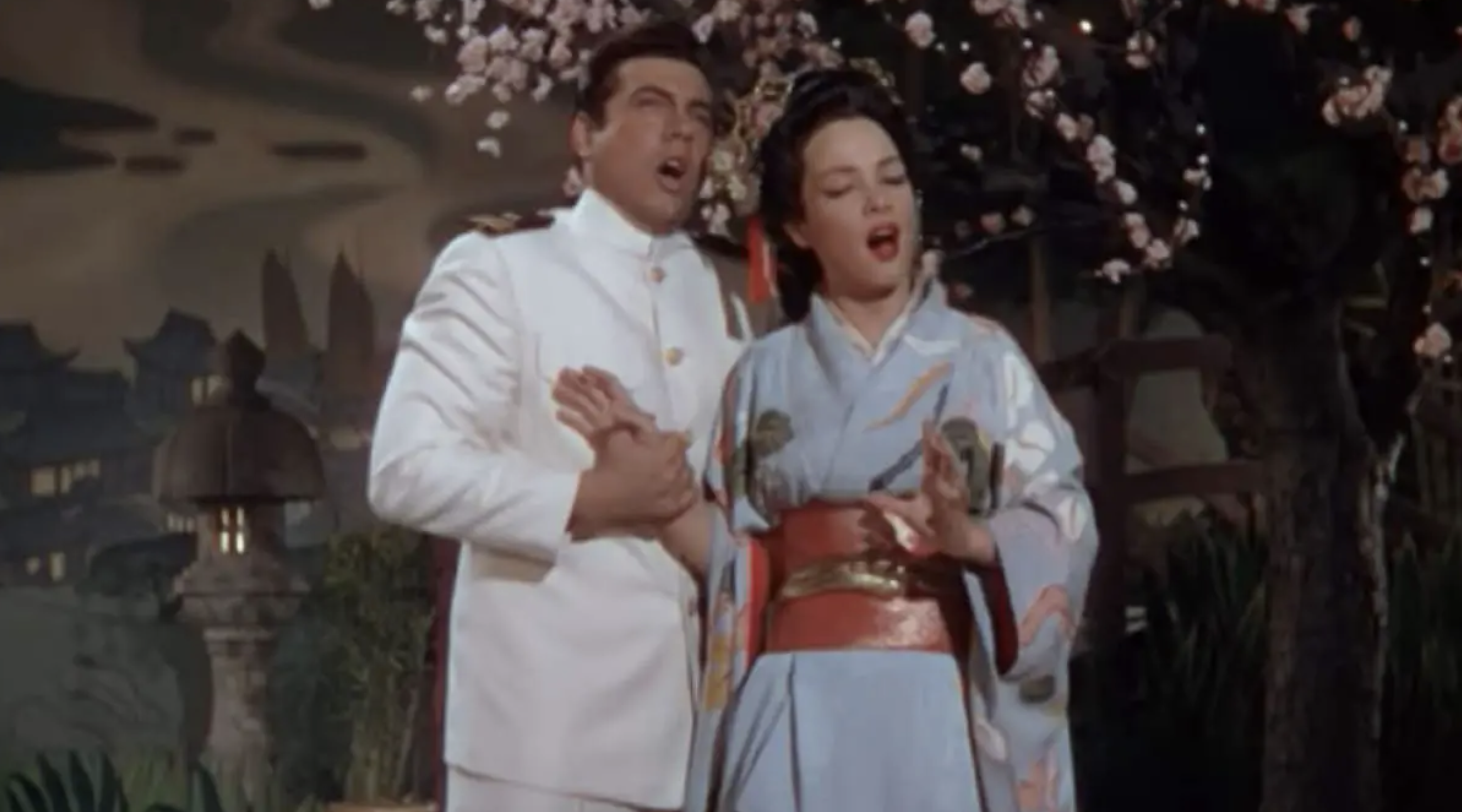
The story focuses on Pepe Abellard Duvalle, played by Mario Lanza, a rugged and lovable fisherman from Louisiana’s Bayous. Pepe aspires to be an opera singer, but his commitment to his fishing career prevents him from doing so. However, all changes when the opera troupe arrives in New Orleans.
Pepe falls in love with soprano singer Suzette Micheline (Kathryn Grayson) while witnessing an opera performance. Inspired by her ability and attractiveness, he vows to seek a singing career and win her love. Pepe’s pursuit of his aspirations results in a variety of hilarious events and love relationships.
The film has several noteworthy musical performances, notably Mario Lanza’s interpretation of the hit song “Be My Love.” Lanza’s strong and impassioned voice elevated the film’s musical passages, making it one of his most memorable performances.
“The Toast of New Orleans” got favorable reviews upon its premiere, owing mostly to Mario Lanza’s singing abilities and the on-screen chemistry between Lanza and Grayson. The film demonstrated Lanza’s ability to combine classical opera with popular music, appealing to a wider audience than conventional opera aficionados.
While the narrative is rather conventional and acts as a vehicle to highlight Lanza’s vocal abilities, it is nevertheless a fun musical picture. “The Toast of New Orleans” aided Lanza’s ascent to stardom and cemented his place as one of the most important voices of his day.
The narrative is set in Louisiana in 1905 and revolves around Pepe Abellard Duvalle [Lanza], a competent swamp fisherman with a natural singing ability. He falls in love with Suzette Micheline [Grayson], a great soprano opera singer. Micheline’s manager, played by the renowned British actor David Niven, invites Duvalle to perform in New Orleans, but Duvalle is unwilling to abandon his quiet existence.
Despite his doubts, Duvalle decides to train for the opera. Micheline, who was first indifferent to Duvalle, gradually falls in love with him but is disillusioned by his change into a cultured gentleman. In the end, Duvalle reverts to his gruff ways and wins Micheline’s heart.
The film comprises chosen arias from the great operas Carmen, Madama Butterfly, and La Traviata, as well as the Academy Award-nominated song “Be My Love.”