Warning: This post contains photos that some readers may find disturbing.
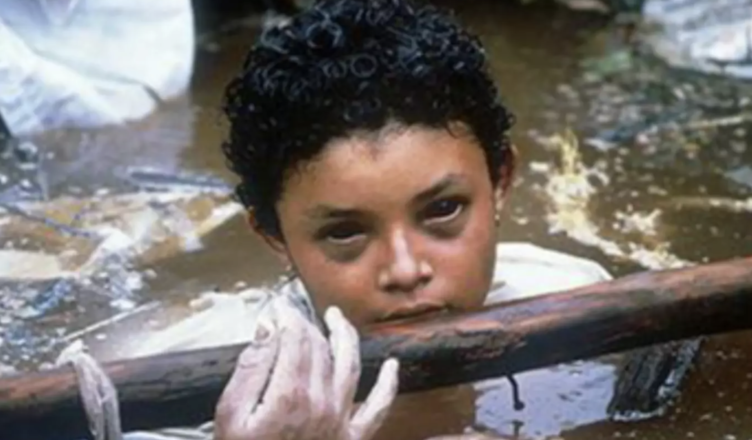
Omayra Sánchez Garzón, a 13-year-old girl, became the tragic face of a natural disaster when a photo of her was taken following a volcanic explosion.
The teen became imprisoned when the Nevado del Ruiz volcano in Colombia erupted.
The loss of life was massive, killing around 20,000 of Armero’s 29,000 population, although the death toll eventually rose to 23,000.
The volcanic eruption occurred in 1985, and it caused glaciers on the mountain to melt, resulting in a pyroclastic mudflow known as a ‘lahar.'”.
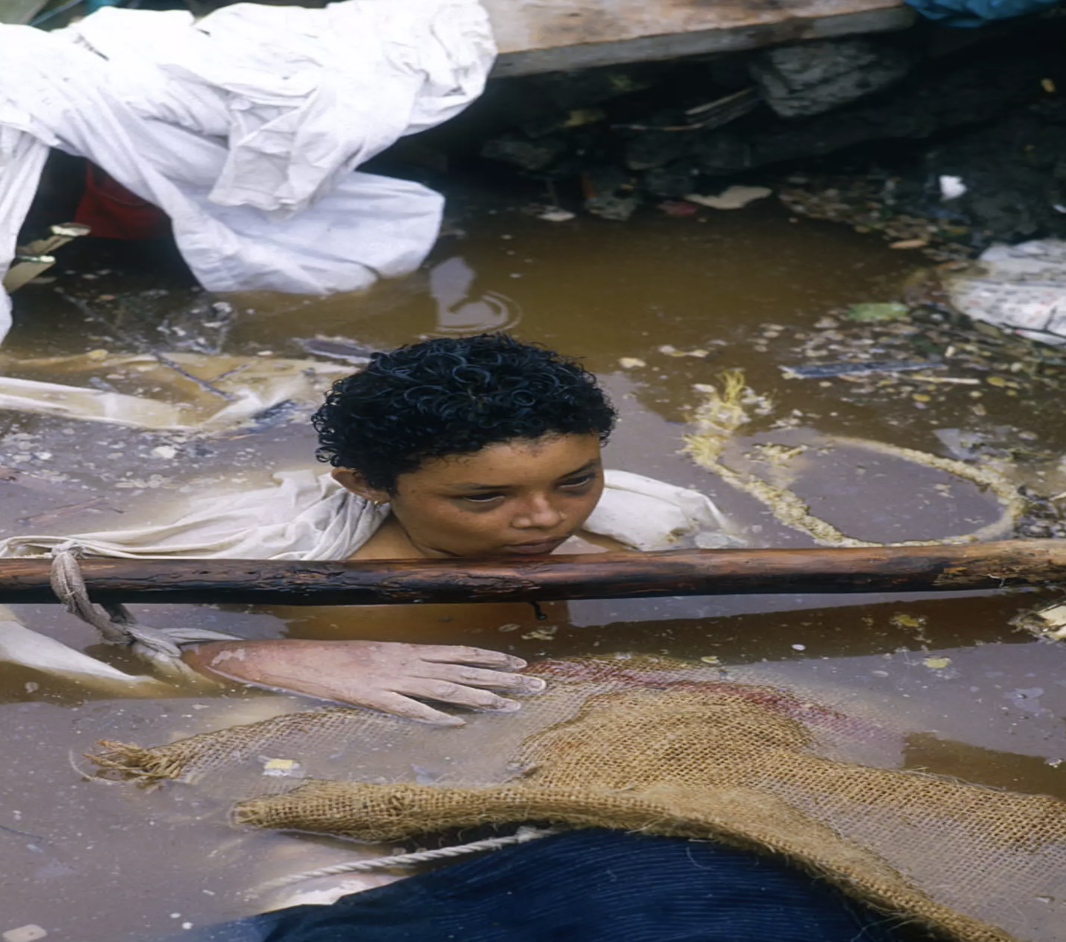
A photographer captured a frightening shot of the youngster, whose eyes had become dark while she was confined.
Despite numerous rescue attempts, the child tragically perished while trapped under volcanic debris and mud.
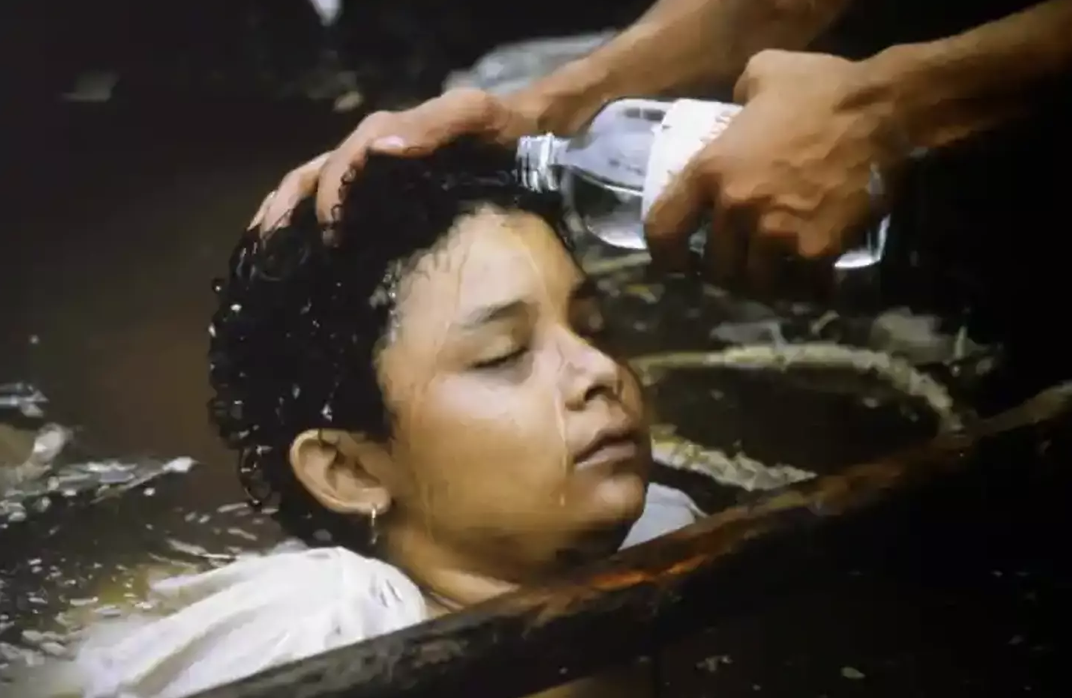
The anxious rescuers had tried everything to save her life, but all they could do was reassure and soothe her.
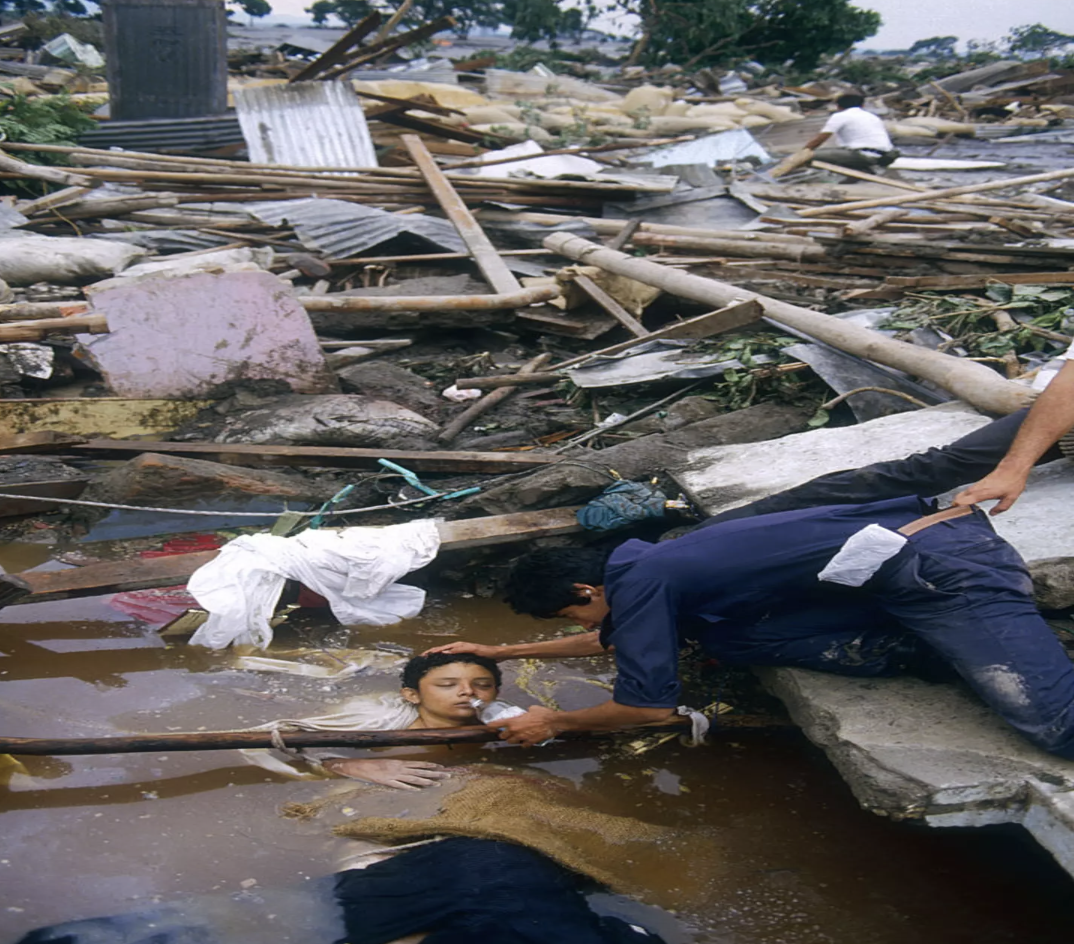
Rescuers had wrapped a tire over her to keep her floating and given her cookies and beverages.
She died a few days later, on November 16, three days after the volcano erupted, from either hypothermia or gangrene.
The recording captures her saying, “Mommy, I love you so much, Daddy, I love you, and Brother, I love you.”
After she died, divers were able to explore the site and discovered that her legs had been caught beneath the roof of her house, with her deceased aunt’s arms hanging on to them.
Photographer Frank Fournier photographed the little child, whose eyes had become black due to being so bloodshot.
Her eyes are thought to have become black as a result of her lengthy immersion in the water, as well as the pressure exerted by the rubble.
He stated that the child had been ‘facing death with courage and dignity’ and described how she had begun to hallucinate.
The photographer claimed she grew confused and began to urge him to drive her to school because she was scared she would be late.
Frank described the situation: “She was in a large puddle, trapped from the waist down by concrete and other debris from the collapsed houses.”
“She’d been there about three days. Dawn was breaking, and the poor girl was in agony and confused.”
“Hundreds of people were stuck everywhere. Rescuers were having trouble reaching them.
He added that when the photo went viral, people were asking him, “Why didn’t you help her? “Why didn’t you take her out?”
He told the BBC that ‘it was impossible’ to save her.
Fournier explained, “There was an outcry—debates on television about the nature of the photojournalist and how much he or she is a vulture.”
“But I believed the story was significant enough to report, and I was glad there was some reaction; it would have been worse if no one cared.
I operate ethically and honestly and am clear about my work.
“I believe the photo raised money for charity from all around the world while also highlighting the country’s authorities’ recklessness and lack of bravery.
“There was a clear absence of leadership. Despite the lack of evacuation arrangements, geologists predicted that the volcano’s eruption would be disastrous.
“People still find the image frightening. This demonstrates the tiny girl’s staying power. I was fortunate to be able to function as a bridge between people and her.” It’s the enchantment of the moment.”