How often have you found yourself cracking an egg into a bowl of other ingredients, only to wonder if the egg is still fresh? Determining the freshness of eggs can be tricky due to their opaque protective shells concealing the condition of the white and yolk.
However, there are several simple ways to assess egg freshness and plenty of preventative measures you can take to avoid spoilage altogether.
Let’s explore some tips in this article that will assist you in determining whether an egg is still suitable for consumption or past its expiration date.
In France, nearly 10 million tonnes of food end up in the trash each year, with people often discarding food once it reaches its expiration date. While the exact number of wasted eggs in France remains unknown, The Guardian reports that in the United Kingdom alone, 720 million eggs are thrown away annually.
The primary reason for this waste is the difficulty many individuals face in determining egg freshness once the use-by date has passed.
Are you planning to prepare a brunch but uncertain how long your eggs have been in the fridge? Don’t worry. There are methods to determine their edibility:
1. Check the expiration dates:
Supermarket-bought eggs come with a recommended use-by date printed on their packaging. Moreover, French regulations prohibit the sale of eggs seven days before the minimum durability date (Ddm) stated on the packaging.
For eggs obtained from local sources, where the use-by date isn’t indicated, it’s crucial to understand that the use-by date (Dlc) is a maximum of 28 days after the laying date. However, if the shells remain intact and uncracked, eggs can be stored in the refrigerator for up to one month beyond the recommended use-by date, totaling 58 days after laying.
Maintaining optimal storage conditions preserves freshness, prevents mold, and helps combat food waste while also reducing the risk of pathogenic organisms.
However, refrain from washing eggs intended for prolonged storage, as this could remove the protective film left by the hen. If the expiration dates aren’t visible on the packaging, alternative methods are necessary to determine freshness.
2. Smell the egg:
Similar to other perishable products like cheeses, desserts, and dairy products, eggs may emit a suspicious odor once past their expiration date.
If you notice an off-putting smell from an egg past its expiration date and intend to store it for later use, perform a smell test. Expired food may lose its vitamins and develop an altered taste, potentially posing health risks.
Expired eggs, whether raw or cooked, can emit a distinct odor. If the smell is unpleasant, discard the egg and wash the container thoroughly.
Conversely, if the egg smells normal, it should be consumed promptly, such as by preparing an omelet.
3. Inspect the shell’s appearance:
Visual examination can also aid in determining an egg’s freshness.
Before consuming, inspect the egg for any signs of a powdery, viscous, or cracked shell. Any abnormal appearance may indicate the presence of mold.
Furthermore, if the shell appears dry and intact, crack the egg into a bowl and scrutinize for any unusual discoloration, such as blue, pink, black, or green spots in the egg white or yolk. These discolorations may signify bacterial growth, potentially causing food poisoning.
Salmonella, a type of bacteria commonly found in eggs and raw or undercooked egg-based preparations, as well as dairy products, can induce salmonellosis, leading to symptoms such as fever, diarrhea, vomiting, and abdominal pain.
Moreover, leakage from the egg yolk or white may indicate aging, although the egg may not have surpassed its usage limit.
4. Conduct the water test:
Another effective technique for assessing egg freshness involves immersing the egg in water.
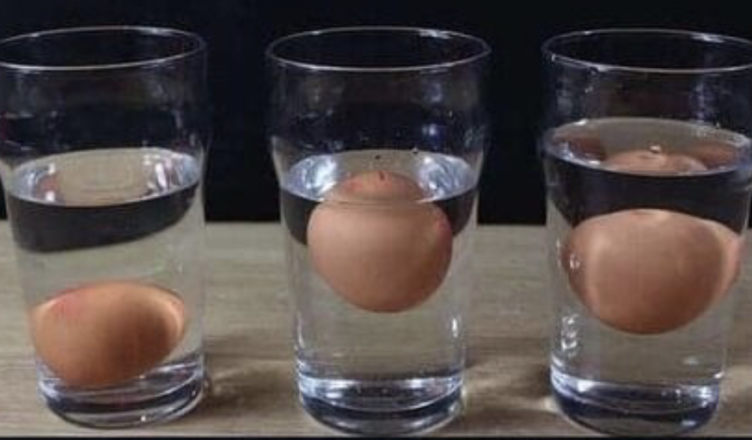
To perform this test, submerge the egg in a saucepan or bowl filled with water. If it sinks to the bottom, it remains suitable for consumption. If it stands upright, it should be consumed promptly. If it floats, it is expired.
The principle behind this test lies in the gradual evaporation of moisture through microscopic pores as the egg ages, resulting in an enlarged air pocket. Consequently, older eggs tend to float more.
However, refrain from repeating this test if immediate consumption of the eggs is desired, as it may compromise the egg’s protective cuticle, which shields against bacteria such as salmonella.
5. Utilize the candling technique:
Candling is a method used to assess egg quality or chick development in fertilized eggs, typically employed in industrial settings to classify table eggs before packaging.
However, you can replicate this technique at home. In a dimly lit environment, such as a cool room, utilize a light source such as a candle or small flashlight. Hold the light towards the end of the egg, then tilt and rotate the egg from side to side to observe the contents.
This technique allows visualization of the air bubble’s size. As eggs age, water evaporates and is replaced by gases, resulting in a larger air pocket.
Can we consume food after its expiration date?
While certain foods remain safe for consumption several days after the expiration date indicated on the packaging, consuming expired raw fish, eggs, or meat poses health risks.
Despite efforts to minimize food waste, it is essential to scrutinize product packaging in supermarkets to ensure safe consumption. Exceeding the expiration date of perishable items exposes individuals to various illnesses.
Here is a breakdown of foods that may still be consumable after the expiration date, as compiled by Femme Actuelle:
Foods with indefinite shelf life:
Certain foods, such as pure honey, salt, sugar, and vinegar, never expire and can be stored indefinitely.
Foods with extended shelf life, subject to certain conditions:
Canned goods, rice, pasta, cornstarch, flour, cereals, and dried vegetables can remain edible well beyond the marked expiration date, although they may be susceptible to infestation by food moths and spoilage.
Consumable foods after the expiration date:
Mustard, ketchup, pickles, and spices can be safely stored and consumed after the expiration date, though their taste may change over time.
Additionally, dairy products such as sour cream, cheese, milk, and yogurt can be consumed one to two weeks after the indicated date, provided the packaging remains unopened. However, swollen packaging indicates the presence of potentially harmful bacteria, necessitating disposal of the products. A pungent, acidic odor may also signify spoilage.
Frozen products may still be consumable after the expiration date if the cold chain has been maintained. Raw fish can be stored for six to nine months beyond the expiration date, while poultry, fruits, and vegetables may last up to one year when frozen. However, frozen meals generally have a shorter shelf life than packaged items.
Foods that should not be consumed after the expiration date:
Particular attention should be paid to vacuum-packed raw meats, eggs, fish, and deli meats, as these are more likely to harbor bacteria. Observing the expiration date on these items is crucial to preventing foodborne illnesses.
Swelling of the packaging may indicate bacterial proliferation, particularly salmonella, listeria, or E. coli. Gelatinous appearance and foul odor upon opening contaminated products further confirm spoilage.
Fresh fruit juices and raw milk cheeses may also contain harmful bacteria beyond the expiration date, while bagged salads are susceptible to bacterial contamination, necessitating adherence to the indicated expiration date.
In summary, while it’s crucial to minimize food waste, prioritizing safety by adhering to expiration dates and employing proper storage