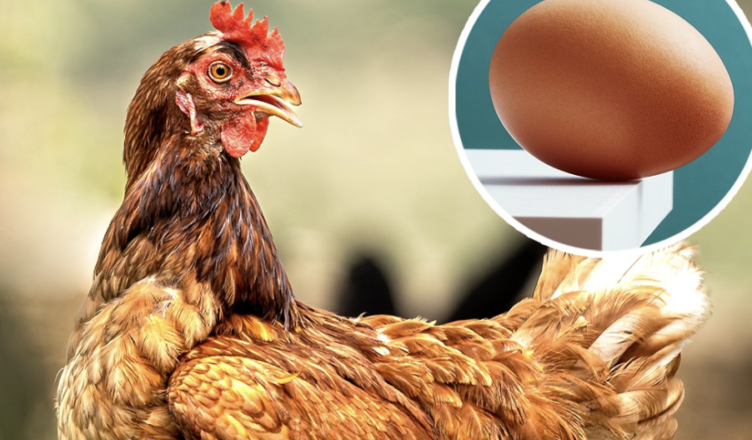
There was nothing better than wondering what we were going to eat for dinner, when our next playdate was, and which came first—the chicken or the egg—before we had to worry about taxes, electricity bills, and our futures.
So, a team from the UK’s University of Bristol’s School of Earth Sciences resolved to find out once and for all.
Some claim that the eggs arrived earlier, deposited by dinosaur relatives of the fluffy, squawky bird that supports restaurants like KFC. Others have said a chicken appeared out of nowhere and then laid an egg.
Scientists published their research in Nature Ecology & Evolution, dividing 51 ancient species and 29 current species into two groups for examination: oviparous (laying hard or soft-shelled eggs) and viviparous (giving birth to live offspring, as humans do).
The study discovered that the early reptile relatives of chickens were viviparous, meaning they gave birth to live creatures rather than laying eggs.
While both the scientists at Bristol and Nanjing University in China agreed that animals laying hard-shelled eggs were among the biggest breakthroughs, this study stands out.
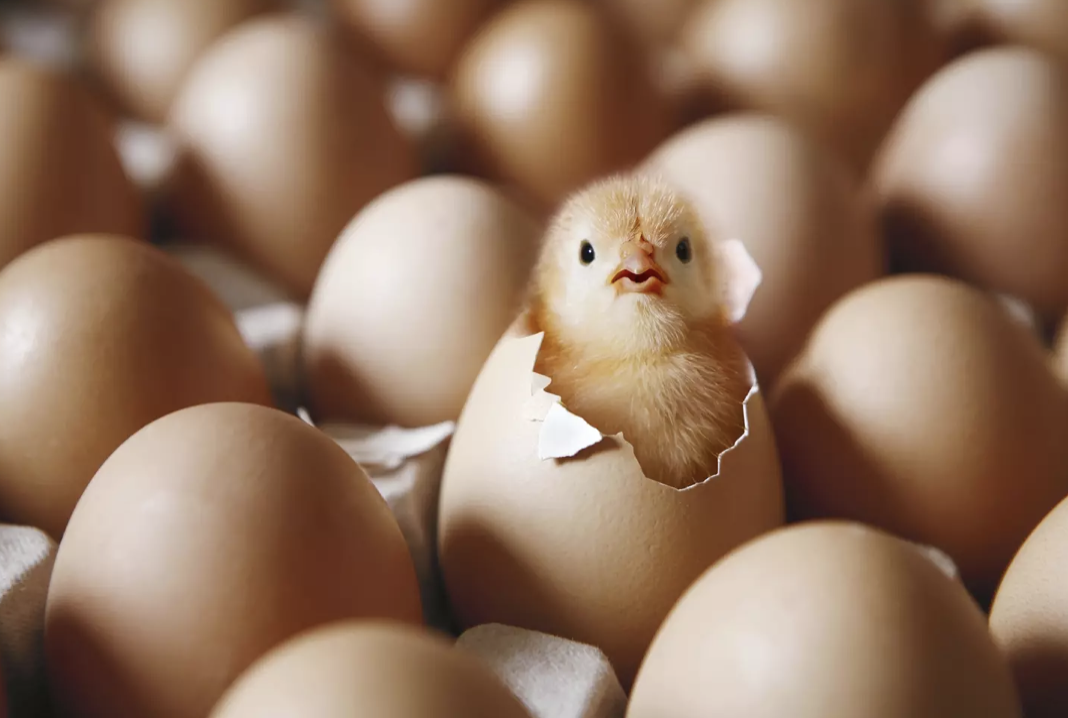
According to the scientists, the research suggests that longer embryo retention (when the mother holds their young before delivery) provided the greatest protection for this group of animals in particular—hence, back then, birthing a live chicken was safer than laying an egg.
In considerably more scientific terms, Professor Michael Benton of the University of Bristol stated: “Before the amniotes, the first tetrapods to evolve limbs from fishy fins were broadly amphibious in habits.”
” They had to live in or near water to eat and reproduce, as do modern amphibians like frogs and salamanders.” When amniotes appeared on the scene 320 million years ago, they were able to break out from the water by developing waterproof skin and other methods of controlling water loss. However, the amniotic egg was the key.
He further stated, “Our work, as well as that of many others in recent years, has consigned the classic ‘reptile egg’ model of the textbooks to the wastebasket.”
The project’s head, Professor Baoyu Jiang, asserted that “we have challenged this standard view.” Biologists have noted that many lizards and snakes have a versatile reproduction strategy that includes both oviparity and viviparity.
Occasionally, closely related species exhibit both behaviors, revealing that live-bearing lizards can return to egg-laying with greater ease than previously thought. Scientists appear to have cracked—or at least chipped—the dispute by developing a new notion that the chicken originated first.
So what do you think?