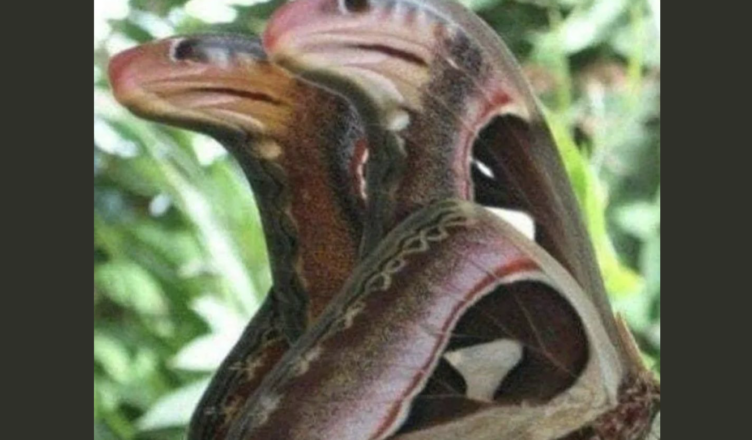
The natural world is teeming with incredible species and fascinating phenomena, showcasing the marvels of biodiversity. Recently, a set of captivating images surfaced, seemingly depicting three angry snakes hiding in a tree. However, the surprising twist revealed that those “snakes” were not snakes at all but a clever optical illusion created by the wings of two different species of Atlas moth.
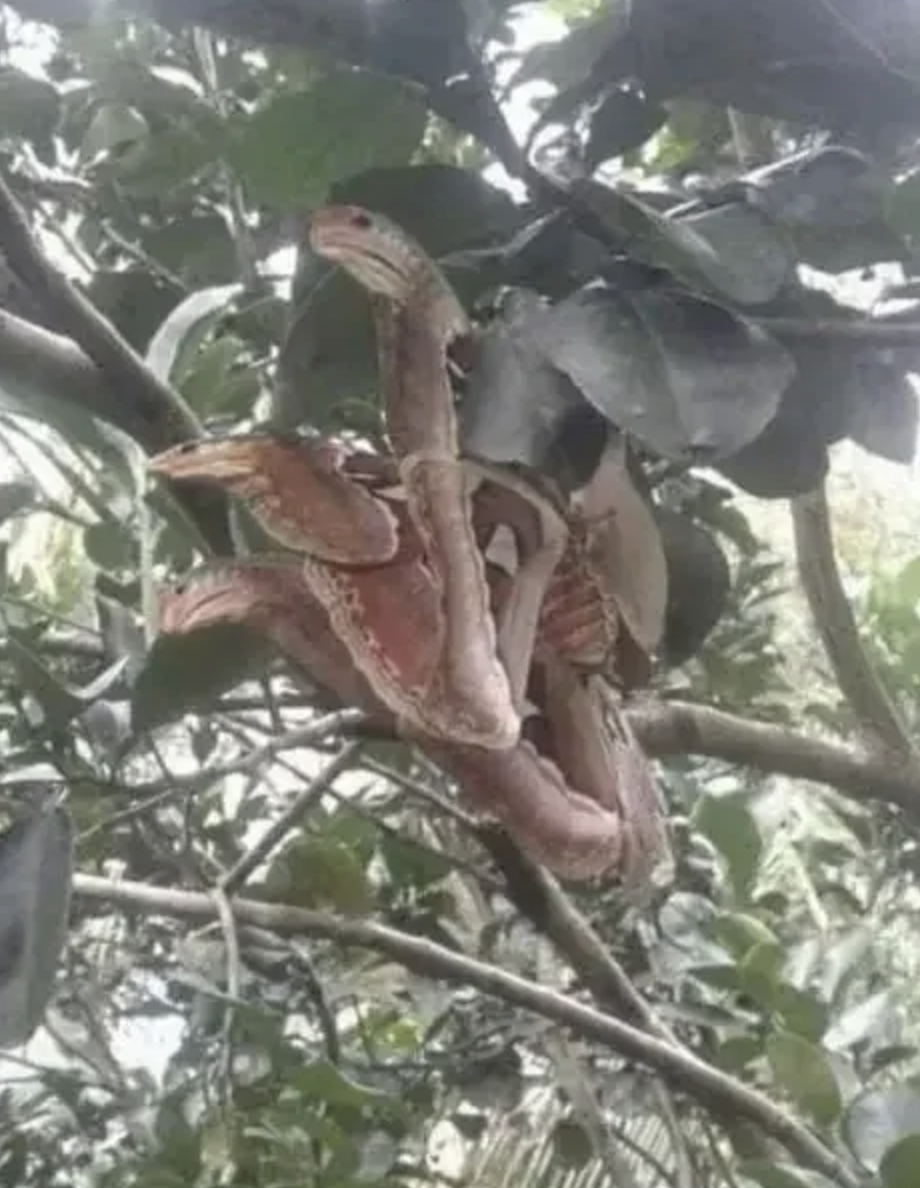
The Atlas moth, native to Asian forests, is among the largest butterflies worldwide, boasting a wingspan of up to 24 cm (9.4 in) and a total wing surface area of over 160 cm2 (25 in2). Despite their size, Atlas moths are not powerful or agile flyers.
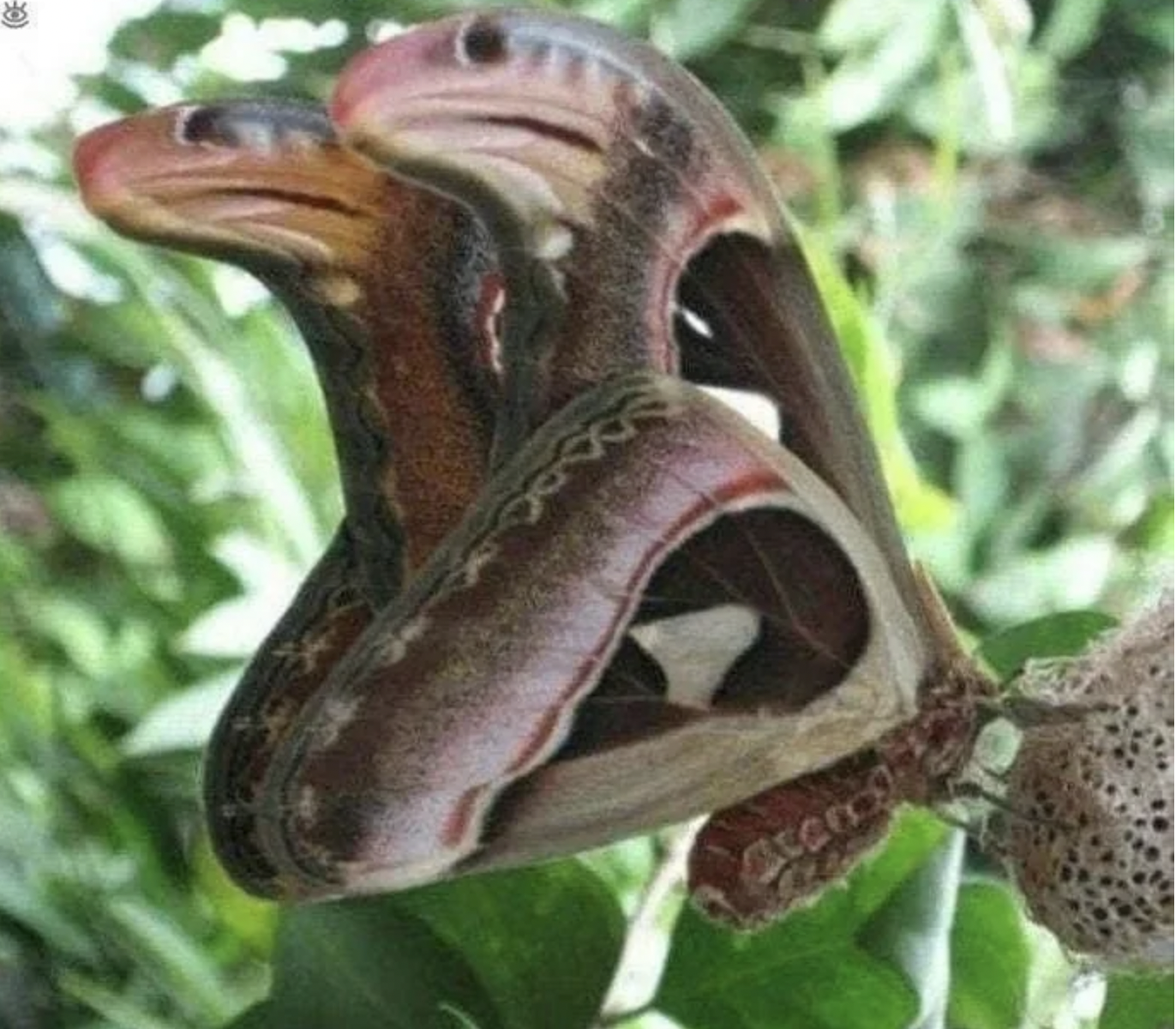
During their adult stage, which lasts a brief two weeks, they primarily focus on laying eggs and safeguarding them. In a remarkable display of adaptation, these moths employ a unique defense strategy when threatened—they descend to the ground, wriggle, and flap their wings deliberately to resemble a snake’s head.
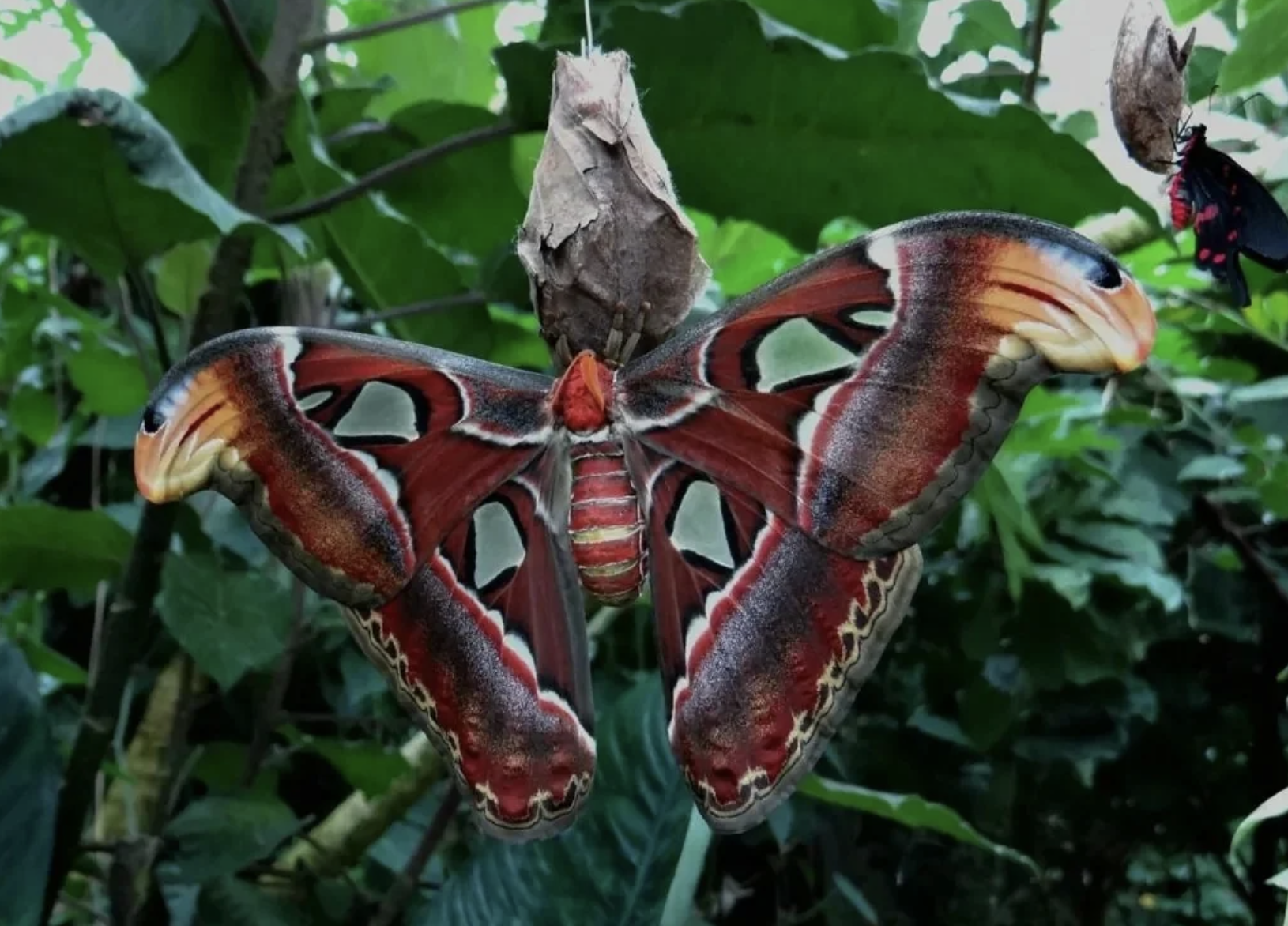
The captivating images shared on Twitter by user Rob Allam sparked global interest. Social media users initially found it challenging to believe that the “snake” was, in fact, a moth. The impressive disguise left many in awe, with comments ranging from admiration for the moth’s camouflage skills to surprise at the illusion.
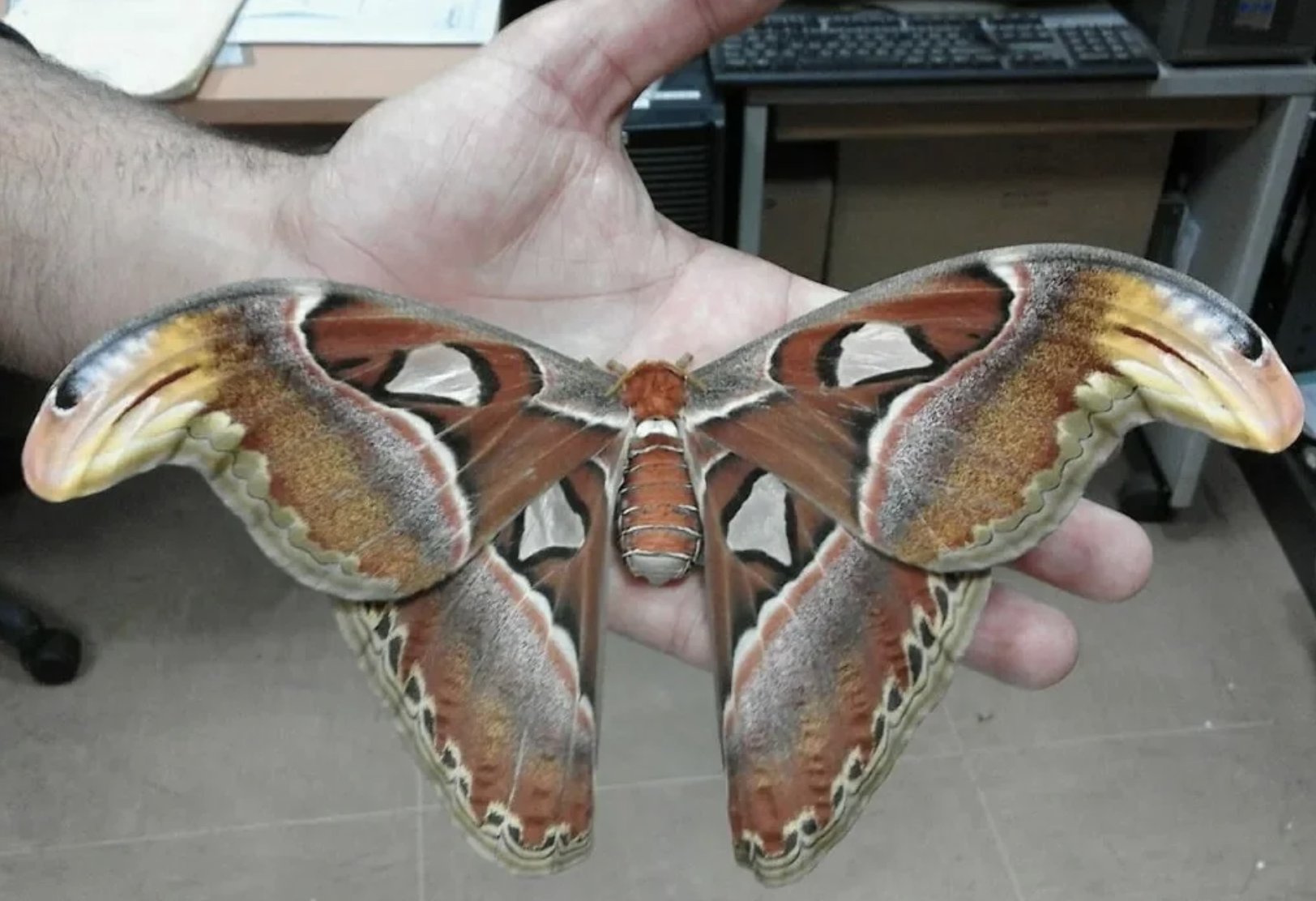
To witness the awe-inspiring presence of an Atlas moth, one would typically need to venture into the tropical forests of Asia. However, reported sightings in other regions, including Europe and the United States, have occurred. The moth’s ability to mimic a snake’s appearance adds another layer of fascination to this incredible species.
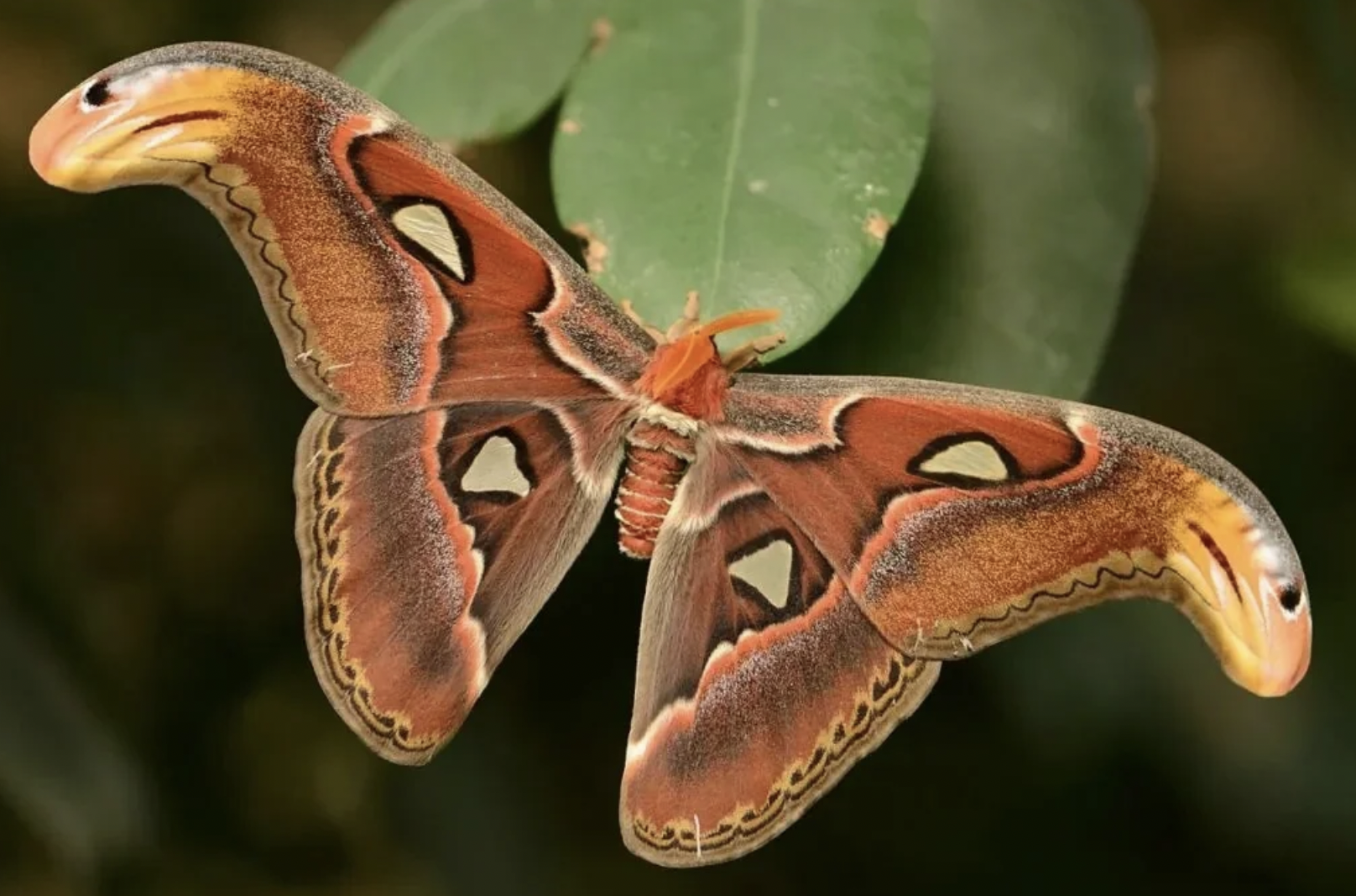
Nature’s wonders, exemplified by the Atlas moth, remind us of the astonishing diversity and adaptive strategies present in the animal kingdom. As we appreciate these marvels, it’s crucial to share and celebrate the extraordinary qualities of species like the Atlas moth that continue to surprise and enrich our understanding of the natural world.