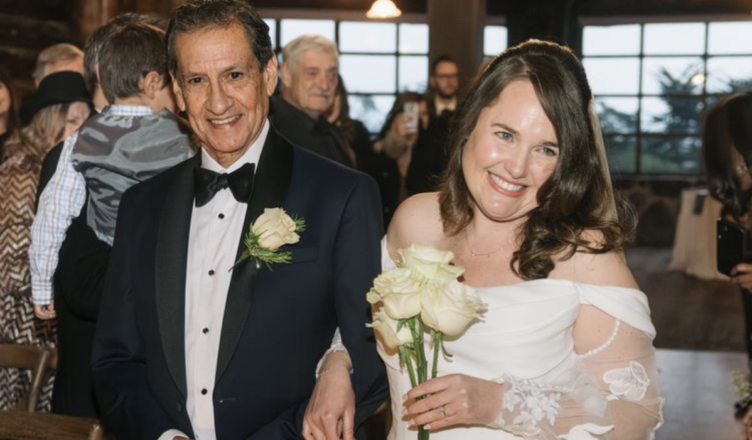
When Jenny Tice was getting ready to walk down the aisle at her wedding, she knew who she wanted by her side: the surgeon who had saved her life twice.
When Tice was 8 months old in 1989, she was diagnosed with biliary atresia, a rare condition affecting the liver’s bile ducts. The condition can be deadly without a liver transplant, but at the time, the procedure was nearly never performed on infants under the age of two.
Tice was lucky to be treated by Dr. Carlos Esquivel, an early supporter of providing liver transplants to ill newborns and toddlers. Esquivel, the chairman of the Division of Transplantation at Stanford Medicine Children’s Health in California, performed Tice’s transplant procedure, giving her a fresh chance at life.
Tice had no idea that more than 30 years later, in 2022, the two would meet again when the real estate loan executive, now 36, was admitted to the hospital for a surgical revision of the common bile duct, which drains bile from her donated liver.
“Dr. Esquivel walked into the room, and I was nervous because I knew he was the boss of the hospital abdominal transplant program,” Tice told the publication. “He looked at me and said, ‘Long time, no see.'”
“I had no working memory of ever meeting this man,” she explains. “It took me a good minute to piece together that he knew me, as he was the one who performed my liver transplant back in 1989 in San Francisco.”
Tice asserts that she was “confident that someone of [Dr. Esquivel’s] skill level could only handle the eight-hour procedure required for the revision.”
Tice knew Dr. Esquivel had to be the one to lead her down the aisle when she became engaged to her now-husband, Robert Nathaniel Eberhart, an urgent care doctor, in October and began planning her wedding.
“After answering ‘Hell yes’ to Nathan’s proposal, my second thought was that I wanted my surgeon to lead me down the aisle. He is my hero, and he has guided me from near death to living a complete life, including the opportunity to fall in love, marry, and now become a mother in May,” says Tice, who is 27 weeks pregnant with the couple’s first child.
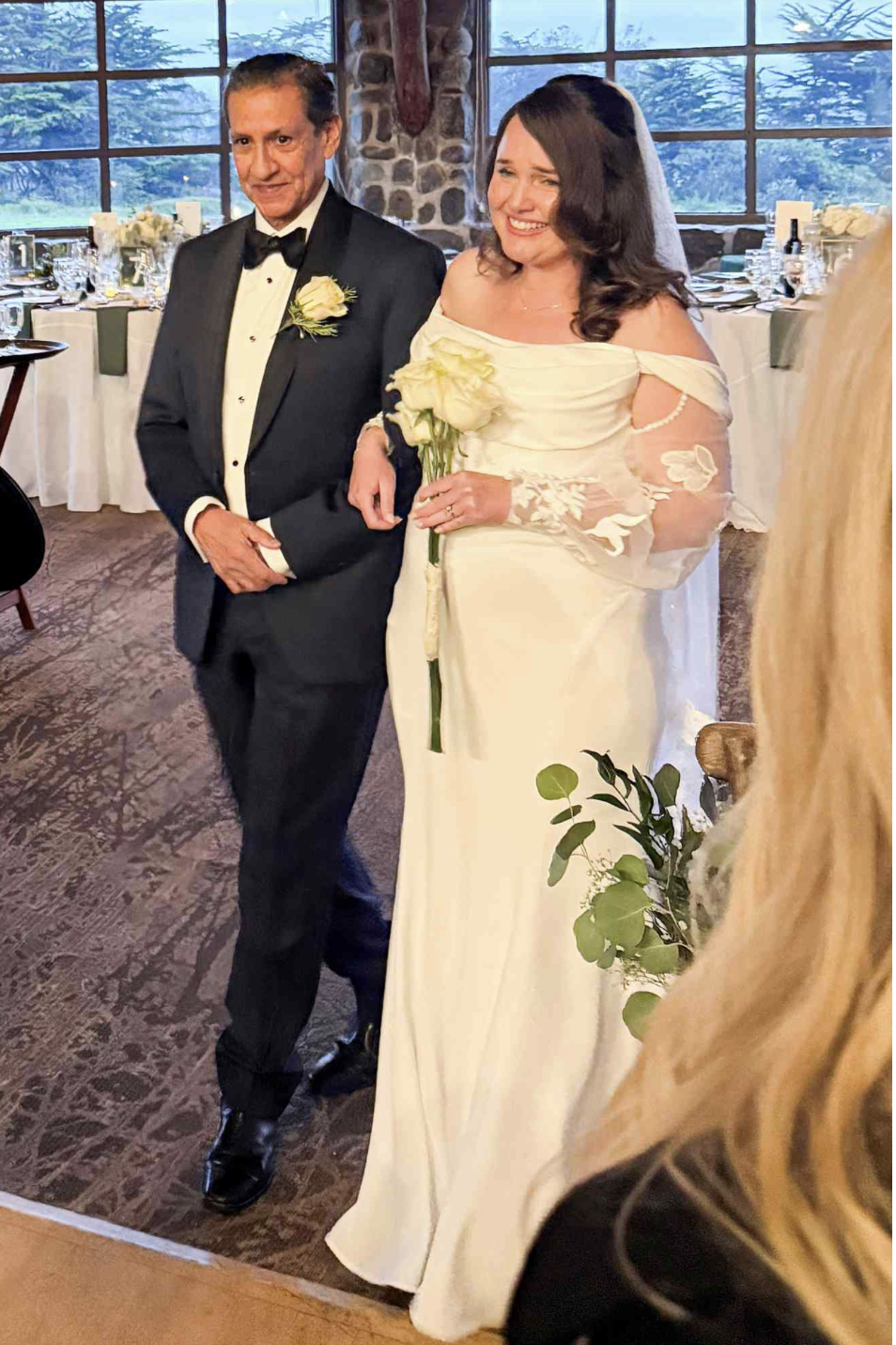
When the bride-to-be requested Dr. Esquivel to perform the honor during her wedding on Jan. 31 in San Francisco, “it was an immediate ‘yes,'” she recalls.
As an acoustic rendition of Elvis Presley’s “Can’t Help Falling in Love” began to play, the surgeon and his former patient joined hands and prepared for their historic stroll.
“I simply recall feeling a sense of tranquility that is difficult to convey. Before I stepped down, I remember saying, ‘Let’s do this,'” she recounts.

“I knew this day would not have been possible if he did not step up to the impossible task of helping very sick babies like me when Dr. Starzl, his mentor, told him to go save the babies,” Tice tells us. “This day would not have been possible without the hope and the story of my liver transplant.”
Dr. Esquivel found the occasion equally remarkable and emotional. “It beats any honors I’ve received along the way [in my career],” he jokes.
During her wedding ceremony, Tice discovered two unique methods to thank her organ donor. Her bridal party members held long-stemmed white flowers, and the officiant, Robert’s father, gave a heartfelt remark from UNOS (the United Network for Organ Sharing) in honor of Tice’s donor.
Tice is now enjoying married life and looking forward to receiving her kid this spring. And, because of Dr. Esquivel’s pioneering work all those years ago, her health is “great.”
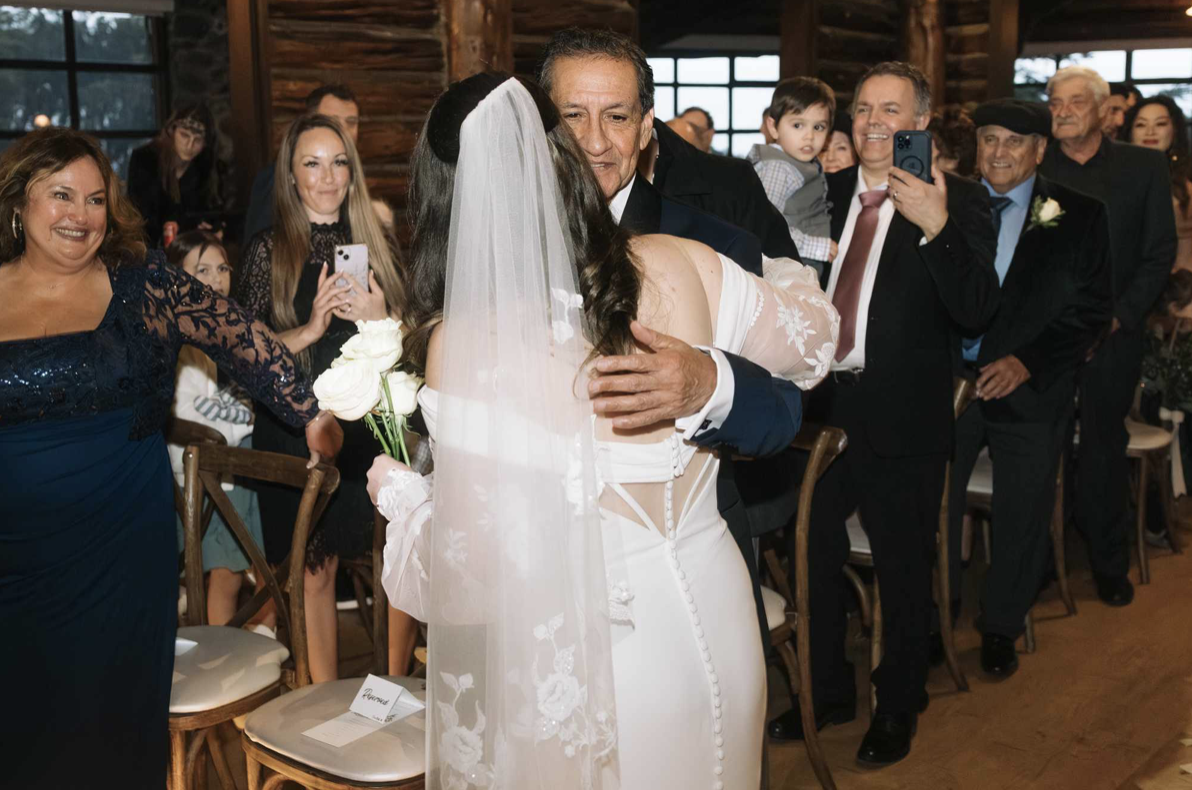
“I have a very high quality of life,” she told PEOPLE. “I have an amazing career and have run two half marathons and still weight lift two times a week.”
Tice is inspired by her experience and volunteers with a foundation that raises awareness and advances research into biliary atresia, which has no known treatment or cause.
“My narrative is possible because someone answered ‘yes’ to [organ] donation; therefore, I celebrate this gift by sharing my experience in hopes that it may inspire other people and save lives,” she explains.”