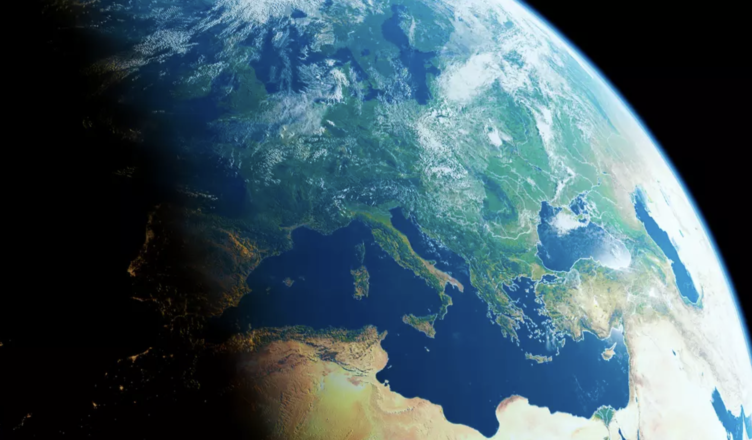
People are freaking out after seeing a snapshot of the Earth from a previously unseen viewpoint. They have a point.
Because the United States and Europe are both in the northern hemisphere, we’re accustomed to viewing our globe with plenty of land.
That is because the bulk of the Earth’s land—around 68 percent—is located there, dominated by continents such as North America, Europe, most of Asia, Africa, and parts of South America.
However, water makes up about 71% of our planet’s surface.
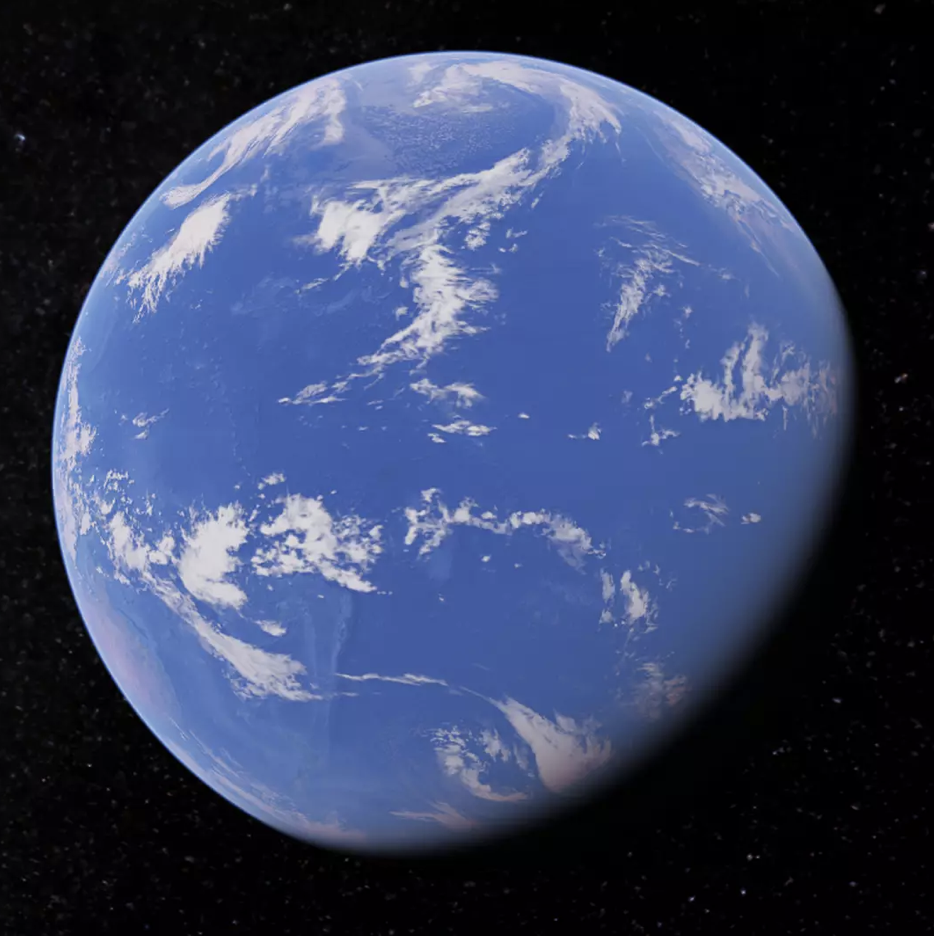
And one Google Earth shot does an excellent job of reminding us that we truly are on a ‘blue’ world.
The photograph in question depicts a portion of the southern hemisphere that we rarely view, which has caused some concern.
Twitter user @AMAZlNGNATURE shared the screenshot with the caption, “The side of planet Earth we aren’t used to seeing.”
The Pacific Ocean dominates the view, with barely a speck of green from New Zealand in the lower left.
The largest and deepest ocean on Earth extends from one end to the other, with a section of Antarctica at the bottom of the image appearing dazzlingly white due to its snowy surface.
The only other white patches on the ocean come from cloud formations and weather systems, as seen from satellites.
The oceanic hemisphere, the side of the Earth with the most water and the least land, is made up of around 89 percent ocean and 11 percent land.
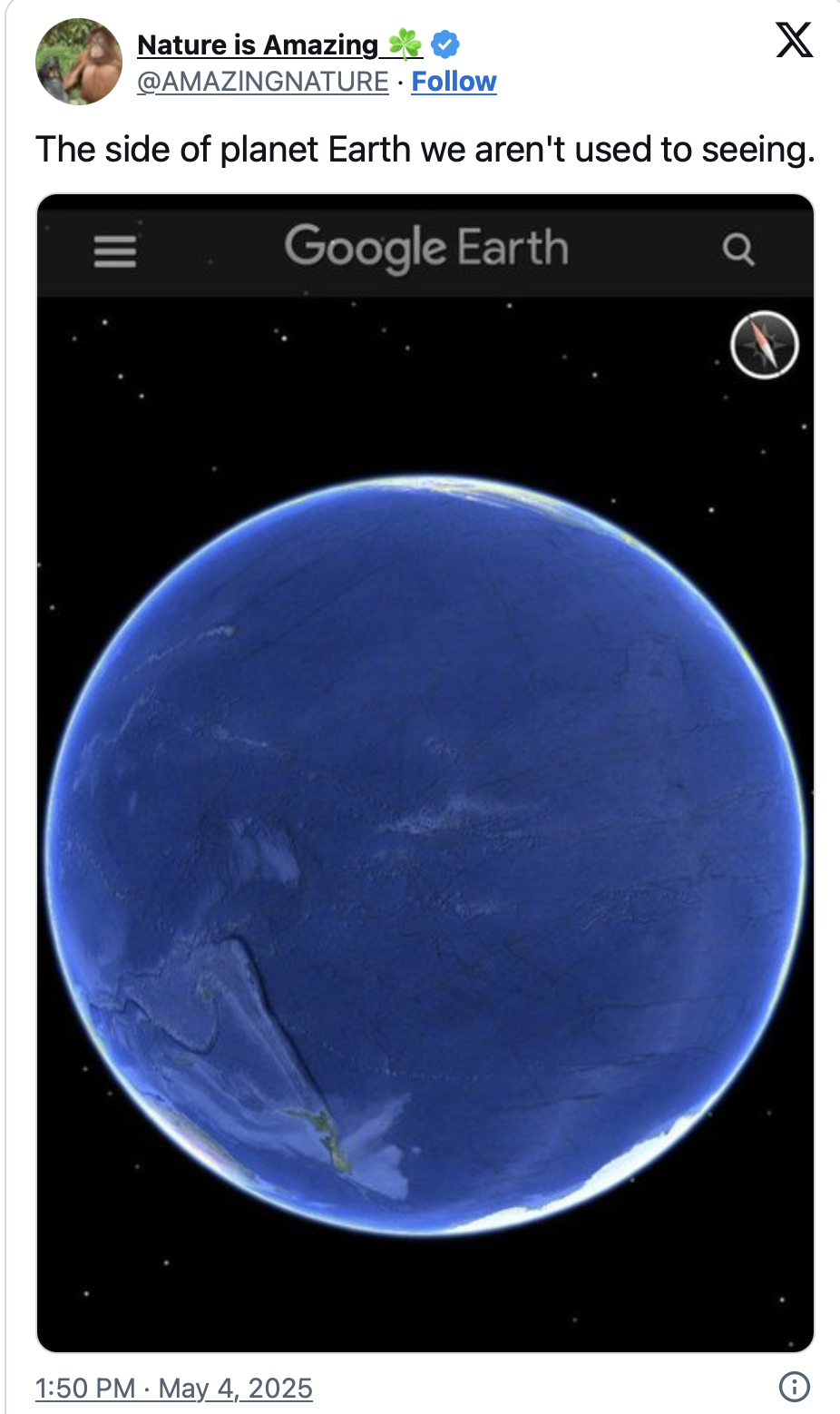
Aside from New Zealand and Antarctica, there is more land than can be seen in the photograph.
This comprises the Hawaiian Islands, Fiji, Tonga, Samoa, and other Polynesian, Melanesian, and Micronesian island republics, as well as French Polynesia and other territories, such as Easter Island, and the extreme edge of the Galápagos Islands (just within the edge).
People on social media found the photo unsettling, and I completely agree.
“The back of Earth’s skull is strange,” one astonished X user said, while another agreed: “Feels odd. I feel like I’m seeing things I shouldn’t.”
“Earth should actually be called water,” suggested a third, while a fourth added, “Proof that most of our planet is still mystery and ocean.”
Kiwis were pleased to see their own nation on the map, as one responded to the initial poster, “Speak for yourself.” Hello from New Zealand!”
A second user commented, “At last, a map that includes us… a map all to ourselves,” as a third individual said, “To Pacific Islanders, this is the front of the world, not the back.”
I suppose it’s all about perspective at the end of the day!