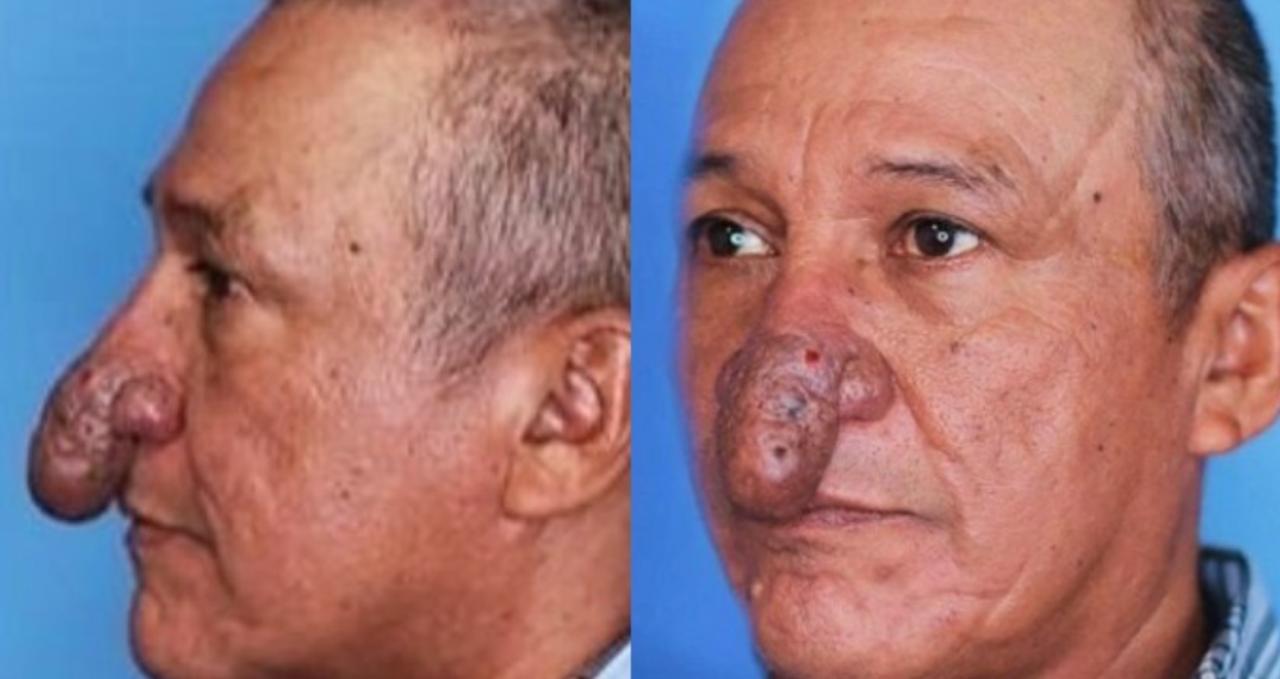
For years, Conrado Ramos Estrada struggled with a severely enlarged nose that affected not only his appearance but also his ability to eat, breathe, and feel comfortable around other people. The 57-year-old painter and construction worker from Portchester, New York, had become accustomed to wearing face masks long before they became commonplace, hoping to avoid the stares and questions from strangers.
His condition had become so pronounced that his nose extended down to his lips, making even simple activities like eating difficult. It also interfered with his breathing and caused snoring. Estrada recalled how children would sometimes ask their mothers what had happened to his face, leaving him feeling self-conscious about his appearance.
His condition, known as rhinophyma, had developed over several years. It causes the skin on the nose to become thickened, swollen, and uneven due to enlarged oil glands. Although the exact cause remains unknown, rhinophyma is associated with rosacea and is more commonly seen in men. Estrada had spent six years visiting doctors and skin specialists, but none of the treatments he tried brought meaningful improvement.
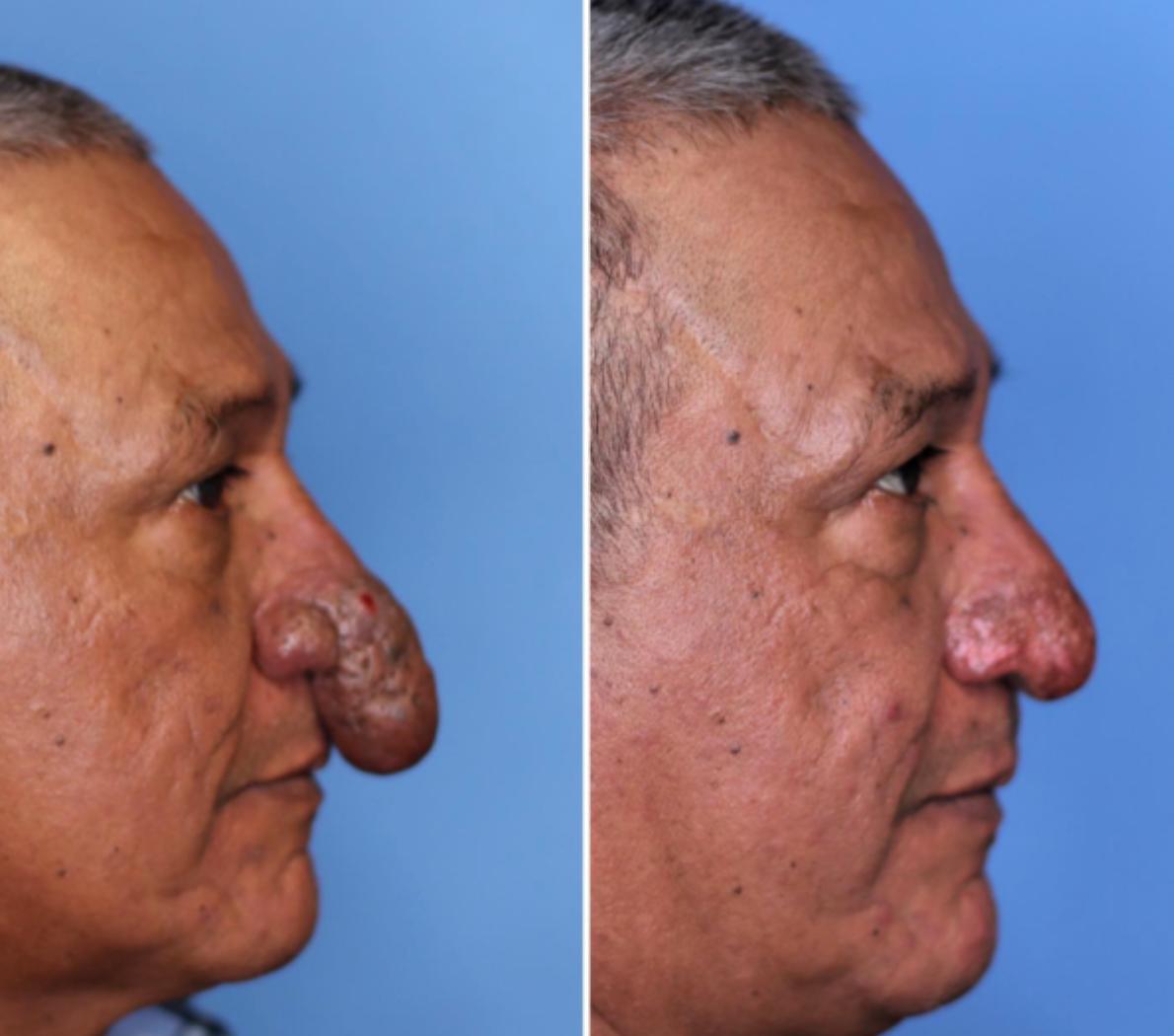
Everything changed after an unexpected encounter with Dr. Thomas Romo, director of facial plastic and reconstructive surgery at Lenox Hill Hospital. The two met when Estrada arrived at the surgeon’s Bronxville home as part of a painting crew. After noticing the severity of his condition, Dr. Romo decided to approach him and offer assistance.
The surgeon recognized that Estrada’s condition was not simply an aesthetic concern. His enlarged nose was affecting his everyday functioning, confidence, social interactions, and potentially his ability to find work. Given the advanced stage of the rhinophyma, surgery was considered the only effective option. Dr. Romo, who regularly provides free reconstructive procedures through his Little Baby Face Foundation, offered to help him.
Estrada was deeply moved by the surgeon’s kindness. After a few days of completing the necessary paperwork, he underwent the operation. Nearly four weeks later, he had returned to work, and the transformation was already making an enormous difference in his life.
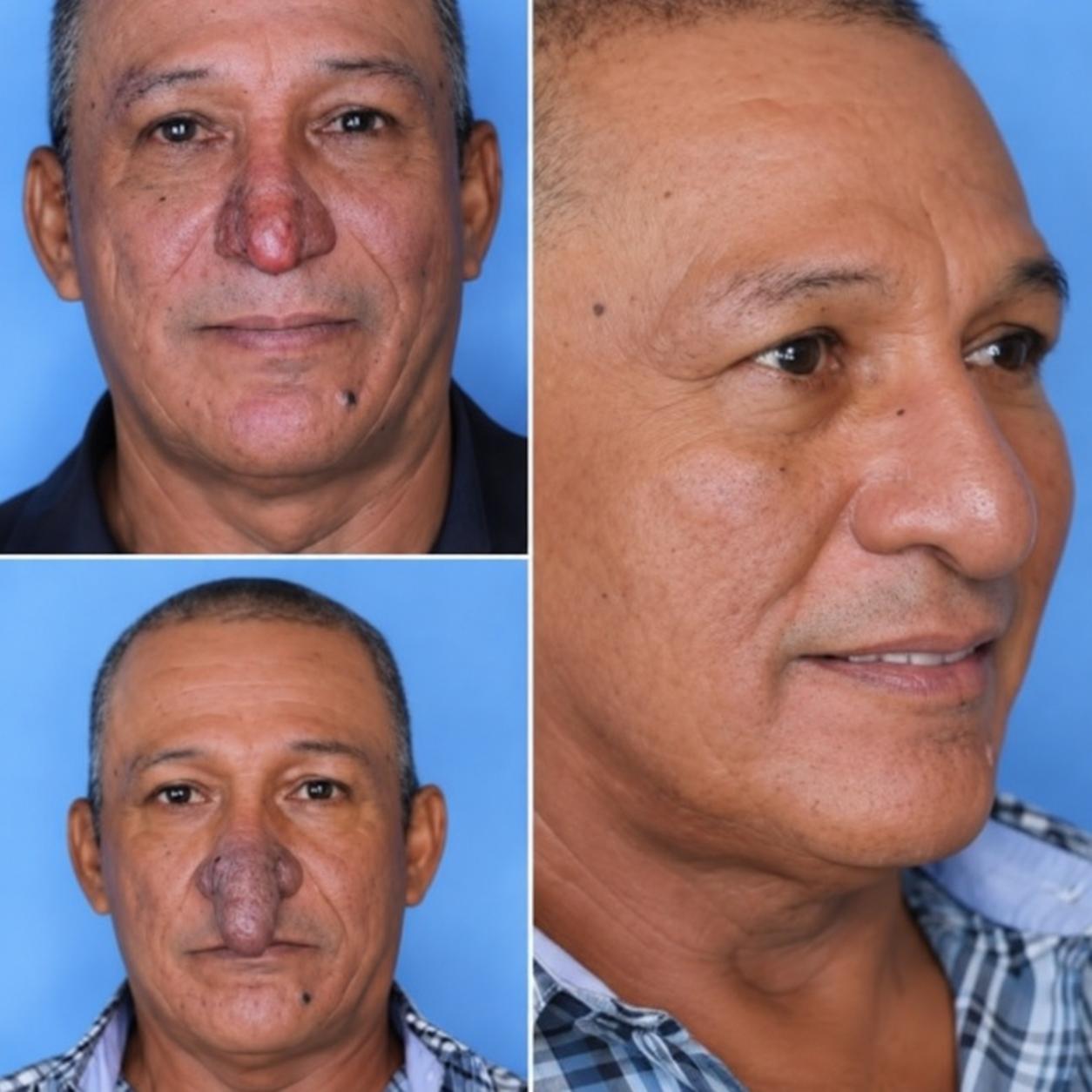
Dr. Romo noticed a remarkable change in his patient’s attitude and confidence, describing how Estrada now stood taller, smiled more, and carried himself with renewed energy. His friends and family were equally delighted by the results.
For Estrada, the experience felt nothing short of a miracle. Reflecting on the surgeon who had given him a new chance at life, he said he believed God had sent an angel to help him, referring to Dr. Romo.